



| IN A NUTSHELL |
|
In an era where military logistics are facing unprecedented challenges, the unveiling of the WindRunner aircraft by U.S. aerospace firm Radia marks a significant shift in strategic airlift capabilities. Unlike its Cold War-era predecessors, the WindRunner is designed to transport entire fighter and helicopter squadrons without disassembly, directly to where they are needed. This new approach could redefine how the U.S. and its allies deploy combat power across the globe, especially in contested and remote environments. As global military dynamics evolve, the ability to rapidly move mission-ready systems could provide a crucial edge in maintaining operational readiness.
The WindRunner’s Revolutionary Design
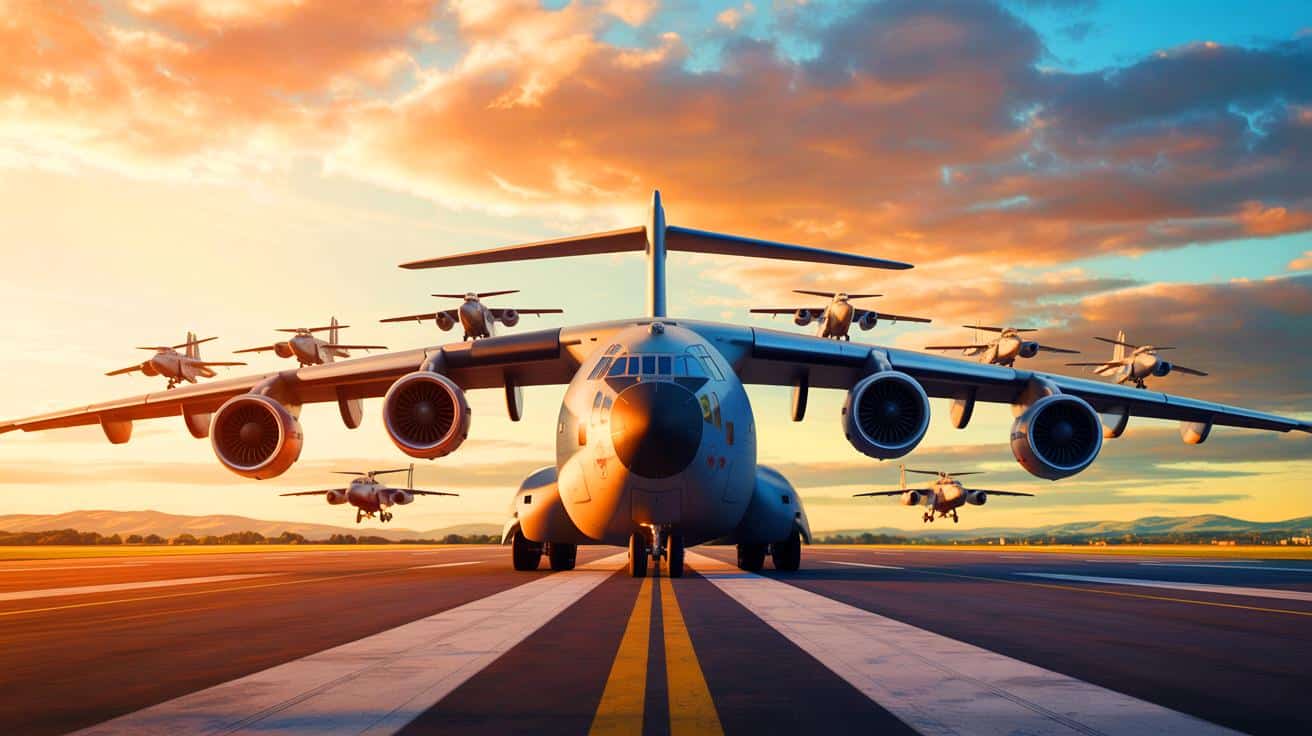
The WindRunner stands out not because of its payload weight but due to its unprecedented cargo volume. With a cargo capacity of 6,800 cubic meters, it can carry 12 AH-64 Apaches, 6 CH-47 Chinooks, or 4 fully assembled F-35Cs in a single trip. This capability surpasses that of the C-5 Galaxy and the C-17 Globemaster III, despite the WindRunner’s lower weight limit of approximately 160,000 pounds. Radia’s CEO, Mark Lundstrom, emphasizes that the focus is on moving complete systems swiftly without the need for air-to-air refueling or extensive runway preparation.
The design philosophy behind the WindRunner reflects a strategic shift towards flexibility and speed. In a world where military operations increasingly require rapid deployment to austere or damaged airstrips, the ability to transport fully operational equipment without disassembly is invaluable. This approach aligns with Agile Combat Employment (ACE) strategies, which prioritize the distribution of forces and equipment across vast distances, particularly in regions like the Indo-Pacific.
A Strategic Edge in Contested and Climate-Stressed Zones
One of the WindRunner's most significant advantages is its ability to operate from unprepared runways as short as 5,900 feet. This capability is particularly valuable in regions affected by natural disasters or conflict, where existing infrastructure may be compromised. The aircraft's roll-on/roll-off delivery system further enhances its operational flexibility, requiring no special equipment for loading or unloading cargo.
As noted in a 2023 RAND report, the capacity to deliver outsized cargo intact and rapidly is a critical requirement in scenarios involving peer adversaries. The WindRunner could fill a crucial gap in the U.S. military's current airlift capabilities, providing a versatile platform for both military and humanitarian missions. Its potential applications range from rapid humanitarian response and mobile hospital deployment to booster rocket recovery and spaceport logistics.
A Moonshot Timeline — and Some Scepticism
Radia aims for the WindRunner's first flight by 2030, leveraging certified parts and existing aerospace technologies to expedite development. However, this ambitious timeline has raised skepticism among industry experts. Dr. Ian MacLaren of the Royal United Services Institute points out that developing a new strategic airlifter in the West is a daunting task, given the lack of recent precedents and the significant financial investment required.
Despite these challenges, Radia has secured partnerships with five key aerospace companies and is collaborating with the U.S. Department of Defense. This cooperation aims to explore the WindRunner's potential in various civil-military applications, including energy infrastructure support. Nevertheless, questions regarding funding, certification, and adoption by military planners remain open, as the Air Force has yet to commit to the new platform.
The Future of Military Airlift
The introduction of the WindRunner could signal a transformative period for military logistics. By prioritizing volume and operational flexibility over sheer payload weight, Radia is challenging traditional notions of strategic airlift. If successful, the WindRunner could redefine how military forces are deployed, particularly in contested regions where rapid response is crucial. The aircraft's ability to deliver mission-ready systems intact may offer a strategic advantage in future conflicts, especially as geopolitical tensions rise.
As the WindRunner moves from concept to reality, it remains to be seen whether its innovative design will be fully embraced by military planners. Will the focus on volume over brute force prove to be the right approach for the challenges of the 21st century? How will this new capability shape the future of military operations and global logistics?
How can WindRunner land on dirt runways without damaging its structure? 🤔
Wow, the WindRunner sounds like a game-changer! Do you think it will really meet its 2030 deadline? 🤔
I’m skeptical about their 2030 timeline. Seems too ambitious!
I’m skeptical about the WindRunner’s ability to operate from unprepared runways. Seems too good to be true!
This sounds like a game changer for military logistics! 🚀
Finally, some innovation in military logistics! Thanks, Radia! 😊
Will the WindRunner’s operational costs be sustainable for long-term use?
Isn’t the focus on volume over weight a bit risky in contested areas?
This sounds amazing, but has Radia considered the environmental impact of such a massive aircraft?
How does WindRunner compare to existing aircraft like the C-5 Galaxy?
What happens if the military doesn’t adopt the WindRunner? Seems like a risky bet!
Can’t wait to see how this aircraft performs in real scenarios! 😄
How will the WindRunner handle adverse weather conditions on unprepared runways? 🌧️
With such ambitious plans, how is Radia handling the funding for this project?