




| IN A NUTSHELL |
|
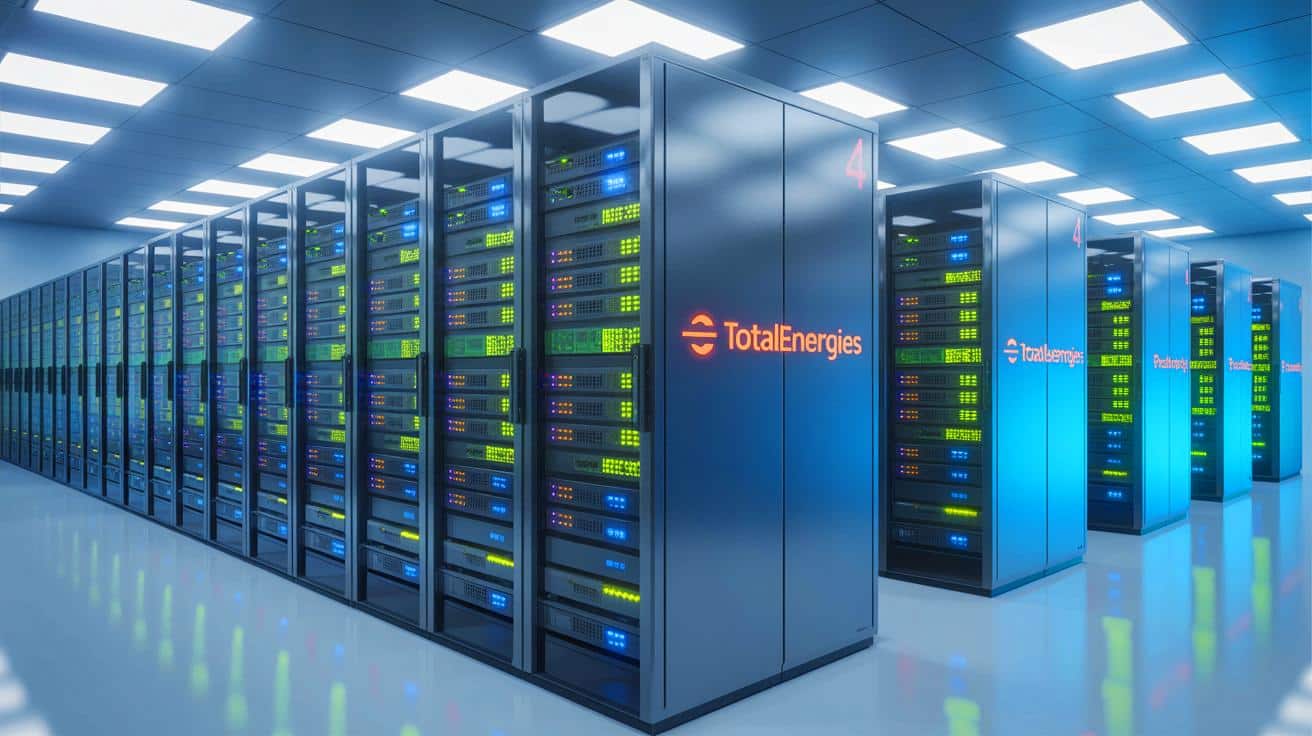
TotalEnergies, a leading French multinational in the energy sector, recently unveiled the fourth generation of its supercomputing technology—Pangea 4. As the company approaches its centennial anniversary in 2024, it continues to break new ground in computational efficiency and power. While Pangea 4 may not surpass its predecessor in raw processing capability, it stands out for its remarkable energy efficiency. This development comes at a time when energy efficiency and sustainability are more crucial than ever. The new supercomputer is designed to tackle some of the most pressing scientific and environmental challenges of our time.
Understanding Supercomputers and Their Purpose
Supercomputers, sometimes referred to as superordinate computers, are extraordinary machines equipped to perform a massive number of calculations at incredible speeds. According to the Commissariat à l’énergie atomique et aux énergies alternatives (CEA), a supercomputer is defined as a large computer with tens of thousands of processors capable of executing millions of billions of operations in mere seconds. These machines are not built for gaming or leisure activities but serve critical roles in scientific research.
Supercomputers are pivotal for conducting complex simulations and experiments. They enable the modeling of intricate phenomena such as seismic activities, star formation, and even the evolution of entire galaxies. Moreover, they are indispensable for weather forecasting and climate predictions. The performance of supercomputers is measured in petaflops, where one petaflop equals one million billion floating-point operations per second. This measurement indicates the computer’s ability to handle vast amounts of data rapidly and accurately.
The Role and Capabilities of Pangea 4
Pangea 4, with its capability of performing 1.6 petaflops, is designed to execute 1.6 million billion operations per second. This computational power is equivalent to having 8,500 laptops work on the same task simultaneously. The supercomputer is slated to have a lifespan of four years, from 2024 to 2028, during which it will serve multiple objectives. According to TotalEnergies, Pangea 4 will be instrumental in projecting carbon capture and geological storage, reducing methane emissions, and simulating wind flows for future wind farm placements.
The supercomputer will also support simulations related to biofuels and polymers, as well as assist in image processing, seismic acquisition, reservoir simulation, and geological basin modeling. These functions align with TotalEnergies' ongoing exploration and production activities, highlighting the critical role Pangea 4 will play in advancing the company's research and operational capabilities.
Pangea 4: A Model of Energy Efficiency
One of the standout features of Pangea 4 is its energy efficiency. The supercomputer is projected to use 87% less electricity, primarily due to the integration of Pangea Cloud technology. This energy reduction is a significant achievement, especially when compared to its predecessor, Pangea III, which had a potential power of 31.7 petaflops. The new model's efficiency is partly a response to the enormous energy demands of such powerful machines.
Despite its lower processing power compared to Pangea III, Pangea 4's design reflects a strategic shift towards sustainability. Pangea III, developed in collaboration with IBM, was already more energy-efficient than earlier versions, consuming only 1.5 megawatts compared to the 4.5 megawatts required by Pangea I and II. This progression underscores TotalEnergies' commitment to reducing its carbon footprint while maintaining technological excellence.
Implications and Future Prospects
The introduction of Pangea 4 at a time when TotalEnergies is celebrating a century of operations underscores the company's dedication to innovation and sustainability. The supercomputer will not only further TotalEnergies' scientific endeavors but also contribute to global efforts in tackling climate change and enhancing energy efficiency. As technology continues to advance, the potential applications and benefits of supercomputers like Pangea 4 are bound to expand.
As we look toward the future, questions arise about the role such technology will play in addressing environmental concerns and how companies like TotalEnergies will continue to balance technological advancement with sustainability. What new frontiers in computational research and environmental stewardship will Pangea 4 open for the energy sector and beyond?



C’est impressionnant de voir une telle réduction de consommation d’énergie, mais comment cela affecte-t-il la performance globale du supercalculateur ? 🤔
Incroyable ! Est-ce que cela signifie que d’autres entreprises suivront l’exemple de TotalEnergies pour économiser de l’énergie ? 🌱
1.6 petaflops, c’est bien, mais est-ce que ça suffira pour les défis futurs ? 🤔
J’applaudis TotalEnergies pour cette avancée. Chaque petit geste compte pour notre planète. 🌍
Félicitations à TotalEnergies pour cette avancée technologique ! 👏
87% moins d’énergie, c’est bien, mais ça reste toujours une grosse machine qui consomme. Est-ce vraiment suffisant ?
Est-ce que Pangea 4 pourra aider à prédire et à prévenir les catastrophes naturelles ?
Super nouvelle! Mais combien a coûté le développement de Pangea 4 ? 😮
87% d’économie d’énergie, c’est impressionnant, mais comment ont-ils réussi ce tour de force ?
J’espère que d’autres entreprises prendront exemple sur cette initiative écologique !
Est-ce que Pangea 4 est utilisé pour d’autres applications que la capture du carbone ?
Les superordinateurs deviendront-ils plus courants dans les entreprises à l’avenir ?
Bravo TotalEnergies! Espérons que d’autres suivront cet exemple de durabilité. 👏
Pourquoi Pangea 4 est-il moins puissant que Pangea III ? Ça me semble un peu en arrière.