





| IN A NUTSHELL |
|
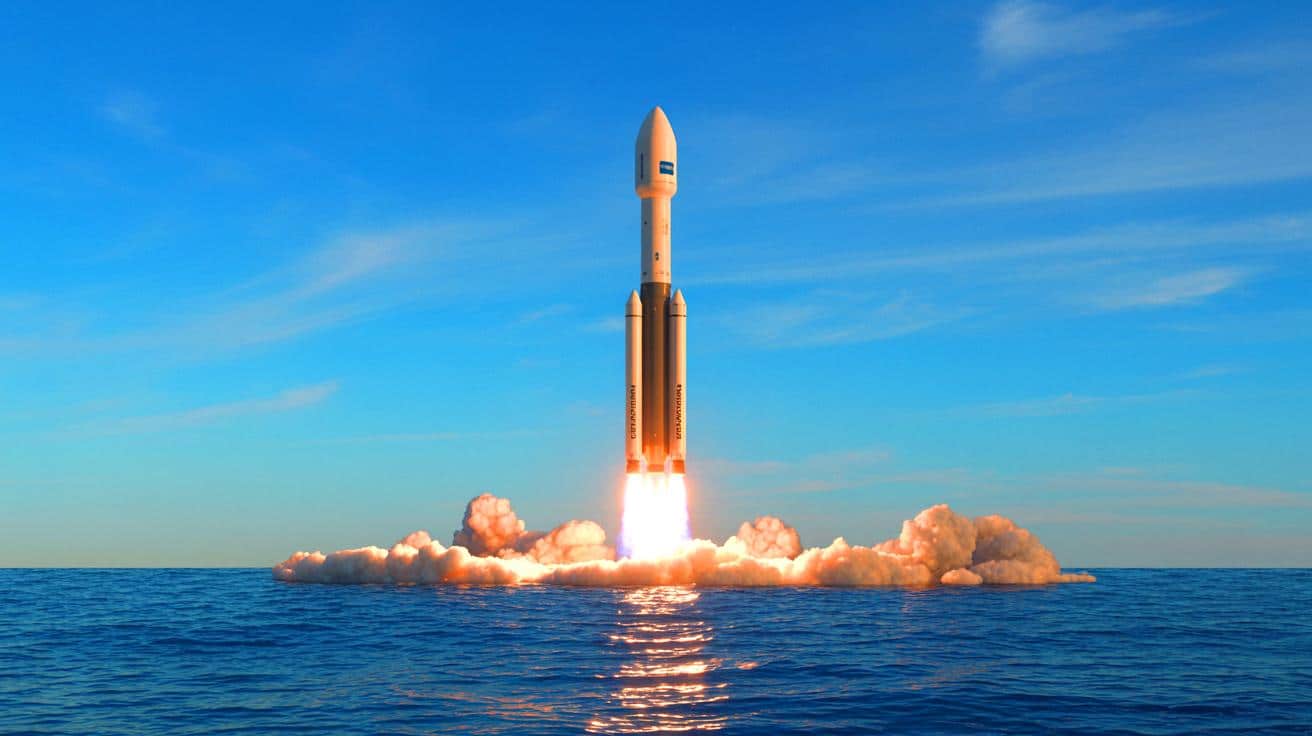
In a significant milestone for the aerospace industry, Blue Origin, led by Jeff Bezos, has achieved a successful landing of the booster from its New Glenn mega-rocket. The landing took place on a drone ship in the Atlantic Ocean, marking Blue Origin as the second company to achieve this feat, following SpaceX. This achievement not only demonstrates the potential of the New Glenn rocket system to carry larger payloads into space but also sets the stage for future missions to the moon and beyond. Additionally, the mission included the successful deployment of NASA’s twin spacecraft aimed at studying Mars’ atmosphere, underscoring the mission’s multipronged objectives.
Blue Origin’s Breakthrough in Rocket Landing
Blue Origin’s successful landing of the New Glenn booster marks a pivotal moment in the company’s history. This achievement places Blue Origin alongside SpaceX in its ability to return boosters to Earth, a crucial step in making space travel more cost-effective. The New Glenn booster, standing at 189 feet tall, touched down on a platform in the Atlantic Ocean approximately ten minutes after launch. This success follows a previous attempt in January, where the booster exploded before landing.
The significance of this landing cannot be overstated. It demonstrates Blue Origin’s ability to overcome past challenges and move closer to its goal of creating a reusable rocket system. By achieving reusability, Blue Origin aims to reduce launch costs significantly, making space travel more accessible for commercial customers and government missions. In doing so, the company positions itself as a strong competitor in the growing space industry, which is currently dominated by SpaceX.
NASA’s Mars Mission: A New Chapter
In addition to the booster landing, Blue Origin’s mission included the successful deployment of NASA’s twin spacecraft designed to study Mars’ atmosphere. This aspect of the mission highlights the collaborative efforts between Blue Origin and NASA, showcasing the potential for private-public partnerships in space exploration. The spacecraft, deployed approximately 34 minutes after launch, are set to provide critical data on the red planet’s atmospheric conditions.
The success of this deployment underscores the growing role of private companies in supporting governmental space missions. By providing reliable launch services, Blue Origin contributes to NASA’s broader objectives of exploring and understanding our solar system. This collaboration not only benefits scientific research but also paves the way for future missions that venture deeper into space.
Challenges and Future Prospects for Blue Origin
Despite the recent success, Blue Origin’s journey has not been without challenges. The company faced multiple delays in launching the second New Glenn rocket. Initially planned for the spring, the launch was postponed due to various factors, including weather conditions and solar storms. These delays highlight the complexities involved in space launches, where precision and timing are paramount.
Blue Origin’s ability to address these challenges and achieve a successful launch reflects its commitment to innovation and development. Moving forward, the company must focus on demonstrating the reusability of its rocket boosters. This includes refurbishing and relaunching the booster, a capability that SpaceX has already mastered. Success in this area will be crucial for Blue Origin to maintain its competitive edge and fulfill its ambitions of lunar exploration.
Implications for the Broader Space Industry
The achievements of Blue Origin have significant implications for the broader space industry. By successfully landing and potentially reusing rocket boosters, the company contributes to the ongoing trend of reducing the cost of space travel. This development is particularly important for commercial customers who seek affordable launch solutions. It also benefits government missions, which can now consider more frequent and cost-effective launches.
Furthermore, Blue Origin’s progress highlights the increasing competition within the space industry. With companies like SpaceX and Blue Origin pushing the boundaries of technology and innovation, the industry is experiencing rapid advancements. This competition fosters a dynamic environment where new possibilities for exploration and commercialization are constantly emerging.
As Blue Origin continues to achieve milestones, the future of space exploration appears promising. The company’s recent success raises important questions about the next steps in its journey. Will Blue Origin be able to consistently demonstrate the reusability of its rocket systems, and how will this impact the competition with SpaceX? The answers to these questions will shape the trajectory of the space industry in the coming years.


Wow, Blue Origin is really stepping up its game! 🚀
Félicitations à Blue Origin pour cet exploit incroyable ! 🚀
Est-ce que Blue Origin pourra vraiment concurrencer SpaceX à long terme?
Est-ce que Blue Origin va vraiment pouvoir concurrencer SpaceX à long terme ? 🤔
Félicitations à Blue Origin pour cette réussite incroyable! 👏
Je me demande combien de fois ils pourront réutiliser ce booster 🤔
Impressionnant mais j’attends de voir si ça se reproduit régulièrement.
Pourquoi y a-t-il eu tant de retards dans le lancement du New Glenn?
Bravo à l’équipe de Blue Origin et à Jeff Bezos pour cette réussite !
Enfin, une véritable compétition pour SpaceX. C’est passionnant!
La collaboration avec la NASA est une excellente nouvelle pour l’exploration spatiale.
Quand est prévu le prochain lancement ?
C’est juste moi ou est-ce que tout le monde devient une entreprise spatiale de nos jours? 😂
J’espère qu’ils atteindront un jour la Lune avec ce genre de technologie. 🌕
Je suis sceptique quant à leur capacité à réduire significativement les coûts.
Est-ce que cela signifie que Blue Origin lancera bientôt des missions lunaires?
Leurs fusées sont-elles réellement réutilisables ou c’est juste un coup de pub ?
Ça aurait pu être mieux, mais c’est un bon début!