





| IN A NUTSHELL |
|
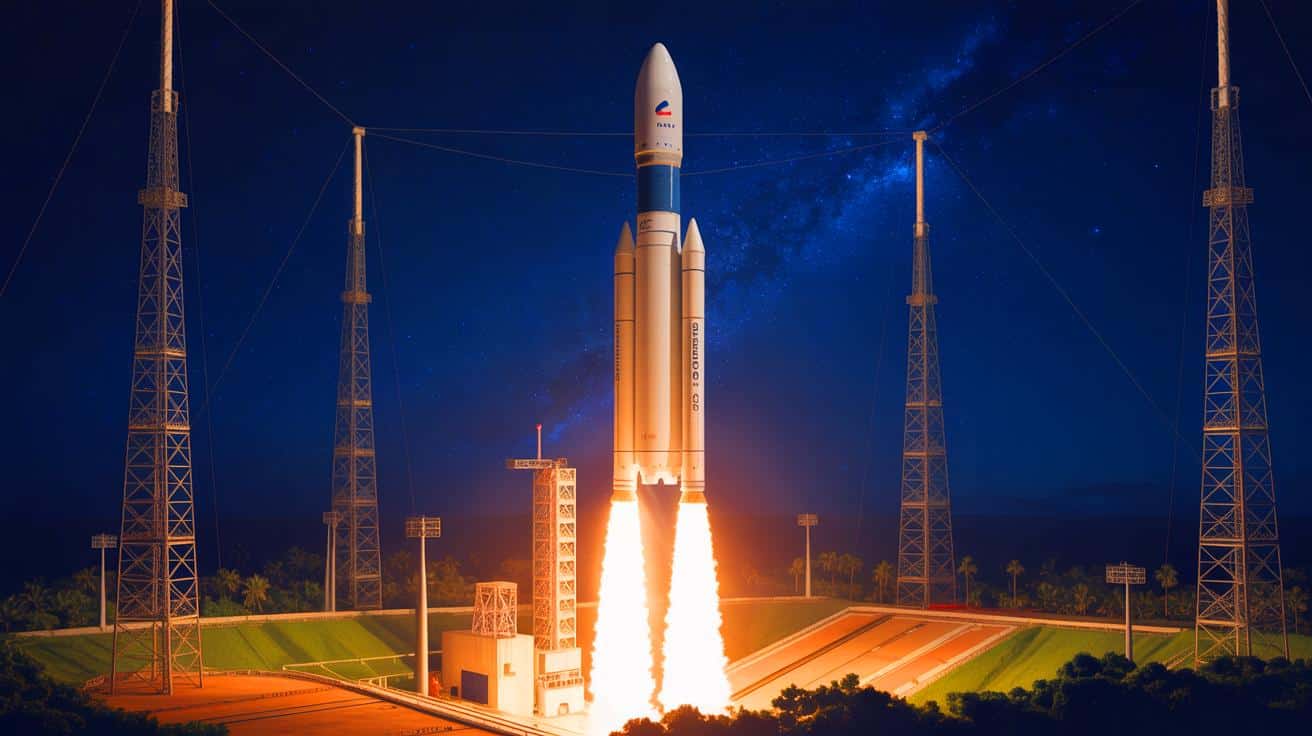
In a significant stride for the European space program, the Ariane 6 rocket is scheduled to launch during the night of December 17, 2025, from the Guiana Space Center. This launch marks the culmination of a year dedicated to the gradual revival of European orbital operations. This final mission of the year sets the stage for a transformative 2026, with the anticipated arrival of a major commercial client: Amazon. As the space industry evolves, the implications of such partnerships are vast, potentially reshaping the future of space exploration and commercial satellite deployment.
December 2025 Launch: A Boost for the European Galileo System
The December 2025 launch of Ariane 6 is poised to strengthen the European Galileo system by placing two new satellites into orbit. This mission will be the last of the year from Kourou, marking the end of a phase characterized by the gradual resumption of European space activities. The original plan included nine missions, but the schedule was adjusted due to technical and logistical adaptations within the program, as well as constraints related to payload availability.
Despite these challenges, the mission underscores the ongoing commitment to enhancing European space capabilities. The launch of the Galileo satellites is critical, as it aims to bolster the system’s coverage and reliability. This effort is part of a broader strategy to ensure Europe has its own satellite-based geolocation service, reducing reliance on external systems and enhancing regional technological independence.
Galileo Satellites: A Step Toward Operational Ramp-Up for Ariane 6
The inclusion of Galileo satellites in the upcoming mission highlights a significant operational ramp-up for Ariane 6. The system allows the European Union to maintain an independent satellite geolocation service, enhancing both coverage and reliability. The addition of these satellites is crucial as it supports the regular exploitation of institutional missions led by European agencies.
ArianeGroup has developed multiple configurations for Ariane 6, including the Ariane 64 version. This version, equipped with four side boosters, is designed to meet the growing demands of commercial markets and is particularly suited for low Earth orbit constellations. This flexibility and capability mark an important milestone in Ariane 6’s development, positioning it as a reliable choice for future satellite deployments.
The Arrival of Ariane 64 and Amazon Leo Constellation
The debut flight of Ariane 64, featuring enhanced propulsion capabilities, is set for early 2026. This mission marks the beginning of using a more powerful version of the rocket, designed to address increasing demand. The first satellites of Amazon’s Leo constellation will be launched during this mission. Amazon’s ambitious program aims to provide global satellite internet service through a progressively deployed low Earth orbit infrastructure.
This project highlights the growing significance of commercial space endeavors. As companies like Amazon venture into satellite internet services, the demand for reliable launch vehicles like Ariane 64 increases. This convergence of commercial and technological interests suggests a dynamic future for space exploration, where private enterprise plays an increasingly pivotal role.
Strategic Opening to the Global Commercial Space Sector
The partnership between Arianespace and Amazon, entailing at least 18 Ariane 6 launches, represents one of the largest private contracts in European space history. This collaboration signals a new phase for the Ariane program, emphasizing a strategic pivot toward the global commercial space sector. The partnership aims to reduce dependency on institutional missions while reinforcing Ariane 6’s presence in the global orbital launch market.
By targeting operators of low Earth orbit constellations, Arianespace seeks to maintain European sovereign space capabilities while diversifying revenue streams. This strategic move is vital for ensuring the sustainability of the Ariane program. As the space industry becomes more commercialized and competitive, such partnerships could shape the landscape of space exploration and satellite deployment for years to come.
As we observe the evolving landscape of space exploration, the collaboration between Arianespace and Amazon highlights the potential for public-private partnerships to drive innovation. With the upcoming launch of Ariane 6 and the subsequent deployment of the Amazon Leo constellation, we are witnessing the dawn of a new era in satellite technology. How will these developments influence the future of global connectivity and the role of European space endeavors in a rapidly changing industry?

Wow, can’t believe Amazon is getting into space launches now! What’s next, moon deliveries? 🚀
Wow, Amazon is really aiming for the stars! 🚀 Can’t wait to see what they’ll do with Ariane 6.
Do you think this partnership will make space launches more affordable in the future?
C’est vraiment une bonne nouvelle pour l’Europe. L’autonomie technologique est cruciale!
Great move by Amazon! But how will it affect smaller players in the space industry?
This seems like a huge step for the European space program. Bravo! 🎉
What happens if the Ariane 6 fails to launch? Does Amazon have a backup plan?
I hope they don’t mix up my Amazon package with a satellite! 😂
I hope they don’t accidentally launch my Amazon packages into orbit. 😂
Who else is excited about the Ariane 64’s capabilities? Can’t wait for 2026!
Isn’t there a risk of space becoming too commercialized with companies like Amazon?
Avec cette collaboration, l’Europe pourrait-elle devenir un leader dans le domaine spatial?
Am I the only one worried about space debris with all these new launches?
Is there enough room in space for all these new satellites? Seems like it’s getting crowded up there!
It’s about time Europe stepped up its space game. Well done! 👏
Can’t wait to see if this actually transforms the space industry as promised.
Merci pour cet article! Très excitant de voir l’innovation technologique en Europe.
How will this impact existing internet service providers when Amazon’s Leo constellation is operational?