



| IN A NUTSHELL |
|
In an era where technological innovation is reshaping industries, Domino’s Pizza is making headlines with its unconventional delivery methods. Recently, the company introduced a series of unique delivery trials in the UK, ranging from submarines to robot dogs. These initiatives are part of Domino’s strategy to enhance delivery experiences while capturing public attention. As a global leader in the food industry, Domino’s continues to push the boundaries of traditional service models, offering a glimpse into a future where creativity and convenience are seamlessly blended.
Submarine Deliveries at Loch Ness
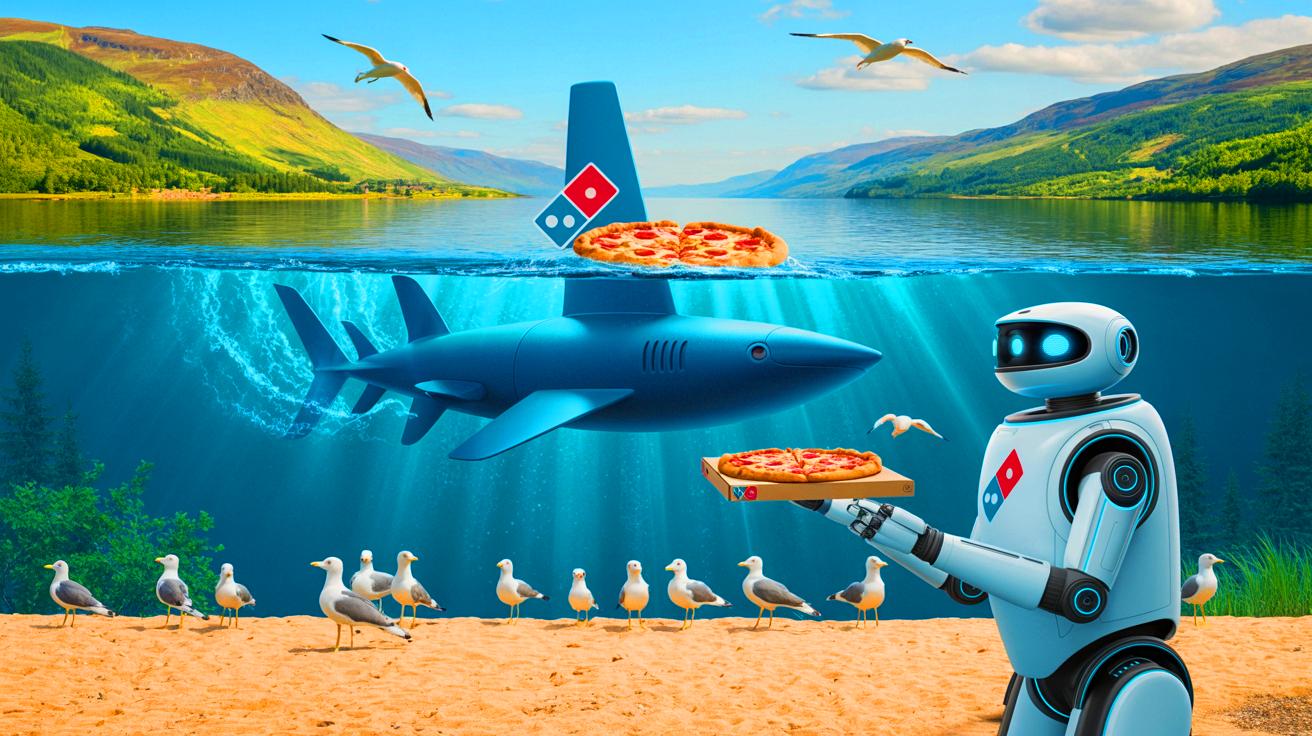
Domino’s UK recently captured the imagination of locals and tourists at Loch Ness with an unusual sighting. Visitors mistook a shark-like submarine for the legendary Loch Ness Monster, only to discover it was part of Domino’s latest delivery experiment. The company used a Seabreacher X submarine, a high-performance submersible with a 325 HP engine, capable of speeds up to 45 mph, to deliver pizzas. This bold move was part of a summer initiative to offer a fun and innovative delivery experience.
Izzy Gardener, from Domino’s Pizza Delivery Innovation team, stated, “Loch Ness is known for its legends, so it felt like the perfect place to test the waters of a world-first submarine delivery.” The initiative is not just a marketing gimmick; it underscores Domino’s commitment to exploring unique delivery methods. While the submarine delivery may seem extravagant, it highlights the brand’s willingness to experiment with unconventional ideas to engage with customers in memorable ways.
Robot Dogs on the Beach
In another innovative trial, Domino’s UK introduced ‘Domidog,’ a robot developed in collaboration with Boston Dynamics. The robot dog was deployed to deliver pizzas on beaches, addressing a common nuisance: seagulls. These birds are notorious for snatching food from tourists, and Domino’s saw an opportunity to tackle the issue with technology.
Domidog is equipped with advanced stereo cameras for 360-degree perception, allowing it to navigate obstacles and deter gulls effectively. As Izzy Gardener explained, “We’re always exploring new and innovative ways to keep your pizza as hot and fresh as possible.” This trial not only showcases Domino’s inventive spirit but also demonstrates how robotics can solve real-world challenges. By leveraging military-grade technology, Domino’s aims to improve delivery efficiency and customer satisfaction.
Pothole-Proof Bikes
Earlier this year, Domino’s UK introduced the Pothole Pro Max, a bike designed to tackle the UK’s persistent pothole problem. Equipped with advanced suspension and shock absorption systems, the bike ensures safe and timely delivery of pizzas, even on bumpy roads. This development coincided with reports highlighting the significant financial burden potholes have on UK motorists, with £579 million spent on car repairs in 2024 alone.
The Pothole Pro Max bike also features a built-in oven, guaranteeing that pizzas arrive hot and fresh. By addressing infrastructure challenges with innovative solutions, Domino’s is not only enhancing its delivery services but also contributing to broader discussions on urban mobility and road safety. This initiative reflects the company’s proactive approach to overcoming logistical hurdles in the food delivery industry.
The Future of Delivery Innovation
Domino’s continues to lead the way in delivery innovation, setting a precedent for other companies in the food industry. By embracing cutting-edge technology and creative solutions, Domino’s is redefining the customer experience. These trials not only capture public attention but also encourage other businesses to rethink traditional service models.
As delivery technology evolves, Domino’s experiments offer a glimpse into a future where convenience meets creativity. The company’s willingness to test new ideas, from submarines to robot dogs, highlights its commitment to innovation. While these initiatives may seem whimsical, they underscore a strategic vision for the future of food delivery. What other unconventional methods might we see next, and how will they shape our expectations for service and convenience?