




| IN A NUTSHELL |
|
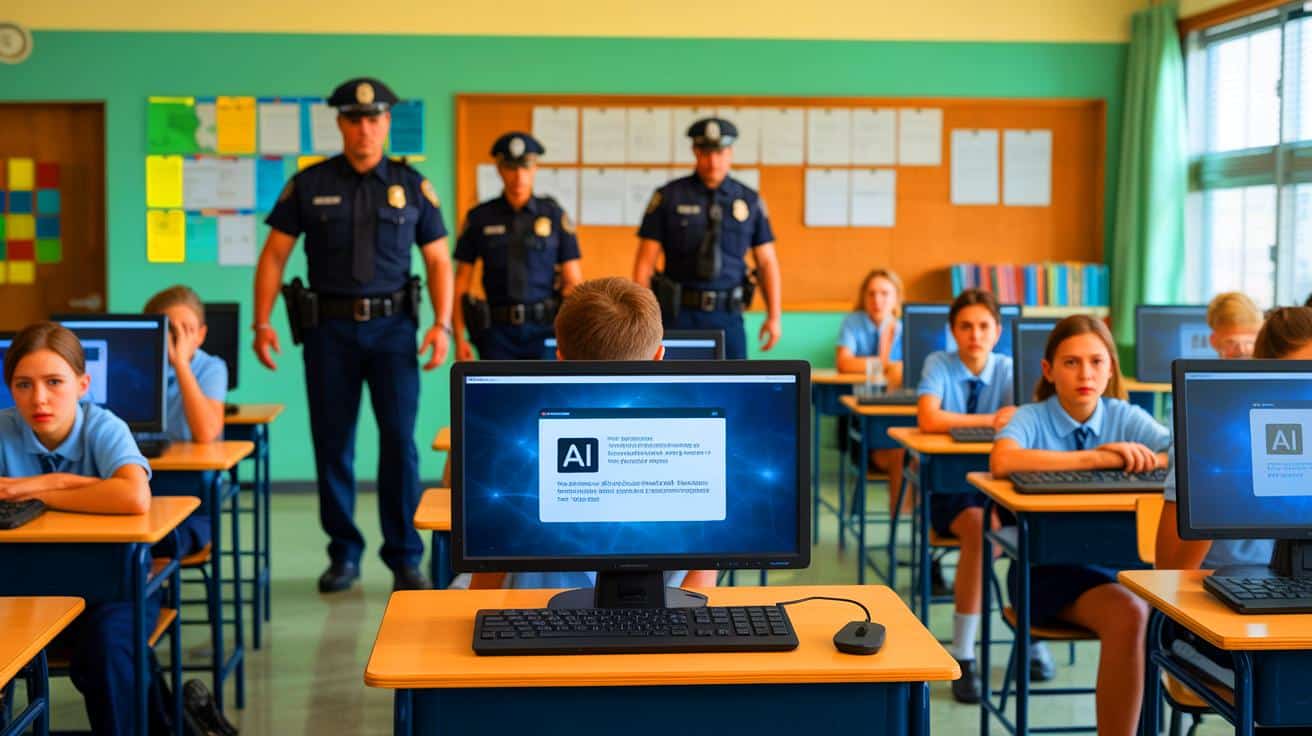
When a 13-year-old student in Florida typed “How to kill my friend during class?” into a school computer, it triggered an automated alert by Gaggle, an AI surveillance system. The student claimed it was a joke, yet the police arrived within minutes, handcuffing him and taking him to a juvenile detention center. This incident has sparked a debate over the balance between safety and privacy in American schools. With the rise of school shootings, any suspicious phrase can be perceived as a potential threat. The story raises important questions about the role of AI in monitoring students and the potential consequences of false positives.
The Role of Gaggle in Monitoring Student Activity
Gaggle, an AI surveillance tool, is integrated into the digital infrastructure of many U.S. schools, continuously analyzing students’ messages, documents, and search queries. The primary aim is to identify and prevent risks related to violence, bullying, and psychological distress. Once an alarming content is detected, the system alerts a designated adult or directly informs law enforcement authorities. At first glance, this proactive approach seems logical. Preventing harm before it occurs is a principle widely supported. However, the reality is more complex. The proliferation of false positives and unwarranted alerts has created a climate of tension and mistrust among teachers, students, and families.
For example, several parents have reported that their children were called in for questioning simply because they used words like “suicide” in a class presentation or “weapon” in a historical essay. In a digital environment where even the most innocent terms can trigger alarms, every word becomes suspicious. This raises significant concerns about privacy and the psychological impact on students who feel they are constantly being watched.
Surveillance Versus Safety: The Impact on School Environments
The Florida student’s case highlights a critical dilemma: how far should schools go to protect young people? Proponents of surveillance tools argue that they have prevented potential tragedies, but critics warn against the dangers of perpetual monitoring, where each digital action can be scrutinized. In the U.S., more school districts face lawsuits over privacy violations. Many students live in constant fear of being observed, leading to self-censorship to avoid attracting the system’s attention.
Despite these measures, no independent study has conclusively shown that such surveillance reduces instances of suicide or school violence. This suggests that fear does not necessarily lead to greater safety. The challenge lies in finding a balance between ensuring security and respecting individual freedoms. How can schools create safe environments without infringing on students’ rights to privacy and free expression?
The Need for Human Interaction in Education
This incident serves as a societal wake-up call. We ask machines to perform tasks that require human touch: listening, understanding, and providing support. Instead of constant monitoring, teaching students to express emotions, use AI responsibly, and communicate effectively might offer better protection. Technology should remain a tool for assistance, not a judge. Schools that focus on digital literacy and emotional education often achieve better outcomes than those relying solely on surveillance.
Gaggle, GoGuardian, or Bark cannot replace a caring adult’s attentive ear. Building trust and fostering open communication between students and educators can create a supportive learning environment. Cultivating these human connections is essential in addressing the root causes of distress and promoting a healthy school culture.
Balancing Safety and Freedom in the Age of AI
This case reflects the contradictions of our time. We seek safety at any cost, captivated by technology, yet we often overlook what is truly essential: the human element. While AI can help identify subtle warning signs, it can never replace the trust, conversation, and empathy essential to education. The student’s inappropriate joke was indeed misplaced, but the most intelligent response is not handcuffing him. Explaining why his words were alarming and teaching him that humor, like AI, requires learning is more productive. Ultimately, the question remains: how can schools balance the benefits of technology with the fundamental need for human interaction and understanding?



Je comprends l’idée de sécurité, mais ne sommes-nous pas en train de sacrifier trop de notre liberté ? 🤔
Ce genre d’incidents ne montre-t-il pas que nous avons trop confié de pouvoir à l’IA dans nos écoles ? 🤔
Alors, un enfant de 13 ans ne peut même plus faire de blagues sans risquer la prison ? C’est triste.
Merci pour cet article éclairant. La balance entre sécurité et liberté est vraiment un sujet complexe.
Si l’IA se trompe, qui est responsable des conséquences ?
Merci pour cet article qui nous pousse à réfléchir sur la surveillance dans les écoles.
J’ai l’impression qu’on oublie parfois que les enfants font des blagues. Est-ce qu’on devrait pas être plus tolérants ?
Et si on remplaçait les algorithmes par un peu plus de dialogue humain ?
Et si le système avait mal interprété une blague innocente, qui est responsable ? L’école ou l’IA ?
Je trouve ça inquiétant que nous en soyons arrivés là. 😟
Est-ce que quelqu’un sait combien de faux positifs Gaggle génère en moyenne ?
Bravo pour avoir mis en lumière ce problème. L’éthique de la surveillance mérite un vrai débat.
On parle de sécurité, mais quid de la santé mentale des enfants qui se sentent constamment surveillés ?
N’est-ce pas ironique que l’outil censé protéger les élèves les mette en danger d’une autre manière ? 😅
Un grand merci pour cet article éclairant. C’est un sujet crucial de notre époque.
Pourquoi ne pas investir dans plus de conseillers scolaires au lieu de technologies de surveillance ?
Je pense que la technologie peut être utile, mais pas sans un certain contrôle humain.
Les écoles doivent-elles vraiment jouer le rôle de Big Brother ?