




| IN A NUTSHELL |
|
In a groundbreaking development, a novel French underwater glider is poised to plunge into the deepest reaches of the ocean, aiming to gather unprecedented data on the ocean’s role in climate regulation. Designed by Alseamar in collaboration with Ifremer and CNRS, this unmanned submersible will dive to depths of 11,500 feet. Its mission is to unravel the mysteries of the oceanic abyss and improve our understanding of these critical ecosystems. The project’s importance is amplified by its potential to transform scientific knowledge and enhance technological capabilities, marking a significant stride in the exploration of Earth’s final frontier.
The Engineering Marvel Behind the Autonomous Underwater Glider
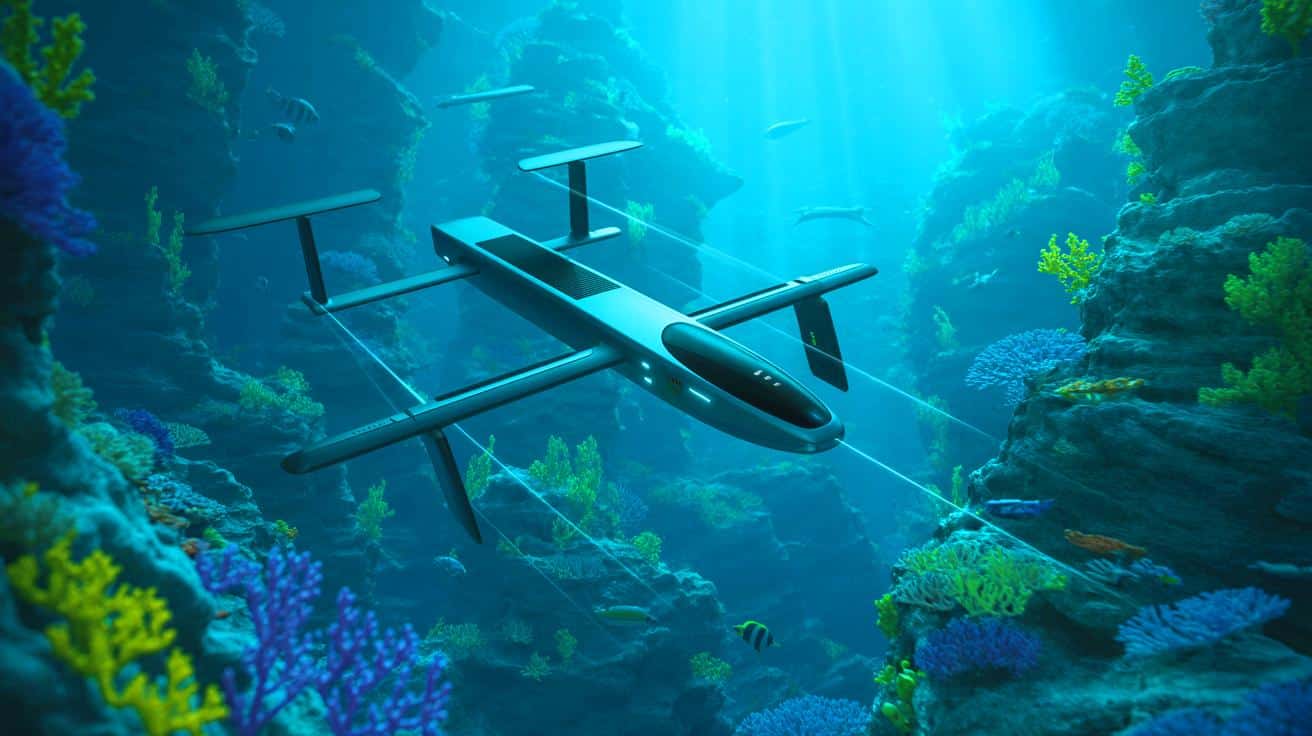
When envisioning underwater exploration, images of massive robots or manned submersibles often come to mind. However, this operation features a new breed of autonomous glider, devoid of propellers or engines, capable of reaching unprecedented depths for its class: up to 11,500 feet, where pressure exceeds 5,000 psi. Sponsored by France 2030, Ifremer, CNRS, and Alseamar—experts in underwater systems—this project stands as a testament to cutting-edge innovation.
The challenge lies in achieving a balance of lightweight design, robust construction, and energy autonomy. The glider’s hull, likely crafted from carbon fiber, must withstand immense pressure while remaining lightweight. An ingenious oil ballast system enables it to adjust buoyancy and glide through water layers efficiently. This energy-saving method allows the glider to operate continuously for a month without interruption, showcasing remarkable engineering prowess.
Gathering Critical Data to Understand Oceanic Climate Impact
Oceans play a pivotal role in climate regulation, largely due to processes occurring far beneath the surface. The glider will descend into the bathypelagic zone, beyond 3,280 feet, an area scarcely accessible to standard sensors yet rich in vital information. The data collected will include temperature, salinity, dissolved oxygen, as well as pH levels, methane, inorganic carbon dioxide, and turbidity. Biodiversity indicators such as fluorescence and zooplankton presence will also be measured.
Moreover, the research aims to decipher the dynamics of water masses, the movement of organic particles, and the growth of low-oxygen regions. These depths harbor complex processes, and a largely unexplored biodiversity may hold unprecedented insights. Such information is crucial for tracking the impact of climate change on marine balance and enhancing our understanding of the ocean’s hidden roles.
Testing Grounds: From the Mediterranean to Mayotte’s Submarine Volcano
The Mediterranean’s northwestern basin, part of the national MOOSE program, is the glider’s initial testing site. This region is monitored by profiling floats, biological nets, and fixed moorings. The goal is to integrate glider data with existing systems to validate its accuracy and reliability.
Subsequently, the glider will head to Mayotte. With the discovery of the Fani Maoré underwater volcano, this area is under close watch. The mission: test the glider at its maximum depth while observing fluid emissions and volcanic activity. This location is ideal for detecting methane or geologically sourced CO₂. Enhanced and extensive observations aim to enrich existing data, providing a more comprehensive understanding of this dynamic environment.
A Strategic Lever to Boost France’s Scientific Autonomy and Industry
This initiative extends beyond scientific inquiry. It aligns with a broader vision to strengthen France’s marine technology industry. The deep-sea glider will employ locally produced sensors, batteries, materials, and software. The aim is to develop lightweight, autonomous, and low-carbon surveillance solutions. Additionally, these tools can operate in networks with other vehicles, ships, and satellites.
Exploring the ocean depths aids in better maritime resource management, anticipating geological risks, and understanding the deep impacts of climate change. While this glider will not supplant oceanographic vessels, it will enable access to previously unreachable areas in a more flexible, sustainable, and consistent manner.
This project represents a significant leap forward in ocean exploration and climate science. As the glider embarks on its journey, it raises a compelling question: How will the data it gathers reshape our understanding of the ocean’s role in climate regulation and influence future technological advancements?


This is such a cool project! Can’t wait to see what they discover. 🌊
Wow, 11,500 feet is deep! 🐠 Can’t even imagine the pressure down there.
How long will it take for the glider to collect all the necessary data?
This is great! But how does it avoid damaging marine life while operating?
The technology behind this is fascinating. Are there any videos of the glider in action? 📹
Awesome work by the French team! Thank you for pushing the boundaries of science.
I wonder if this will help us predict future climate changes more accurately. 🤔
Are they planning to share the data with international climate bodies?
Great article, very informative. Thanks for sharing!
The engineering behind this glider sounds like something out of a sci-fi movie! 🚀
Isn’t 11,500 feet a bit too deep? What if it gets stuck down there?
Carbon fiber hull sounds impressive, but how does it handle potential collisions?
How does the oil ballast system work? Sounds like sci-fi stuff to me!
Great article, but it could use more details on the testing procedures.
This glider could really change our understanding of the ocean. Amazing work!