



Far more than a simple way of getting from one place to another, transportation plays a fundamental role in economic development, social connections and the organization of territories.
Connecting People and Places
One of the primary functions of transportation is to connect people. Reliable transport networks make it easier to reach workplaces, schools, hospitals, shops and public services.
This accessibility has a direct influence on quality of life. In urban areas, efficient public transportation can give residents access to a wider range of employment and educational opportunities. In rural or isolated regions, roads and rail connections can reduce geographical isolation and improve access to essential services.
Transportation also strengthens connections between communities. Visiting relatives, attending cultural events or discovering new regions all depend, to varying degrees, on the ability to travel easily.
A Key Driver of Economic Activity
Modern economies could not function without transportation. Companies need efficient logistics networks to receive materials, supply factories, deliver products and serve their customers.
From a local retailer receiving daily deliveries to an international manufacturer operating a global supply chain, transportation influences costs, delivery times and competitiveness. Ports, airports, rail freight terminals and major roads have therefore become strategic infrastructure for economic development.
Efficient transportation can also make a region more attractive to businesses. Good connections provide companies with easier access to customers, suppliers and workers, encouraging investment and employment.
Supporting International Trade
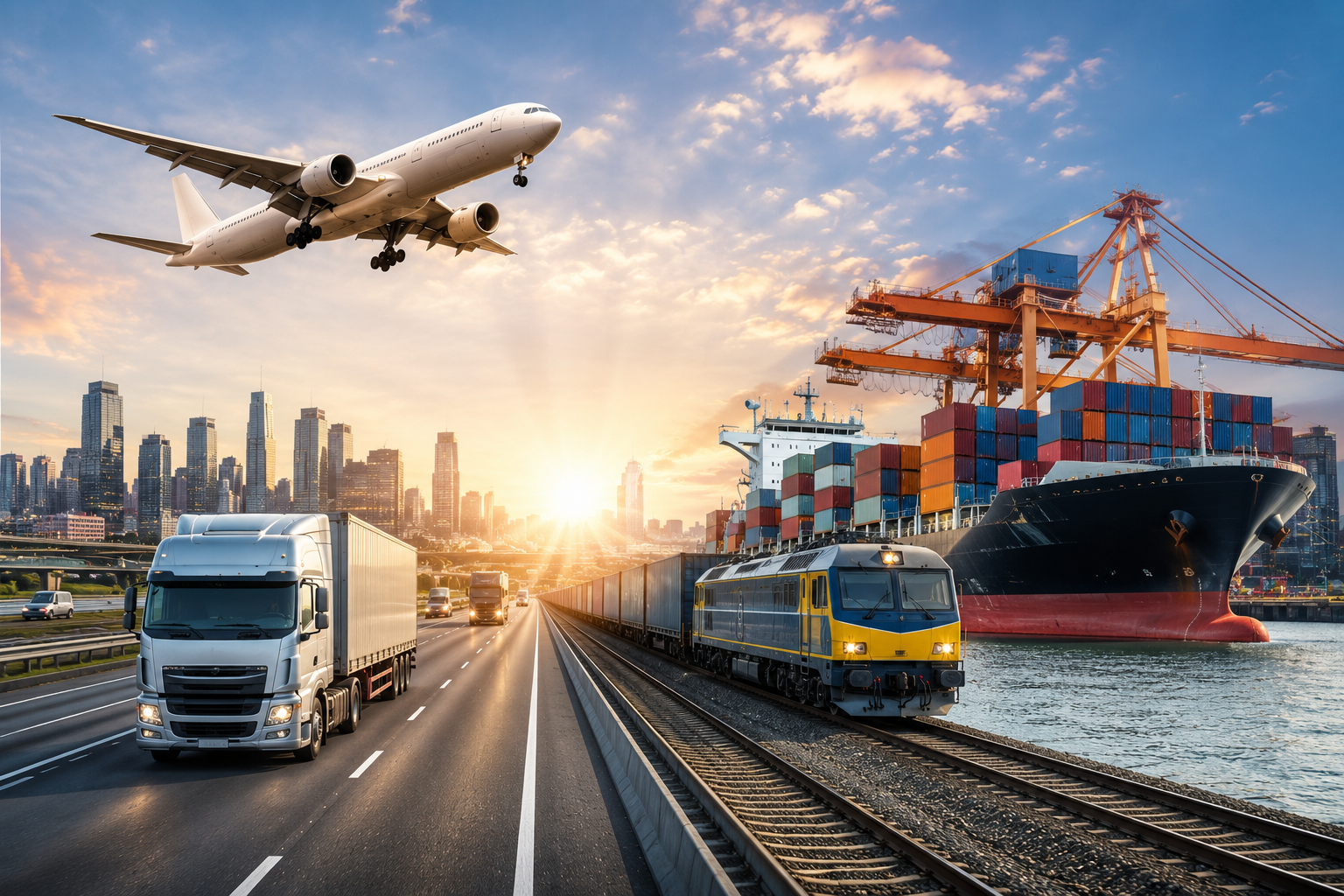
Transportation has played a central role in the development of international trade. Maritime shipping allows enormous quantities of goods to travel between continents, while air freight provides faster solutions for products requiring short delivery times. Railways and trucks complete these networks by transporting goods to and from ports, airports and logistics hubs.
The globalization of production has made these connections particularly important. A single product may contain components manufactured in several countries before being assembled elsewhere and eventually sold on another market.
Disruptions to major transport routes can consequently have effects far beyond the region in which they occur. Congestion, extreme weather or infrastructure failures may delay deliveries and affect entire supply chains.
Shaping Cities and Territories
Transportation networks have a significant influence on how cities and regions develop. Roads, railway stations and public transit lines can determine where people choose to live and where companies establish offices, factories or shops.
Urban planning and mobility are therefore closely connected. A city designed primarily around cars develops differently from one built around walking, cycling and public transportation.
Well-designed transport systems can help reduce travel times and improve access to different neighborhoods. Conversely, inadequate infrastructure can contribute to congestion, isolation and inequalities between areas.
Facing the Environmental Challenge
Transportation also represents one of the major challenges of the transition toward a lower-carbon economy. Many forms of mobility still rely heavily on fossil fuels, particularly road transport, aviation and shipping.
Reducing their environmental impact requires several complementary approaches. Electric vehicles, cleaner fuels, more efficient logistics and technological innovation can contribute to lowering emissions. Developing rail transport, public transit, cycling and walking can also reduce dependence on individual cars where suitable alternatives exist.
The objective is not simply to reduce transportation, but to rethink how people and goods move while maintaining accessibility and economic activity.
Technology Is Transforming Mobility
Digital technologies are also changing the transportation sector. Real-time traffic information, navigation applications, connected vehicles and intelligent logistics systems make it possible to optimize journeys and improve the use of existing infrastructure.
Automation and artificial intelligence could accelerate this transformation. They are already being used to optimize delivery routes, anticipate maintenance needs and analyze traffic flows.
At the same time, new mobility services are changing individual habits. Car-sharing, bike-sharing and integrated transport applications provide additional alternatives to traditional modes of travel.
An Essential Infrastructure for the Future
Transportation affects almost every aspect of society. It connects people, supports businesses, enables international trade and influences the development of cities and regions. Its importance is therefore both economic and social.
The challenge for the coming decades will be to preserve these benefits while building transportation systems that are more efficient, accessible, resilient and environmentally sustainable. As populations, technologies and economic models evolve, the ability to move people and goods effectively will remain one of the foundations of modern society.