





| IN A NUTSHELL |
|
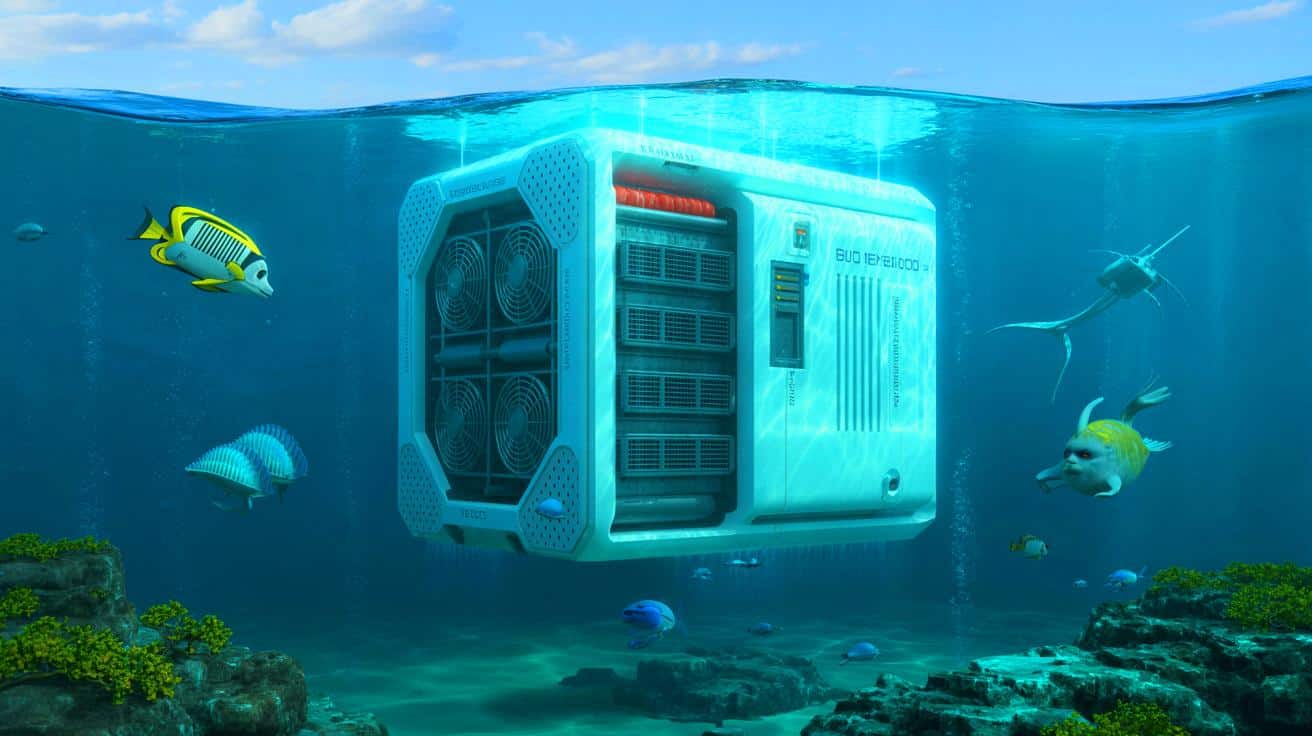
As the demand for data storage and processing continues to climb, driven largely by the burgeoning field of artificial intelligence, innovative solutions are being sought to manage the energy demands of these vital infrastructures. One such solution is being explored in China, where a company is set to submerge data servers off the coast of Shanghai. This underwater data center aims to significantly reduce energy consumption by utilizing the natural cooling properties of ocean currents. While this approach shows promise, it also raises several technical, ecological, and economic questions that need to be addressed before it can be widely adopted.
The Promise of Underwater Data Centers
Underwater data centers are seen as a cutting-edge solution to the growing energy demands of traditional data storage facilities. Yang Ye, a representative from the maritime equipment firm Highlander, points out that undersea operations take advantage of natural ocean currents to keep servers cool. This method can potentially save up to 90% of the energy typically required for cooling land-based data centers.
The concept is not entirely new. Microsoft trialed a similar initiative off the coast of Scotland in 2018, and while they deemed the project a success, it did not move on to commercial implementation. The Chinese project, however, is set to become one of the world’s first commercial underwater data centers, serving major clients like China Telecom. This aligns with broader governmental efforts in China to reduce the carbon footprint of data centers.
Technical Challenges in Implementation
Building and maintaining underwater data centers come with significant technical hurdles. Zhou Jun, an engineer with Highlander, highlighted the unexpected challenges faced during the construction of the Shanghai project. The servers are housed in a steel capsule coated with glass flakes to protect against saltwater corrosion. Ensuring the integrity of this structure and maintaining a dry environment for the servers is crucial.
Additionally, powering these underwater facilities presents its own set of challenges. The Shanghai data center is designed to draw nearly all its energy from nearby offshore wind farms, with over 95% of its power coming from renewable sources. However, connecting the internet to these offshore facilities involves a complex process of laying cables underwater, which is more intricate than for traditional land-based centers.
Ecological Considerations and Concerns
Beyond technical challenges, the ecological impact of underwater data centers is an area of concern. Marine ecologist Andrew Want from the University of Hull notes that the heat emitted by these facilities could alter marine ecosystems. Some species might be attracted to the warmth, while others could be driven away, potentially disrupting local biodiversity.
In a 2020 assessment of Highlander’s test project in Zhuhai, it was found that the temperature of the surrounding water remained within acceptable thresholds. However, expert Shaolei Ren warns that as these centers scale up, so too will their thermal output, necessitating further study on potential thermal pollution.
Economic Viability and Future Prospects
While the technological and ecological feasibility of underwater data centers is being explored, their commercial viability remains uncertain. The Chinese government has supported these initiatives through subsidies, such as a $5.62 million grant for Highlander’s earlier project in Hainan province. However, scaling these projects to a level where they can compete with traditional data centers poses significant challenges.
Experts like Ren suggest that while underwater facilities may not replace traditional data centers, they could complement them by serving niche market segments. The future of these innovative structures will likely depend on continued research and development, as well as careful consideration of their economic and environmental impacts.
The concept of underwater data centers presents a fascinating intersection of technology, ecology, and economy. As the world grapples with increasing data demands and environmental concerns, such innovative solutions offer a glimpse into the future of sustainable technology. However, many questions remain about the long-term viability and impact of these facilities. How will ongoing research and development shape the future of data storage, and can these underwater centers become a mainstay in the global data infrastructure?


Est-ce que ces centres de données sous-marins sont vraiment l’avenir ou juste une mode passagère ? 🤔
Wow, des data centers sous l’eau ?! Ça semble futuriste ! 🏊♂️
Est-ce que l’énergie des fermes éoliennes est suffisante pour alimenter ces installations ?
J’apprécie l’innovation, mais les risques pour l’environnement marin me préoccupent vraiment.
J’espère qu’ils ont bien réfléchi à l’impact environnemental avant de se lancer là-dedans !
Merci pour cet article fascinant ! Je ne savais pas que la Chine avait un tel projet en cours.
Merci pour cet article fascinant ! Ça donne matière à réflexion. 😊
Les centres de données sous-marins sont-ils plus sûrs contre les cyberattaques ?
Les poissons vont-ils finir par devenir des experts en informatique ? 😂
Une idée géniale pour économiser de l’énergie, mais qu’en est-il du coût de maintenance ?
Je suis sceptique. Les défis techniques semblent énormes pour que cela fonctionne vraiment.