


| IN A NUTSHELL |
|
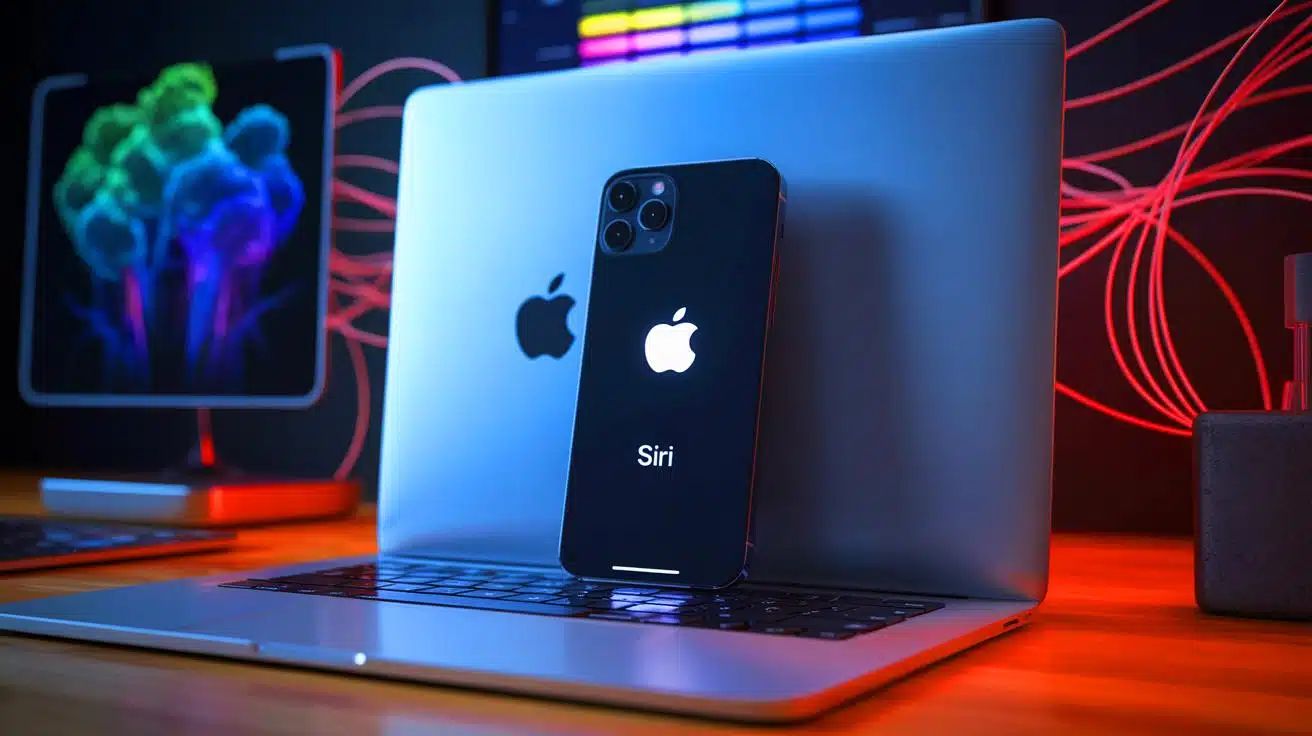
In a surprising turn of events, Apple is reportedly in talks with Google to utilize its Gemini artificial intelligence to revamp Siri, marking a potential shift in Apple’s AI strategy. This move comes after multiple engineering setbacks and delays in updating Siri, which have left Apple lagging behind its competitors in the AI arena. The potential collaboration highlights a rare instance of cooperation between two tech giants often seen as rivals. Although the discussions are still in the early stages, this development could signify a broader push by Apple into the realm of generative AI, with a goal of shipping the updated Siri next year.
Apple’s Strategic AI Partnership
The news of Apple’s discussions with Google has sent ripples through the financial markets, with Alphabet’s stocks climbing by 2.9% to $205.46 and Apple’s shares increasing by 1.4% to $227.95. This potential partnership is significant as it underscores Apple’s ongoing struggle to bridge its AI gap. Previously, Siri’s updates faced significant delays, including a crucial overhaul postponed by a year due to engineering challenges.
The responsibility for Siri’s future has shifted from John Giannandrea, Apple’s former AI chief, to Craig Federighi and Mike Rockwell. They are now exploring whether integrating external technology could expedite the development process. Apple is currently testing two different versions of Siri: one developed internally, called Linwood, and another, Glenwood, that leverages external AI systems. The company plans to evaluate both approaches to determine the most viable long-term strategy.
Turmoil and Leadership Changes
Apple’s AI division has been experiencing significant upheaval, with several key figures exiting the company. Ruoming Pang, the former chief architect of Apple’s Foundation Models team, departed for Meta in July, reportedly with a $200 million compensation package. His departure was followed by several other colleagues, raising concerns about Apple’s ability to maintain its competitive edge in AI.
Amid these challenges, some Apple executives have proposed replacing the models underpinning other Apple Intelligence features, potentially deviating from the company’s tradition of running AI on devices to ensure user privacy. Currently, Apple’s collaboration with external partners is limited to cloud-based processing through its Private Cloud Compute system. However, the company has already outsourced specific tasks, such as incorporating ChatGPT tools in iOS 26 for image generation, and shelving an internal AI coding project in favor of systems developed by OpenAI and Anthropic.
Apple’s AI Ambitions
Despite the setbacks, Apple remains committed to advancing its in-house AI capabilities. The company is currently testing its first trillion-parameter model, a significant leap from its existing 150 billion-parameter systems. This development marks Apple’s most visible effort to address its AI deficiencies. CEO Tim Cook has emphasized the importance of succeeding in AI to employees, asserting that Apple often enters markets later but eventually dominates them with superior products.
Whether Apple’s Siri will be powered by Gemini, Claude, ChatGPT, or its proprietary models remains uncertain. However, the urgency of this shift is evident. Apple cannot afford further delays as its competitors continue to advance rapidly in the AI domain.
Future Implications and Market Impact
The potential collaboration between Apple and Google could have far-reaching implications for the tech industry. It represents a departure from Apple’s long-standing tradition of developing proprietary technology and marks a pragmatic approach to overcoming its AI challenges. By leveraging external expertise, Apple aims to accelerate its AI advancements and catch up with its rivals.
This development also highlights the evolving nature of competition and collaboration within Silicon Valley. While Apple and Google have historically been seen as competitors, this collaboration underscores the potential benefits of strategic partnerships in advancing technological innovation. As the tech industry continues to evolve, the lines between competition and collaboration may become increasingly blurred.
As Apple navigates this pivotal moment in its AI journey, the question remains: Can the company successfully integrate external technology to enhance Siri, or will it ultimately rely on its in-house advancements to regain its competitive edge in the AI landscape?