





| IN A NUTSHELL |
|
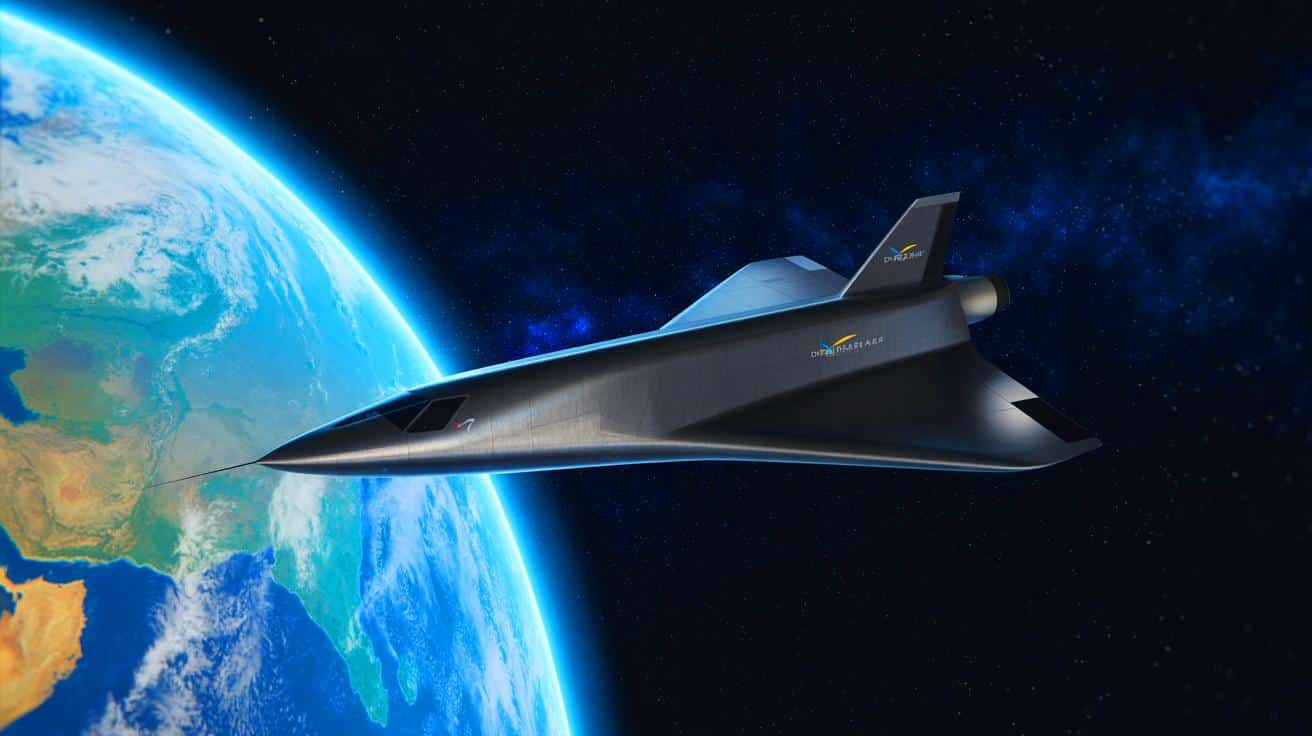
In a significant development for the aerospace industry, Sierra Space and NASA have revisited their contract terms concerning the Dream Chaser spaceplane. This renegotiation shifts the Dream Chaser from its initial role of supplying the International Space Station (ISS) to becoming a free-flying spacecraft. This strategic pivot is not just about adapting to delays and programmatic changes but also about positioning the Dream Chaser for a broader future in space transportation. With the ISS scheduled for decommissioning by 2030, Sierra Space is exploring new avenues for the spaceplane, including potential roles in national defense and supporting private space station ventures.
The Initial Vision for Dream Chaser
The Dream Chaser was conceived as part of NASA’s Commercial Resupply Services (CRS-2) initiative. This program aimed to expand the fleet of spacecraft capable of resupplying the ISS. Sierra Space was one of the companies awarded a contract under this program, with the expectation of executing at least seven supply missions. The Dream Chaser, with its innovative Shooting Star cargo module, was intended to not only deliver supplies but also handle waste disposal by burning up disposable modules in the Earth’s atmosphere.
However, the program faced numerous obstacles. Technical challenges and design changes in the Dream Chaser’s propulsion system led to significant delays. This three-mode propulsion system, capable of switching thrust levels by alternating between hydrogen peroxide and a mix of peroxide and RP-1 fuel, proved complex to certify for ISS missions. These hurdles, coupled with the impending decommissioning of the ISS, prompted a reevaluation of the spacecraft’s mission and contractual obligations.
A Shift in Strategy
NASA and Sierra Space’s revised agreement reflects a pragmatic shift in strategy. With the ISS’s operational timeline ending in 2030, the original plan for seven Dream Chaser missions became increasingly unlikely. Moreover, Sierra Space’s ambitions for the spaceplane extend beyond resupply missions. The company envisions the Dream Chaser as a versatile asset capable of supporting national defense and security operations.
Under the new terms, the Dream Chaser’s first orbital flight will occur in 2026 as a free flier, independent of the ISS. This flexibility allows Sierra Space to explore diverse mission profiles without being tethered to the ISS’s schedule. While NASA may still purchase cargo missions if time permits, the spaceplane’s future now hinges on its adaptability to emerging needs in space transportation and defense.
Preparing for a Post-ISS Future
As the era of the ISS draws to a close, the focus is shifting towards the development of private space stations and other low-Earth orbit ventures. Sierra Space is positioning the Dream Chaser to play a critical role in this new landscape. The spacecraft’s ability to launch vertically on a rocket and land horizontally like an airplane offers unique advantages in terms of reusability and rapid turnaround.
These features make the Dream Chaser an attractive option for servicing future private space stations. Its versatility also extends to defense and intelligence missions, where quick deployment and mission flexibility are paramount. As such, the Dream Chaser is poised to become a key player in the next phase of human spaceflight, aligning with broader national security priorities.
Sierra Space’s Vision for the Future
Fatih Ozmen, Executive Chair at Sierra Space, articulates a bold vision for the Dream Chaser. He describes the spaceplane as embodying the future of versatile space transportation, with capabilities tailored to meet a wide range of mission requirements. This includes addressing both emerging threats and longstanding national security concerns.
By decoupling the Dream Chaser from exclusive reliance on NASA, Sierra Space aims to preserve its potential as a national asset. The company’s strategic pivot underscores a commitment to ensuring the spacecraft’s readiness for new challenges and opportunities in space exploration. This approach reflects a broader trend in the aerospace industry towards leveraging commercial innovation to enhance national capabilities.
As Sierra Space and NASA chart a new course for the Dream Chaser, the broader implications for space exploration and defense are significant. Will this shift in strategy enable the Dream Chaser to fulfill its potential as a versatile asset in the evolving landscape of space missions? The coming years will reveal how this innovative spaceplane adapts to the demands of a dynamic and rapidly changing industry.

Wow, Dream Chaser as a free flier! Does this mean it’ll have more flexibility in its missions? 🤔
Wow, shifting from ISS support to defense missions? That’s a major pivot! 🚀
Does the Dream Chaser have any unique features compared to other spacecraft? 🤔
I’m excited to see how Dream Chaser will support defense missions. Such a cool pivot! 🚀
Pourquoi changer de mission au milieu du chemin? Ça semble un peu risqué! 😅
Un espaceplane qui peut atterrir comme un avion? Ça me rappelle une navette spatiale! 😄
La flexibilité du Dream Chaser pourrait-elle inspirer d’autres projets spatiaux à l’avenir?
Pourquoi NASA a changé de plan en milieu de route? Ça semble un peu risqué, non?
Merci pour cet article détaillé! C’est passionnant de voir comment l’industrie spatiale évolue.
Est-ce que d’autres entreprises spatiales vont suivre l’exemple de Sierra Space?
Je me demande si ce changement de mission va retarder le lancement prévu en 2026? 🤨
How will the Dream Chaser be used in national defense? Seems like a big leap from ISS missions.
Une mission libre et non liée à l’ISS semble être une bonne idée pour l’avenir du Dream Chaser.
Bonne chance à Sierra Space! J’espère que tout se passera comme prévu!
Les défis techniques rencontrés semblent complexes. Est-ce que ça ne va pas affecter la fiabilité?
Le Dream Chaser pourrait-il devenir un atout essentiel pour la défense nationale? 🛡️✨
J’adore l’idée de l’intégrer dans des missions privées. La concurrence est toujours bénéfique!
Est-ce que le Dream Chaser va travailler avec d’autres pays ou seulement pour les États-Unis?
Le fait qu’il puisse servir à la fois pour la défense et les missions privées est vraiment innovant.
J’espère que le Dream Chaser ne rencontrera pas les mêmes problèmes que la navette spatiale.
Pourquoi ne pas avoir prévu ce changement plus tôt? Ça aurait pu éviter des retards.
La capacité de lancer verticalement et d’atterrir horizontalement est tout simplement géniale! 😊
Je suis curieux de voir si ce changement de mission sera un succès à long terme. 🤔
Les plans de Sierra Space sont audacieux. Espérons qu’ils auront les ressources nécessaires.
Est-ce que ce changement de mission a impacté le financement de Sierra Space?
La fin de l’ISS semble proche. Le Dream Chaser se prépare-t-il pour prendre le relais?
Ce serait incroyable si le Dream Chaser devenait un acteur clé des futures missions spatiales. 🌌
Je suis sceptique quant à ce changement de direction. Espérons que ce sera pour le mieux!
I’m excited to see what the Dream Chaser can accomplish with its new mission focus. 🚀
Avec l’ISS qui disparaît, c’est logique de chercher d’autres opportunités. Bien joué, Sierra Space!
Avec la décommission de l’ISS, c’est logique de chercher des nouvelles avenues pour le Dream Chaser! 👍
J’espère qu’ils ont pensé à la sécurité avec tous ces changements de mission. 🛡️
How does the propulsion system of the Dream Chaser compare to other spacecraft?