





| IN A NUTSHELL |
|
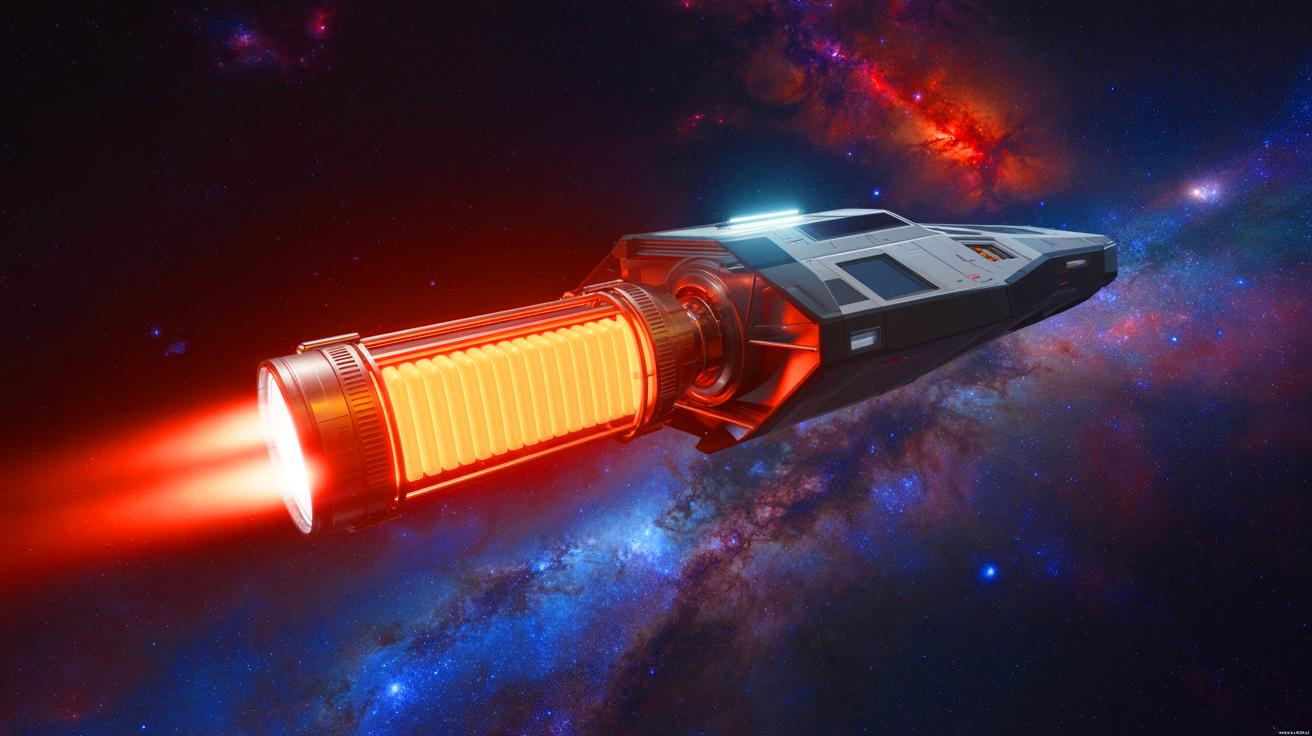
NASA’s pursuit of deeper space exploration has led to innovative developments in nuclear technology, particularly in the use of Radioisotope Thermoelectric Generators (RTGs), colloquially known as “nuclear batteries.” These generators convert heat from the natural decay of radioactive isotopes into electricity, powering spacecraft on missions where solar energy is insufficient. Historically, NASA has relied on plutonium-238 for these RTGs, facilitating groundbreaking missions such as Voyager and New Horizons. However, recent advancements suggest that a new isotope, americium-241, may extend the reach of space exploration even further. This innovation promises to overcome the persistent challenge of fuel limitations in long-duration space missions.
Understanding the Role of Nuclear Batteries
Radioisotope Thermoelectric Generators (RTGs) are pivotal in powering spacecraft, especially those venturing beyond the solar system where sunlight wanes. These “nuclear batteries” operate by converting the heat from the radioactive decay of isotopes into electrical power. The primary isotope used is plutonium-238, known for its 88-year half-life. This longevity allows spacecraft to journey vast distances over extended periods without the need for solar power.
However, the potential of RTGs is not limited to plutonium-238. Americium-241, another promising isotope, exhibits a half-life of 433 years, more than four times that of plutonium-238. This remarkable endurance could enable NASA’s probes to travel further into the cosmos, sustaining operations for centuries. Despite its promise, americium-241 must meet stringent safety and performance standards before it can be widely adopted. To date, only plutonium-238 has consistently met NASA’s rigorous criteria.
The Future of Long-Duration Space Missions
The search for sustainable and long-lasting power sources is a critical objective for NASA. As space missions aim for more distant and prolonged exploration, the need for reliable power sources becomes increasingly urgent. The introduction of americium-241 into NASA’s RTG arsenal could revolutionize these missions. Unlike its predecessors, americium-241 offers a significantly extended operational lifespan, allowing spacecraft to reach and study remote celestial bodies.
NASA’s Glenn Research Center, in collaboration with the University of Leicester in the UK, has embarked on testing americium-241’s viability as a nuclear fuel. The integration of this isotope with advanced conversion systems, such as the Stirling engine, is being explored. This free-piston design, already proven in previous missions, is particularly suited to the zero-gravity environment of space.
Americium-241: A New Hope for Space Exploration
In January, research initiatives at NASA’s Glenn Research Center marked a significant milestone in the potential adoption of americium-241. This isotope is being evaluated as a future primary fuel for RTGs. Its prolonged half-life is its greatest asset, offering the potential to power spacecraft for centuries. This promising development could redefine the scope of NASA’s exploratory missions, reaching further into the universe than ever before.
While current missions continue to rely on plutonium-238, the future beckons with the promise of americium-241. The development of efficient conversion systems is crucial for harnessing the full potential of this isotope. The Stirling engine, which allows pistons to move freely in microgravity, is one such technology that may pave the way for future successes.
Challenges and Prospects in Nuclear Space Technology
The journey to adopt americium-241 is not without its challenges. Production and safety protocols for this isotope require meticulous attention to ensure compliance with NASA’s standards. Furthermore, the conversion of its heat to electricity must be reliable and efficient over extended periods. This necessitates ongoing research and development, with significant investments in testing and refinement.
Despite these hurdles, the potential rewards are immense. The prospect of spacecraft powered by americium-241 promises a new era of exploration. As funding for research continues, the hope is that these technologies will unlock previously inaccessible regions of space.
NASA’s exploration endeavors continue to push the boundaries of human achievement. The potential use of americium-241 as a power source heralds a new chapter in space exploration, offering longevity and sustainability in missions. As these technologies develop, the question remains: How will this advancement reshape our understanding of the universe and our place within it?

C’est incroyable! 433 ans d’énergie, on dirait de la science-fiction! 🚀
Wow, 433 years of power? That’s older than my grandma! 😄
How safe is americium-241 for use in space?
Donc, si j’ai bien compris, on pourrait envoyer des sondes plus loin que jamais auparavant? 😮
Merci NASA, ça promet des missions spatiales incroyables!
J’espère que ces nouvelles batteries ne causeront pas de problèmes environnementaux. 🤔
Nuclear batteries… sounds like sci-fi becoming reality!
Isn’t americium-241 too risky for space missions?
Pourquoi ne pas utiliser plutonium-238 et americium-241 ensemble pour encore plus d’efficacité?
Je suis curieux de savoir comment ils gèrent les déchets nucléaires là-haut. 🤔
Merci NASA pour toujours repousser les limites du possible! 👏
Will this new technology make space travel cheaper in the long run?
Les batteries nucléaires, c’est sûr, ça fait un peu peur quand même… 😬
Pourquoi n’avons-nous pas pensé à l’americium-241 plus tôt? Cela semble si prometteur!
Quelqu’un sait combien ça coûte de produire l’americium-241?
J’adore l’idée que nos sondes puissent explorer encore plus loin dans l’espace!
Je me demande si ces technologies auront des applications sur Terre aussi. 🤔
Bravo à la NASA et à l’Université de Leicester pour cette collaboration! 👏
Est-ce que ce type de technologie pourrait être utilisé pour des missions habitées un jour?
Les Stirling engines, c’est vraiment fascinant! Qui aurait cru que ça marcherait aussi bien dans l’espace?
Espérons que ces nouvelles batteries ne tombent pas en panne après quelques années. 🤞
433 ans? Je ne serai plus là pour voir ça. 😂
NASA devrait faire attention à la sécurité avec tout ce nucléaire dans l’espace.
Je suis impatient de voir les résultats de ces tests! 🚀
Les missions actuelles dépendent toujours du plutonium-238. Combien de temps avant que l’americium-241 prenne la relève?
Quelqu’un peut-il m’expliquer ce qu’est exactement un Stirling engine?
Peut-être qu’un jour, nos petits-enfants verront ces sondes atteindre les étoiles! 🌟
J’espère que la NASA réussira à surmonter les défis liés à cette technologie. 👍
Les coûts de production de l’americium-241 risquent-ils de freiner son adoption?
J’ai hâte de voir quelles nouvelles découvertes ces sondes pourraient faire!
Les implications de cette technologie sont énormes, tant pour l’exploration spatiale que pour la science en général.
Quelqu’un sait si d’autres pays travaillent sur des technologies similaires?
J’espère que l’americium-241 est plus sûr que le plutonium-238! 🤞
Then why are we not using these to power the factories and homes on the planet and save the emissions?