




| IN A NUTSHELL |
|
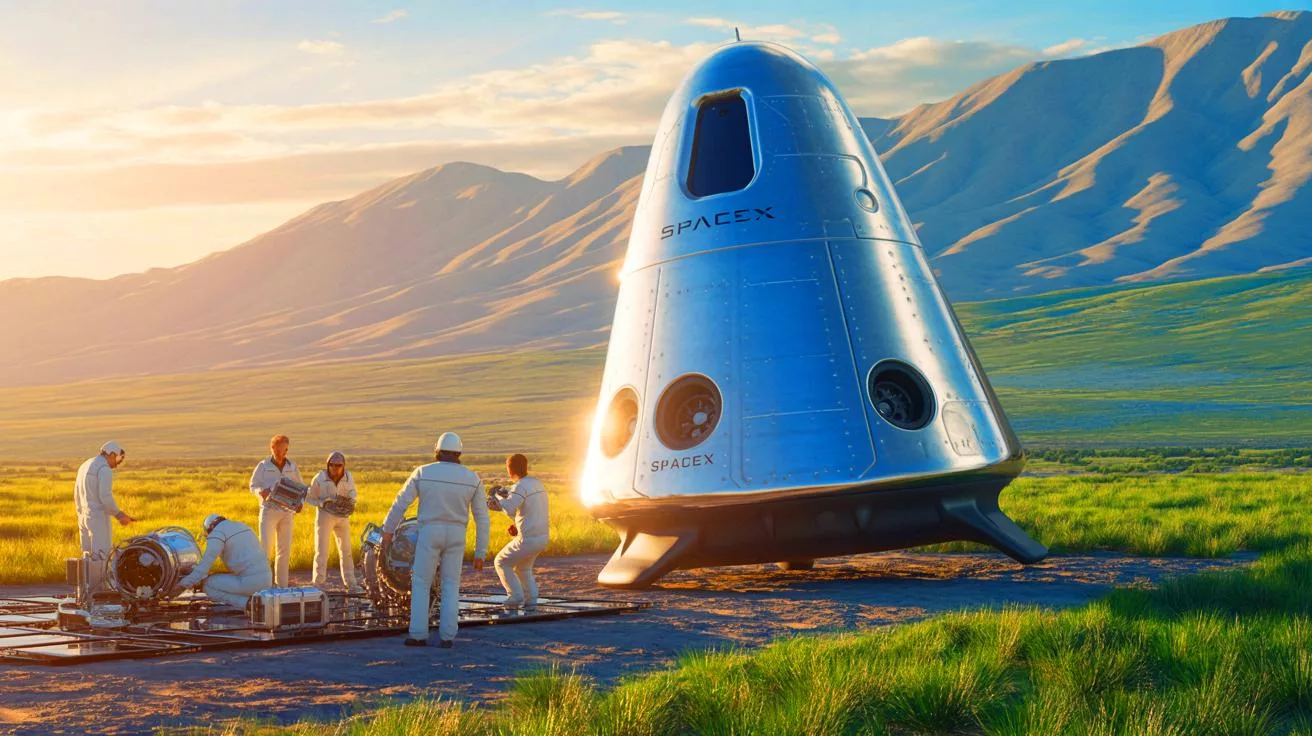
SpaceX’s Dragon capsule recently completed a significant mission by returning to Earth with an impressive payload of 6,700 pounds of advanced technology from the International Space Station (ISS). This operation marks another notable success in the collaborative efforts between NASA and private space enterprises. The diverse cargo brought back is poised to enhance our understanding of space technology and bolster educational programs. The projects associated with this mission may redefine future space exploration and significantly contribute to technological advancements on Earth.
Evaluating Material Durability in Space
Among the key projects aboard the Dragon capsule was the Multipurpose International Space Station Experiment, known as MISSE-20. This initiative was dedicated to examining how different materials withstand the harsh conditions of space. Scientists selected a variety of samples, including radiation shielding, solar sail coatings, ceramic composites, and specialized resins. These materials were tested for their durability against ultraviolet radiation, atomic oxygen, and extreme temperature fluctuations.
The insights gained from MISSE-20 are expected to have a significant impact on the design of future spacecraft. By analyzing these materials on the ISS’s exterior, researchers acquired valuable information about their degradation processes in space. Understanding these processes is essential for developing spacecraft that are both safe and durable, particularly for missions venturing into deep space. The knowledge gained could lead to innovations in creating more efficient heat shields and robust outer structures, paving the way for safer journeys beyond Earth’s orbit.
Revolutionary Robotic Advancements
Another highlight of the Dragon capsule’s cargo was the Astrobee-REACCH robotic system. This pioneering project combined NASA’s Astrobee free-flying robots with flexible, tentacle-like arms equipped with adhesive pads. These advanced robots demonstrated their ability to grasp and manipulate objects of various shapes and textures in the microgravity environment of space.
The potential applications for this technology are extensive. From servicing satellites and removing orbital debris to repositioning objects in space, these robots could play a crucial role in extending the operational life of satellites and enhancing spacecraft safety in low Earth orbit. As space technology continues to evolve, innovations like Astrobee-REACCH are vital for maintaining and optimizing space assets, ensuring a more efficient and secure space environment for all stakeholders.
Advancements in Space-Based Imaging
The return of the Dragon capsule also included equipment and data from the OPTICA experiment, which stands for Onboard Programmable Technology for Image Compression and Analysis. This project aimed to test the compression and real-time transmission of hyperspectral imagery, reducing the bandwidth required to send detailed images from space.
The success of OPTICA has considerable implications for various fields, including disaster response, agriculture, and environmental monitoring. By lowering costs and enhancing the efficiency of space-based imaging systems, this technology could revolutionize how we gather and utilize data from space to solve real-world challenges. This breakthrough in imaging technology holds the potential to transform our capabilities in monitoring and responding to global issues, offering new tools to address pressing societal needs.
Inspiring the Next Generation
Also among the Dragon capsule’s return items were children’s books from the Story Time from Space project. During their time on the ISS, crew members read five STEM-themed books and recorded science demonstrations to accompany each story. These readings and demonstrations were transmitted back to Earth, enriching a growing library of educational videos.
The Story Time from Space initiative aims to inspire young minds and ignite a passion for space science. By bringing these stories into classrooms worldwide, the project helps bridge the gap between Earth and space, nurturing a new generation of explorers and scientists eager to uncover the universe’s mysteries. This educational endeavor is crucial in cultivating future leaders in space exploration and scientific discovery, ensuring that the torch of curiosity and innovation continues to burn brightly.
The successful return of the Dragon capsule underscores the ISS’s role as a vital testing ground for innovations that can transform life on Earth and propel humanity further into the cosmos. With each mission, we move closer to realizing our dreams of reaching the Moon, Mars, and beyond. What groundbreaking discoveries and technologies will the next mission unveil, and how will they continue to shape our future in space exploration?
Wow, 6,700 pounds of tech! Can’t wait to see how this will change our lives. 🚀
Wow, 6,700 pounds of technology! I hope they didn’t forget anything up there. 😅
How does the MISSE-20 project influence spacecraft design? I’m curious to know more about the materials they tested.
How exactly does the MISSE-20 project impact spacecraft design? 🤔
Les robots Astrobee-REACCH semblent incroyables ! Comment peuvent-ils aider à nettoyer les débris spatiaux ?
SpaceX and NASA make such a great team! Thanks for bringing us closer to the stars. 🌟
Merci à SpaceX et l’ISS pour ces avancées. Quel impact cela aura-t-il sur notre vie quotidienne ?
Is this tech going to be used for commercial purposes or just for NASA?
Les STEM books de Story Time from Space sont une idée géniale pour inspirer les enfants ! 😍
Story Time from Space sounds like an amazing initiative for kids! 📚
Est-ce que ces innovations technologiques seront accessibles au public bientôt ? J’ai hâte de voir ça !
I’m skeptical about all this “advanced technology” — what’s the real impact on Earth?
Je suis sceptique. Est-ce vraiment possible de changer l’avenir de la Terre avec cette technologie ?