




| IN A NUTSHELL |
|
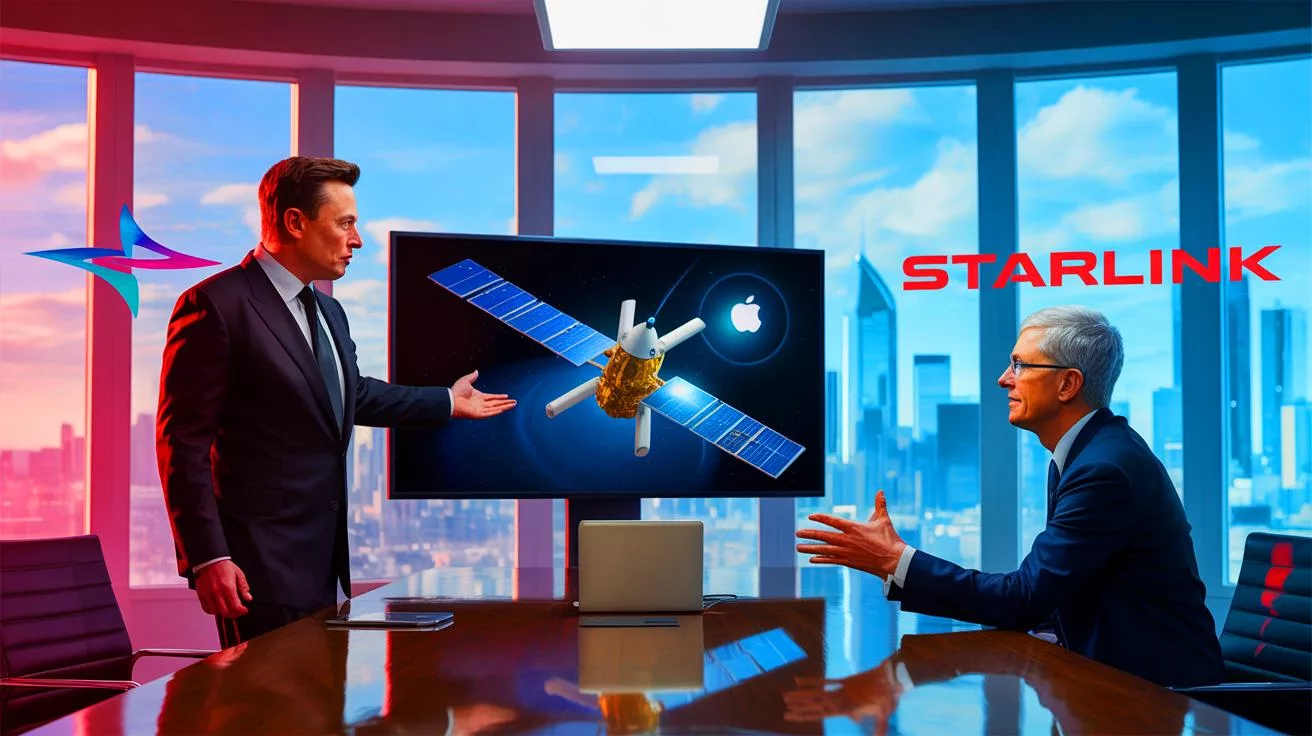
In a bold move that could reshape the landscape of smartphone connectivity, Elon Musk proposed a multi-billion-dollar collaboration with Apple to integrate Starlink’s satellite technology into the iPhone 14. The $5 billion offer came with a stipulation of exclusivity for 18 months, followed by a $1 billion annual licensing fee. Musk’s proposal was met with a swift rejection from Apple CEO Tim Cook, who opted instead for a more conservative agreement with Globalstar. This decision set off a chain of events involving legal challenges, strategic shifts, and a race to dominate the future of mobile communication through satellite technology.
Legal Challenges and Internal Resistance
The aftermath of Apple’s decision to partner with Globalstar rather than Starlink was not without its complications. SpaceX, Musk’s aerospace company, quickly moved to challenge Globalstar’s operations by filing regulatory complaints with the Federal Communications Commission (FCC). SpaceX alleged that Globalstar was underutilizing its assigned spectrum and was employing licensing strategies that unfairly blocked competition. These legal maneuvers were not just about spectrum allocation; they explicitly mentioned Apple, indicating potential repercussions for the iPhone’s satellite capabilities.
Within Apple, the choice to go with Globalstar was met with skepticism. High-ranking executives, including Craig Federighi and Adrian Perica, reportedly voiced concerns about Globalstar’s technological infrastructure. Insiders described the company’s systems as outdated and unlikely to match the rapid advancements in satellite technology. Despite Apple’s financial commitment to fund new satellite launches, questions linger about the sustainability and efficacy of relying on Globalstar in a market that is rapidly evolving.
The $1.7 billion investment, with $1.1 billion allocated for satellite construction, aims to secure service continuity for Apple.
https://www.rudebaguette.com/en/2025/06/this-new-mandatory-smartphone-score-in-france-starts-now-and-could-change-how-millions-choose-their-next-device/
However, the prolonged timeline for full deployment—expected to take up to a decade—casts doubt on Apple’s ability to remain competitive as the satellite connectivity landscape transforms.
The Race to Redefine Mobile Connectivity
While Apple treads cautiously, Starlink and its partnership with T-Mobile are accelerating the shift towards seamless satellite connectivity. By enabling smartphones to connect directly to low-Earth orbit satellites using existing carrier networks, Starlink bypasses the limitations inherent in Apple’s emergency-only satellite services. This strategy shifts the balance of power from device manufacturers to network providers, potentially altering the dynamics of the telecom industry.
Musk’s ambitions extend beyond infrastructure. He has openly criticized Apple’s business practices, including its App Store fees, and has even suggested the possibility of a Tesla-branded smartphone. By aligning with companies like Epic Games, Musk underscores his commitment to challenging Apple’s dominance over mobile platforms.
Starlink’s integration with T-Mobile allows any smartphone on the network to automatically access satellite services when out of traditional range.
Apple’s approach, characterized by a focus on stability and risk aversion, contrasts sharply with Musk’s aggressive innovation. The decision to continue with Globalstar indicates a preference for controlled growth over rapid technological upheaval.
Implications for the Telecom Industry
The unfolding scenario has significant implications for the telecom sector. As Starlink’s services expand, the traditional role of telecom companies as intermediaries is being challenged. The ability of smartphones to directly connect to satellites represents a paradigm shift in how mobile connectivity is perceived and utilized. This technology not only enhances communication in remote and underserved areas but also redefines the competitive landscape for telecom providers.
Apple’s cautious strategy could potentially lead to missed opportunities if the market shifts decisively towards satellite-enabled communication. Meanwhile, Starlink’s rapid deployment and the backing of T-Mobile could set new industry standards that other companies will strive to meet. The ongoing tussle between these technological giants illustrates the broader battle for control over the future of global communication infrastructure.
The Future of Mobile Communication
As the rivalry between Musk and Cook unfolds, the stakes for future connectivity continue to rise. The decision by Apple to side with Globalstar may reflect a traditional approach, but it also raises questions about its adaptability in a swiftly changing technological environment. The integration of satellite technology into everyday communication is no longer a distant possibility; it is becoming an essential component of modern infrastructure.
The dynamic between established technology firms and emerging satellite providers highlights the complexities of navigating this new frontier. Will Apple’s focus on stability and control hinder its ability to innovate, or will Musk’s disruptive tactics redefine the industry? As satellite technology becomes increasingly central to global communication, the answers to these questions will shape the future of how we connect in a world that is ever more reliant on advanced networks.
As these developments unfold, the key question remains: How will traditional telecom giants adapt to the rapid advancements in satellite connectivity, and what role will they play in the next chapter of global communication?


Wow, ça c’est une grosse nouvelle! Pensez-vous que Musk va réessayer avec Apple? 😮
Wow, Tim Cook really said “No” to Musk? That’s some serious tech drama! 🍿
Tim Cook a-t-il vraiment dit non à 5 milliards de dollars? Quelle audace!
Why would Apple choose Globalstar over Starlink? Seems like a missed opportunity!
Je suis curieux de voir si Starlink et T-Mobile vont vraiment bousculer le marché. 📱
Apple a peut-être manqué une grande opportunité ici. Que pense Cook? 🤔
Elon Musk isn’t taking this lightly, is he? Filing complaints already…
Je ne comprends pas pourquoi Apple a choisi Globalstar. Quelqu’un peut m’expliquer?
J’adore voir ces guerres technologiques! Qui va gagner, à votre avis? 😂
I’m not surprised. Apple always plays it safe, but will it pay off in the long run?
Elon Musk, toujours prêt à défier les géants de la tech. Respect! 🚀
Cook est peut-être trop conservateur. Apple pourrait le regretter!
Maybe Elon should just launch his own phone. A Tesla phone would be epic!
Est-ce que cela signifie que nous aurons bientôt des iPhones avec Starlink? 🛰️