




| IN A NUTSHELL |
|
A new study by Fluid Focus, led by Dr. Paul Redmond from the University of Liverpool and published in collaboration with The Times (UK), has brought to light alarming statistics regarding the smartphone habits of today’s students. It reveals that if current trends continue, students could spend as much as 25 years of their waking lives on their smartphones. This report, based on voices from thousands of students, underscores the growing awareness and concern about the impact of digital devices on young lives. As the numbers uncover a deeper issue, the implications for education and mental health are profound and far-reaching.
Screen Habits Are Shaping the Next Generation
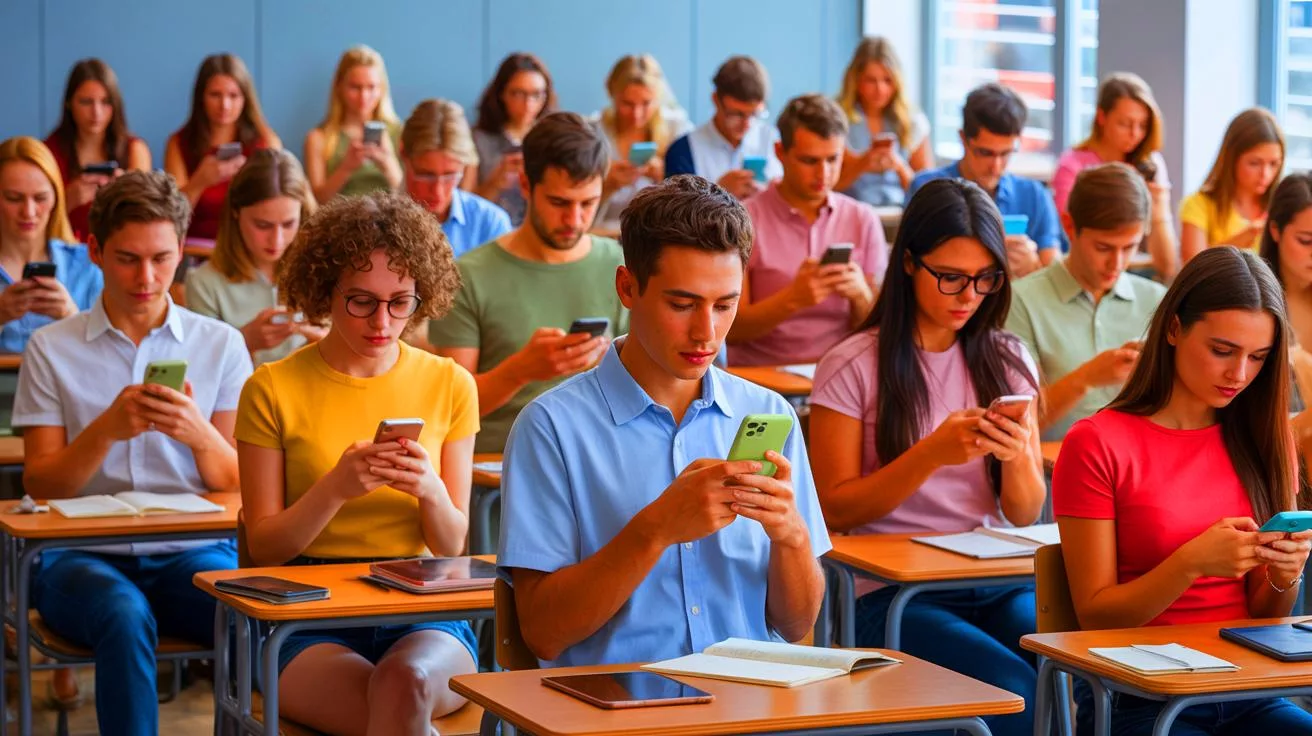
The study surveyed 2,842 students from the UK and Ireland, including those in secondary schools, further education colleges, and universities. The data reveals that students spend an average of 5.5 hours per day on their smartphones. When extrapolated over a lifetime, this equals a significant portion of their waking hours. The findings show that 76% of students consider their smartphone use to be unhealthy, and 70% acknowledge its negative impact on their academic performance. Sleep disruption due to nighttime phone use is a concern for nearly half of the participants.
Researchers emphasize that technology should enhance, not control, our lives. The attention economy has commodified focus, and students are increasingly aware of its implications. This study is part of the broader Smartphones in Education program, which aims to shed light on the critical role of technology use in educational settings.
Attention Span Is Declining—And Students Know It
Beyond the numbers, the study delves into the students’ perceptions of their smartphone habits. Many report experiencing heightened anxiety, low self-esteem, and difficulties focusing in both academic and social contexts. The findings resonate with earlier U.S. studies linking smartphone overuse to attention disorders and self-regulation challenges.
What sets this research apart is its focus on students’ voices, capturing a generational awareness that acknowledges the issue but struggles to find solutions. One poignant quote from the study highlights this sentiment: “Our generation isn’t unaware—we’re overwhelmed.” This awareness, while valuable, underscores the need for tools and systems to help students manage their digital habits effectively.
Impact Could Spill Into the Job Market
The implications of these screen habits extend beyond the classroom. The study highlights the potential influence on the future workforce, particularly as distraction-heavy environments may hinder essential professional skills such as concentration, deep work, and emotional regulation.
In an era where AI and automation are reshaping labor markets, the ability to focus without digital distractions is increasingly valuable. The report ties these findings to insights from LinkedIn and McKinsey, which stress skills like self-motivation, adaptability, and critical thinking as essential in modern workplaces. Fluid Focus warns that distraction is not just a personal issue but a professional disadvantage.
Most Students Want to Change—But Need Help Doing It
Despite the concerning data, there is a significant takeaway: awareness is high among students. The study notes that 7 out of 10 students expressed a desire to reduce their phone usage. However, the challenge lies in providing the structure and support necessary for meaningful change.
The study advocates for integrating digital well-being into school curricula, treating it as essential as sex education or physical health. This would involve teaching students to use devices intentionally, recognize compulsive behaviors, and establish boundaries between productivity and passive scrolling. The focus is not on banning phones but on fostering a thoughtful and balanced approach to technology use.
The Attention Economy Is Winning—For Now
At its core, the study situates the smartphone issue within the broader context of the attention economy. As tech companies vie for control over every moment of our time, young people find themselves in a loop of notifications and endless feeds. The researchers emphasize that attention is valuable because it is finite, and whoever controls it, controls behavior.
The challenge moving forward is to empower students to reclaim control over their attention. The researchers argue that without proactive efforts from schools and families to build attention-shaping skills, the cost will be more than educational. It will have cultural, psychological, and economic ramifications.
As we consider the findings of this study, it becomes clear that the issues surrounding smartphone use and attention are complex and multifaceted. What steps can educators, parents, and policymakers take to equip the next generation with the skills needed to thrive in an increasingly digital world?


25 years? Are we sure that’s not a typo or an April Fool’s joke? 😅
Wow! 25 years is a loooong time to spend on a phone. 😲
When did phones become this much of a life partner? I’m genuinely worried!
Je me demande si ces chiffres sont vraiment précis…
How do we balance between using tech for good and letting it take over our lives?
Est-ce qu’il y a des pays où le problème est pire?
This study is eye-opening! Thanks for bringing this important issue to light. 😊
Maybe it’s time we teach kids about “digital detox” in schools. Just saying!
Merci pour cet article, ça ouvre vraiment les yeux sur l’ampleur du problème.
Does this mean we should start carrying around pocket-sized books again?
Comment peut-on intégrer l’éducation au bien-être numérique dans les écoles?
I’m not surprised. People use their phones for everything nowadays.
Can schools really make a difference in changing these habits?
76% des étudiants pensent que leur utilisation est malsaine, mais est-ce qu’ils font quelque chose pour y remédier?
Is it too late to start reversing these trends, or is there still hope?
C’est fou! On dirait que les smartphones sont devenus une extension de nous-mêmes.
This is actually quite scary. What will our brains look like in the future?