



| IN A NUTSHELL |
|
In a world where digital connectivity is crucial, the specter of geomagnetic storms poses a significant threat. Known for their ability to cause global internet outages, these storms could cost the U.S. economy an estimated $7.2 billion per day. The underlying cause of these storms is often linked to space tornadoes, spirals of solar wind that result from plasma eruptions on the sun. These phenomena can have severe implications for both astronauts and Earth’s technological infrastructure. Scientists from the University of Michigan are advocating for an improved early warning system to mitigate these risks. They propose a constellation of spacecraft, potentially powered by solar sails, to serve as a critical line of defense against these cosmic threats.
Understanding the Risk of Space Tornadoes
Space tornadoes, while sounding otherworldly, have real and severe implications for our planet. These swirling masses of plasma and magnetic fields, also known as flux ropes, form when coronal mass ejections (CMEs) collide with slower-moving solar winds. According to a study by the University of Michigan, these vortices can have magnetic fields strong enough to trigger geomagnetic storms on Earth. Such storms could lead to massive disruptions, including global internet outages and compromised satellite operations.
In 2013, former NASA chief Charles Bolden warned of the potential devastation space weather could wreak, likening it to natural disasters on Earth. Though often invisible, these storms hold the power to disrupt our modern, interconnected world. The University of Michigan team conducted computer simulations to explore how these space tornadoes could affect Earth. Their findings highlight the need for a robust warning system to detect these threats as they develop.
The simulations revealed that flux ropes could range from 3,000 to 6 million miles in diameter. While many dissipated quickly, some persisted, especially when fast solar winds collided with slower streams. These persistent events pose the greatest risk, underscoring the inadequacy of current warning systems. The researchers advocate for a multi-probe approach to gain a comprehensive view of solar winds and improve preparedness.
Proposed Advancements in Solar Weather Detection
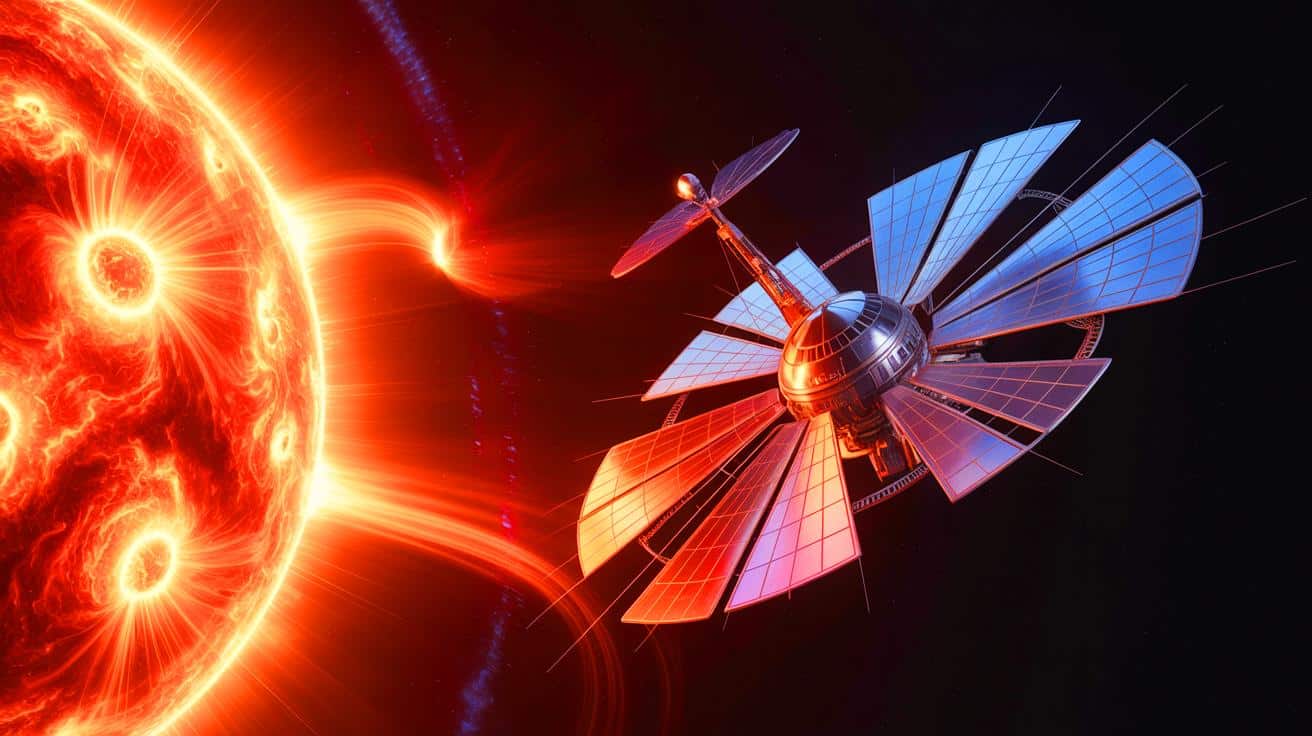
To address the looming threat of space tornadoes, scientists propose an enhancement to the Space Weather Investigation Frontier (SWIFT) concept. This involves deploying a constellation of four probes arranged in a triangular-pyramid formation, each stationed approximately 200,000 miles apart. Three identical probes would form the corners, while a hub spacecraft would face the sun to provide a more comprehensive view of the incoming solar winds.
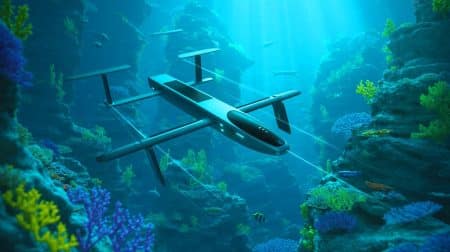
The hub spacecraft could benefit from insights gleaned from NASA’s Solar Cruiser project, which aimed to study the sun using an aluminum solar sail. These probes would be positioned at Lagrange Point 1 (L1), a stable location between Earth and the sun. This strategic positioning could enable a 40% increase in the speed of space weather warnings.
The team highlights the critical need for such advancements, as illustrated by a 2021 paper from University of California, Irvine assistant professor Sangeetha Abdu Jyothi. The paper detailed the potential for a powerful CME to cause a ‘solar tsunami,’ disrupting undersea cables and resulting in costly internet outages. By accelerating our ability to detect and respond to these threats, the proposed system could safeguard vital infrastructure and minimize economic losses.
The Real-World Impact of Geomagnetic Storms
Geomagnetic storms are not just theoretical threats; they have tangible effects on our world. In May 2024, a geomagnetic storm disrupted satellite orbits, tripped high-voltage power lines, and forced some aircraft to reroute. Such events serve as stark reminders of the vulnerabilities in our current systems and the pressing need for improved detection and preparedness measures.
Satellites, crucial for communication and navigation, are particularly susceptible to these disruptions. When their orbits are affected, the ripple effects can be widespread, impacting everything from GPS services to international communications. Power grids are similarly vulnerable, with high-voltage lines at risk of tripping and causing widespread blackouts.
These incidents underscore the urgency of developing more effective warning systems. By investing in the proposed constellation of probes, we could better predict and mitigate the effects of future storms, protecting both infrastructure and the economy from potential catastrophes.
Future Directions in Space Weather Research
The University of Michigan’s proposal represents a significant step forward in space weather research. By incorporating advanced technology and strategic positioning, the proposed system could transform our ability to predict and respond to space tornadoes and geomagnetic storms. However, implementing such a system requires international collaboration, robust funding, and continued research.
Future advancements may also explore the integration of other technologies, such as artificial intelligence, to enhance predictive capabilities. Collaboration with global partners could facilitate data sharing and improve the accuracy of forecasts. As we continue to rely on digital connectivity and satellite technologies, the importance of such research cannot be overstated.
Will the global community come together to develop and implement these critical advancements, or will we remain vulnerable to the whims of space weather?
C’est incroyable ! 😲 Comment n’avons-nous pas encore de système d’alerte efficace pour un problème aussi sérieux ?
Wow, I had no idea space could be so dangerous for our internet! 🌐
Do these space tornadoes also affect astronauts? 🤔
Est-ce que ces tempêtes géomagnétiques pourraient affecter les satellites de communication internationaux ? 🤔
C’est vraiment incroyable ce que l’espace peut faire à notre technologie moderne!
J’ai du mal à croire que des “tornades spatiales” puissent être aussi destructrices. Ça ressemble à de la science-fiction.
Is this just another doom and gloom scenario or should we really be worried?
Thanks for the heads-up, I might just start hoarding books and board games! 📚🎲
Merci pour cet article informatif. Je ne savais pas que les tempêtes solaires pouvaient avoir un tel impact sur Internet.
Pourquoi on n’en entend pas plus parler dans les médias?
Les gouvernements devraient investir davantage dans la recherche spatiale pour prévenir ces catastrophes potentielles. 🌍
Could this affect my GPS when I’m driving to work? 🚗
So, do we need to start preparing like it’s Y2K all over again? 😅
Do these solar tornadoes have any effect on climate change?
Is there anything individuals can do to protect themselves from these storms?
J’espère que les scientifiques trouveront une solution rapidement!
If it costs billions daily, why aren’t governments investing more in prevention?
Sounds like a sci-fi movie plot, but it’s real. Fascinating and terrifying!
Do animals get affected by these geomagnetic storms?
Les tornades spatiales, c’est un concept vraiment effrayant.
Thanks for the detailed explanation, I had no idea this was even a thing!
Is our current technology even capable of dealing with the aftermath of such storms?
Why does it feel like every day there’s a new existential threat? 😟
Are there any historical events where space weather caused major disruptions?
This is why we need more funding for space research!
C’est inquiétant de penser que tout notre système de communication pourrait s’effondrer.
How soon could these advanced detection systems be deployed?
Seems like space is getting more dangerous every day!
Does this mean we need to plan for potential internet blackouts more often? 💻
J’ai toujours su que l’espace était fascinant, mais je ne savais pas qu’il pouvait être si menaçant.
How reliable are the current predictions for space weather events?
Could these storms affect global stock markets and financial systems?
Les conséquences économiques semblent énormes, peut-on vraiment s’en prémunir?
Thank goodness for scientists who keep an eye on these cosmic threats!
Are other countries also working on similar detection technologies?
J’ai du mal à imaginer que quelque chose d’aussi lointain puisse nous affecter autant.
Sounds like a great plot for a disaster movie. 🎬
Is the risk of internet outages the same worldwide?
What happens to airplanes during these geomagnetic storms? ✈️