





| IN A NUTSHELL |
|
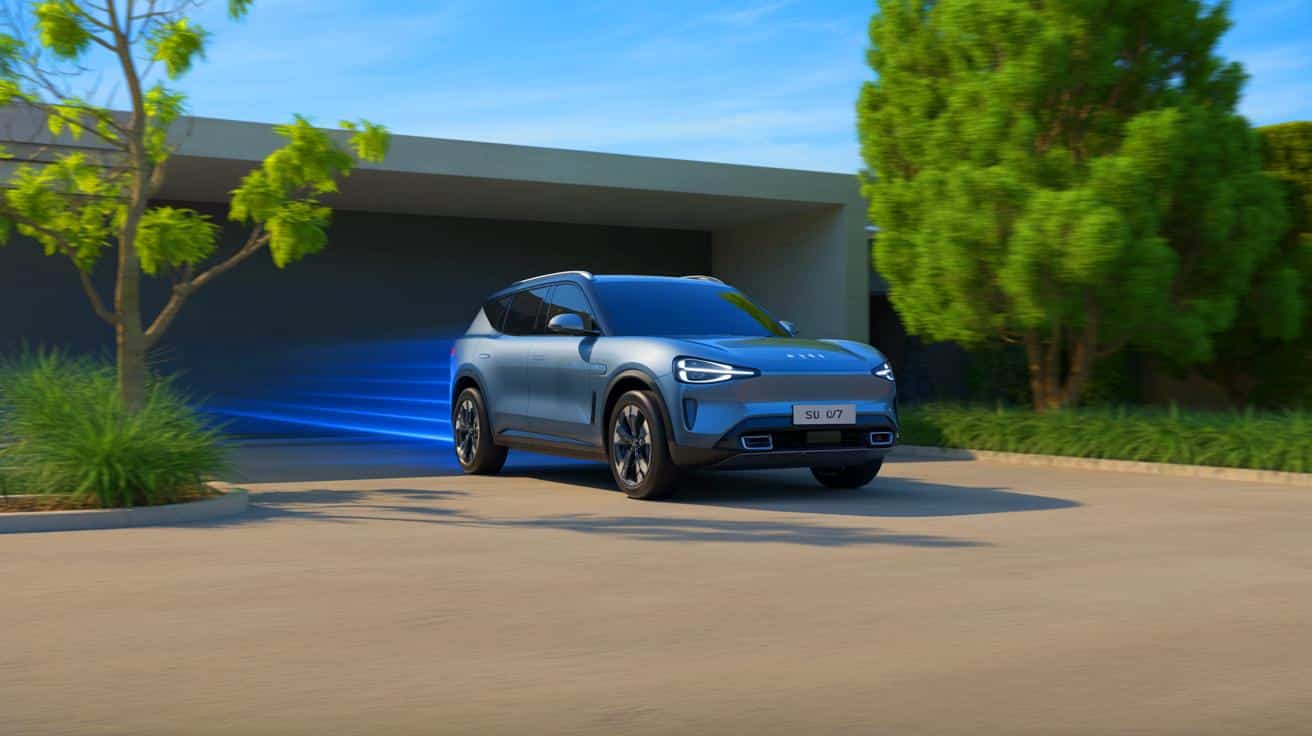
In an unexpected turn of events, a Xiaomi SU7 in China captured public attention when it was recorded moving forward on its own in a parking area. Surveillance camera footage showed the SUV rolling out of its parking spot with no driver inside, catching the vehicle’s owner and a bystander off guard. The incident has raised questions about the safety and reliability of remote vehicle control technology. Xiaomi’s subsequent investigation revealed that a remote command had triggered the car’s movement, highlighting both the potential and pitfalls of advanced automotive technology.
Remote Command Triggers Movement
The incident involving the Xiaomi SU7 was thoroughly investigated by the company. A specialized team scrutinized the vehicle’s backend data alongside smartphone operation logs, with the vehicle owner’s consent. The analysis confirmed that the SUV had received a Remote Parking Assist (RPA) command, prompting the car to move forward.
Xiaomi explained that this feature requires the phone to be within Bluetooth range, which suggests that the car’s movement was remotely activated rather than a result of a system malfunction. The company stated, “The vehicle’s backend data shows that during the time window described by the user, the vehicle received a parking assist command from the iPhone 15 Pro Max.” This statement was made public on Chinese social media platform Weibo.
Porsche’s 701-Horsepower Hybrid 911 Turbo S Hits 60 MPH in 2.4 Seconds Starting at $270,300
The owner of the SU7 corroborated Xiaomi’s findings, confirming on Weibo that the company had verified the data and that the results were accurate. Xiaomi Auto Vice President Li Xiaoshuang also acknowledged the findings, urging the public to take note of this clarification.
Industry Concerns Over Remote Features
This incident has reignited debates within the automotive industry about the safety and dependability of remote vehicle control features. Technologies such as Remote Parking Assist (RPA) are designed to offer convenience, particularly in tight parking spaces, but they also highlight the necessity for robust safety measures and fail-safe systems.
Industry experts assert that as vehicles become more interconnected, maintaining user trust hinges on the implementation of reliable safety systems and transparent data management. The Xiaomi SU7 case serves as a crucial reminder that while convenience features are valuable, they must be supported by clear operational protocols, rigorous testing, and open communication with vehicle owners.
Balancing Innovation and Security
The rise of remote vehicle control technologies is seen as a significant advancement in automotive innovation. However, incidents like that of the Xiaomi SU7 illustrate the delicate balance between convenience and security. As these technologies evolve, automakers are tasked with ensuring that their systems are both user-friendly and secure from unauthorized access or inadvertent activation.
Ensuring the safety of remote features requires not just technological solutions, but also user education. Owners must be well-informed about how these systems operate, the potential risks involved, and the steps they can take to prevent unintended activations. This includes understanding when and how remote commands can be issued and the importance of keeping their devices secure.
The Future of Remote Vehicle Technology
The incident has further implications for the future trajectory of remote vehicle technology. As consumer demand for convenience features continues to grow, the automotive industry is likely to see an increase in the integration of such technologies. However, this growth must be accompanied by stringent safety standards and clear communication strategies.
Looking ahead, it will be critical for manufacturers to engage in open dialogues with consumers and regulatory bodies to address concerns and establish industry-wide standards. These efforts will be essential in ensuring that the benefits of remote technologies are fully realized without compromising user safety.
The Xiaomi SU7 incident underscores the ongoing challenges and responsibilities associated with advancing automotive technology. As the industry moves forward, the essential question remains: How can automakers effectively balance innovation with safety, ensuring that these advanced features enhance rather than compromise the driving experience?


Wow, this is some real sci-fi stuff! 🚗
Wow, cars are moving by themselves now? 🤔 What’s next, flying cars?
Is it just me, or does this sound like the beginning of a Black Mirror episode?
This is why I stick to my trusty old manual car. No remote surprises! 😅
Great, now cars are ghosting us too… 😅
How safe is it really to have a car that can move by itself?
Could someone hack into these systems and move your car without your consent? Scary thought.
I wonder what other hidden features my car might have! 🤔
Really makes you think about how much control we actually have over our vehicles.
Big thumbs up to Xiaomi for investigating this incident quickly! 👍
This is why I still drive a manual car. Old school but safe! 😏
Je me demande si ces fonctionnalités sont vraiment nécessaires ou juste un gadget de plus.
Is it possible for hackers to control the car remotely? Scary thought!