





| IN A NUTSHELL |
|
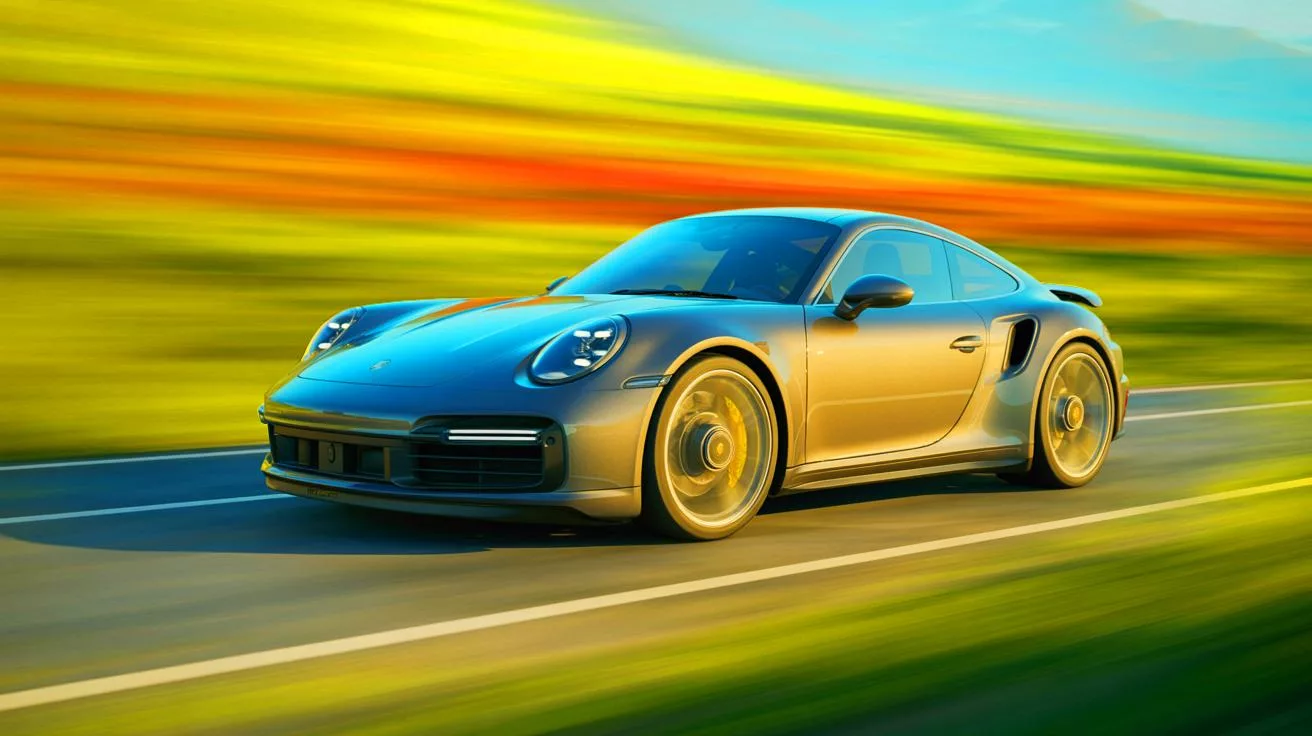
The automotive world witnessed a significant milestone with the debut of Porsche’s latest 911 variant at the IAA Mobility show in Munich, Germany. As the most powerful 911 to date, this model represents a fusion of traditional engineering prowess and cutting-edge hybrid technology. Boasting an unprecedented acceleration capability, this 911 variant is poised to redefine performance standards in the sports car segment. With its innovative T-Hybrid system, Porsche has not merely enhanced the vehicle’s speed but has also ensured a driving experience that closely mimics that of an electric vehicle, thanks to the elimination of throttle lag.
Pioneering Hybrid Innovation
Porsche’s latest engineering marvel is not just an evolution but a revolution in the lineage of the 911. By integrating the T-Hybrid system, Porsche has introduced a new chapter in hybrid technology. Instead of merely augmenting an existing engine, the automaker developed a new 3.6-liter flat-six engine. This engine showcases a departure from traditional belt drives, opting instead to leverage the 400 V traction battery to power various components.
The hybrid system, first seen in the 911 GTS T-Hybrid, employs a single electric turbocharger. This component functions similarly to the MGU-H in Formula 1 cars. It rapidly spins up to 120,000 rpm, effectively eliminating throttle lag and recapturing excess energy to store in the 1.9 kWh battery pack. The result is a turbocharged engine with an immediate throttle response that parallels an EV’s performance, ensuring power delivery to the wheels without delay.
Unparalleled Performance Metrics
The 2026 911 Turbo S takes performance to new heights with dual electric turbochargers. These are coupled with a 53 hp (40 kW) permanent synchronous motor integrated into the eight-speed dual-clutch transmission. This configuration delivers a total output of 701 hp (523 kW) and 590 lb-ft (800 Nm) of torque, allowing the car to sprint from 0 to 60 mph in a mere 2.4 seconds. Additionally, it reaches 124 mph (200 km/h) in just 8.4 seconds, outperforming its 2025 predecessor by half a second.
Despite an added weight of 180 lbs (82 kg), the hybrid Turbo S demonstrates a significant performance boost on the 12.9-mile Nürburgring Nordschleife. During testing, it clocked a lap time of 7 minutes and 3.92 seconds, marking a 14-second improvement over its non-hybrid counterpart. According to driver Jörg Bergmeister, the car not only compensates for the weight gain but also enhances agility and grip, making it faster in critical track sections.
Technological Advancements and Design
The introduction of the 400 V hybrid system allows Porsche to equip the Turbo S with new electrohydraulic antiroll bars. These bars respond more quickly than the hydraulic systems in non-hybrid models, further enhancing the car’s handling capabilities. This technological advancement is part of Porsche’s commitment to combining performance with innovation.
While the hybrid system offers numerous benefits, it also comes with certain trade-offs. Notably, the absence of a manual transmission option may disappoint purists. However, this decision aligns with the broader automotive trend toward automatic transmissions in high-performance vehicles, driven by the quest for optimal efficiency and speed.
Market Position and Consumer Appeal
With a starting price of $270,300 for the coupe and $284,300 for the Cabriolet, the 911 Turbo S is a premium offering in Porsche’s lineup. Despite the hefty price tag, the model promises unparalleled versatility, with features that make it suitable for daily use, long journeys, and track days. According to Frank Moser, Porsche’s vice president of the 911 and 718 model lines, the new Turbo S delivers increased comfort and customization alongside its enhanced speed.
Porsche anticipates that deliveries will commence in the spring, offering consumers the opportunity to experience this blend of power and innovation firsthand. The “Turbonite” accents distinguish the 911 Turbo from other models, adding to its allure and exclusivity.
As the automotive industry continues to evolve, Porsche’s latest 911 variant exemplifies the potential of hybrid technology to enhance performance without compromising on traditional driving experiences. This model raises important questions about the future of sports car design and the role of hybrid systems in achieving an ideal balance between power and efficiency. How will other automakers respond to this challenge, and what innovations will they introduce to compete in this rapidly changing landscape?

Wow, 701 horsepower! That’s a beast on wheels. How does it handle in everyday traffic? 🤔
Wow, 701 horsepower! How does it feel to drive a beast like that? 🚗💨
Is this car available in electric blue? Asking for a friend. 😜
That price tag is a bit steep! Could buy a house for that amount.
How does the hybrid system affect fuel economy? I’m curious if it’s practical for daily driving.
Is it just me, or do these cars keep getting faster and faster? 😂
At $270,300, I hope the car can fly too! ✈️
Thank you Porsche for pushing the limits of hybrid technology!
It’s impressive, but can it make me coffee in the morning? 😂
2.4 seconds to 60 mph… That’s insanely quick! Can it fly too? 😜
Does it come with a lifetime supply of tires? Because I’m gonna need it! 🏁
Curious if there’ll be a manual version for us purists?
This is the future of sports cars! Porsche has outdone themselves once again. 👏