





| IN A NUTSHELL |
|
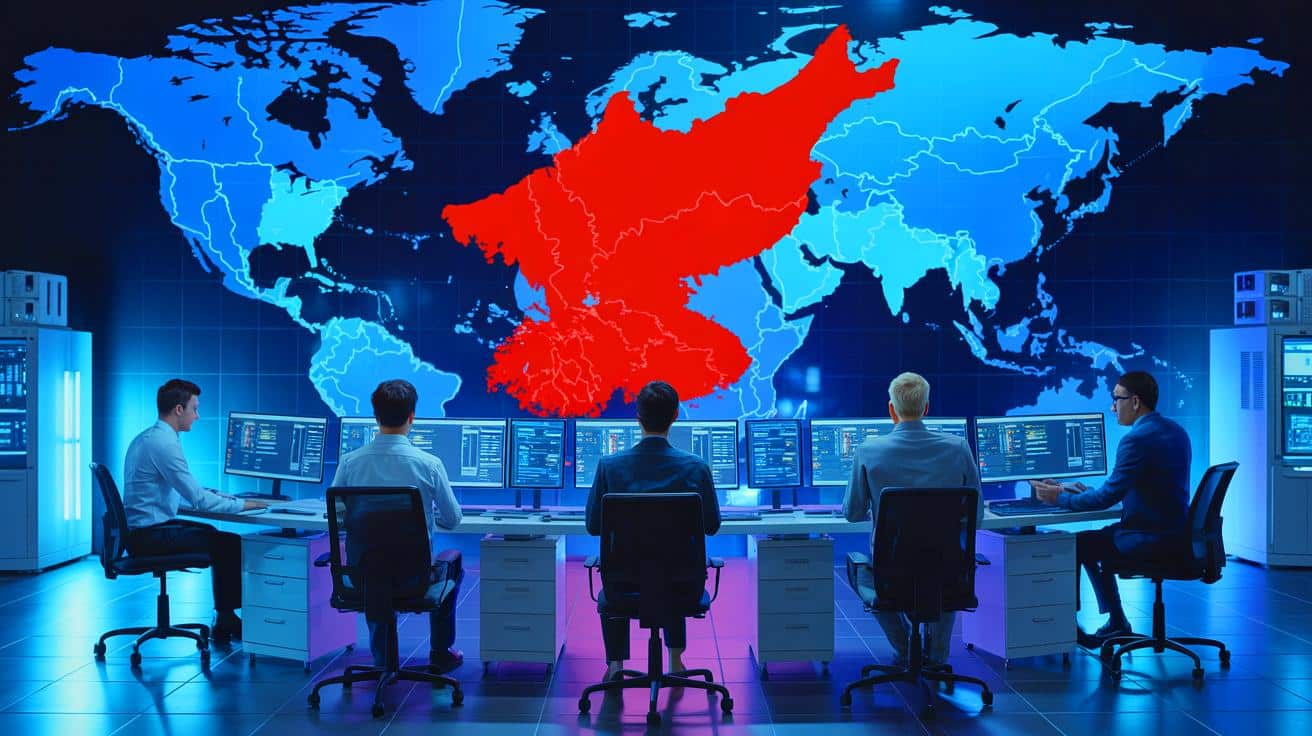
Recent revelations have uncovered a startling infiltration of North Korean workers into major industries worldwide. On June 30, the U.S. Department of Justice seized 200 computers, about 20 websites, and approximately 30 bank accounts in a sweeping operation known as “DPRK RevGen.” This operation, although yielding modest tangible results, shines a light on the broader issue of North Korean infiltration in the tech sector. North Korean workers have managed to penetrate leading companies by taking on roles as engineers and developers, often working remotely. They have cleverly set up computer farms across 16 U.S. states, connecting through local telecom providers to create a facade of being based in those areas, all while laundering their earnings.
Why North Korea Infiltrates These Companies
The infiltration of North Korean workers into global industries is not merely a random occurrence but a calculated strategy by the regime in Pyongyang. A report by Okta Threat Intelligence sheds light on the recruitment program for North Korean IT workers, which poses a significant threat to sectors relying on remote talent. The program, known as ITW, involves over 130 entities facilitated by North Korean agents and employees. This initiative has resulted in more than 6,500 initial job interviews across over 5,000 different companies.
The driving force behind this grand plan is the severe sanctions imposed on North Korea by the U.S. and its allies. Seeking ways to generate revenue and acquire sensitive information, North Korea has mobilized thousands of workers. These IT professionals often resort to advanced impersonation techniques to deceive Western companies during the recruitment process. The primary aim of the ITW program is financial gain through salary payments, though data theft and ransomware extortion attempts have also been noted.
North Korean personnel, sometimes in influential positions within these organizations, can potentially gather sensitive information on numerous topics. As highlighted in the report, "The potential for expanded access and data collection from this prolonged operation should be a concern for governments and organizations across most economic sectors."
France and Many Other Countries Targeted
The North Korean infiltration strategy is not limited to the technology sector. The regime has expanded its reach to other industries, such as finance, healthcare, public administration, and professional services. This diversification of targets indicates a shift in North Korea's approach. According to Okta's research, North Korean threat actors are now targeting more than just tech companies, with 27% of their targets located outside the United States.
North Korean workers are now collaborating in numerous Western countries, including France, the United Kingdom, Germany, India, Australia, Singapore, Switzerland, Japan, and Poland. This broadening of targets underscores the evolving nature of the DPRK IT Worker scheme. In response to this threat, experts urge companies to adopt a multilayered defense strategy. This includes rigorous entity verification during recruitment, continuous monitoring of remote workers' access and behavior, and a robust internal plan to respond to potential security incidents. A political awakening to this issue is also necessary, as these revelations will likely resonate with governments worldwide.
The Broader Implications for Global Security
The infiltration of North Korean workers into global industries raises broader questions about international security and economic stability. The regime's ability to manipulate the global job market to its advantage highlights significant vulnerabilities in the current system. Countries around the world must reassess their cybersecurity measures and recruitment processes to protect themselves against such threats. The potential for sensitive information to fall into the wrong hands is a risk that governments and companies cannot afford to ignore.
Furthermore, this infiltration poses a challenge to international relations, as countries must navigate the delicate balance between economic cooperation and national security. The actions of North Korea serve as a reminder of the ongoing geopolitical tensions and the need for robust international collaboration to address these issues. The global community must remain vigilant and proactive in countering such threats to ensure the safety and security of its economic and technological infrastructures.
Steps Forward for Companies and Governments
In light of these revelations, both companies and governments must take concrete steps to address the threat posed by North Korean infiltration. Businesses should implement comprehensive cybersecurity protocols and enhance their recruitment processes to prevent unauthorized access to sensitive information. Regular audits and employee training programs can help reinforce these measures and ensure compliance with best practices.
Governments, on the other hand, have a responsibility to strengthen international cooperation and intelligence sharing to combat this growing threat. By working together, countries can develop unified strategies and policies to deter North Korean activities and protect their economies. As the situation evolves, continuous monitoring and adaptation will be crucial in staying ahead of these sophisticated infiltration tactics.
As the world grapples with the implications of North Korean infiltration, the question remains: How can we fortify our defenses to prevent future breaches and ensure the security of our industries and economies against such sophisticated threats?



Wow, North Korea is really stepping up their game in tech espionage! 😮
Wow, I had no idea North Korea was so deeply embedded in global tech. 😮
How did they manage to infiltrate so many companies without getting caught earlier?
How do these remote workers manage to pass job interviews without raising any red flags?
Je suis toujours surpris par l’ampleur de ces opérations secrètes.
Is it really possible for companies to completely protect themselves from such infiltration? 🤔
Are there any specific companies that were heavily affected by this infiltration?
Thank you for shining a light on this issue. It’s eye-opening and quite alarming.
Merci pour cet article, c’est incroyable comment ils arrivent à se cacher à l’intérieur des systèmes. 😱
So, North Korea is basically running a tech startup within the US? 😆
How are companies expected to verify the identities of remote workers more effectively?
This is a wake-up call for companies to take cybersecurity more seriously. 🔒
It’s shocking that North Korean workers can hold influential positions in major companies.
Why isn’t there more international cooperation to tackle this issue?
Are there any specific industries more vulnerable to this kind of infiltration?
Thanks for the detailed article! It’s crucial information for all tech companies.
I’m skeptical about the extent of this infiltration. Could it be exaggerated?
Can these North Korean workers really access sensitive information that easily?
How did the US Department of Justice manage to uncover this operation?
I’m curious about the long-term implications this might have on global security.
Could this be part of a larger strategy by North Korea to destabilize economic systems?
So much for remote work being the future! 😬
Is there any way to track the money laundering activities mentioned in the article?
What steps can small businesses take to protect themselves from such threats?
It’s about time companies started verifying the locations of their remote employees. 🌎
Avec des menaces comme ça, je pense qu’on a besoin de meilleurs pare-feu. 😂
Has this kind of infiltration been happening for a long time without detection?
Merci pour cet article informatif, c’est vraiment effrayant!
How do North Korean workers bypass security checks during the recruitment process?
Is it possible for international sanctions to curb these infiltration activities?
How are other countries responding to these revelations?
Do you think this will lead to stricter remote work policies globally?
Not suprised that North Korea is involved in such sophisticated cyber operations.
What exactly were the roles of the North Korean workers within these companies?
Are there any signs that a company might be compromised by such infiltration?
It’s amazing how much we rely on technology, yet it’s so vulnerable. 😕
This sounds like a plot straight out of a spy movie! 🎬
How do we ensure that multinational companies are adequately protected?
Why is there such a lack of awareness about these cybersecurity threats?
Does this mean we should be more cautious about hiring remote workers from certain regions?
Is there any way to identify these North Korean workers before hiring them?