





| IN A NUTSHELL |
|
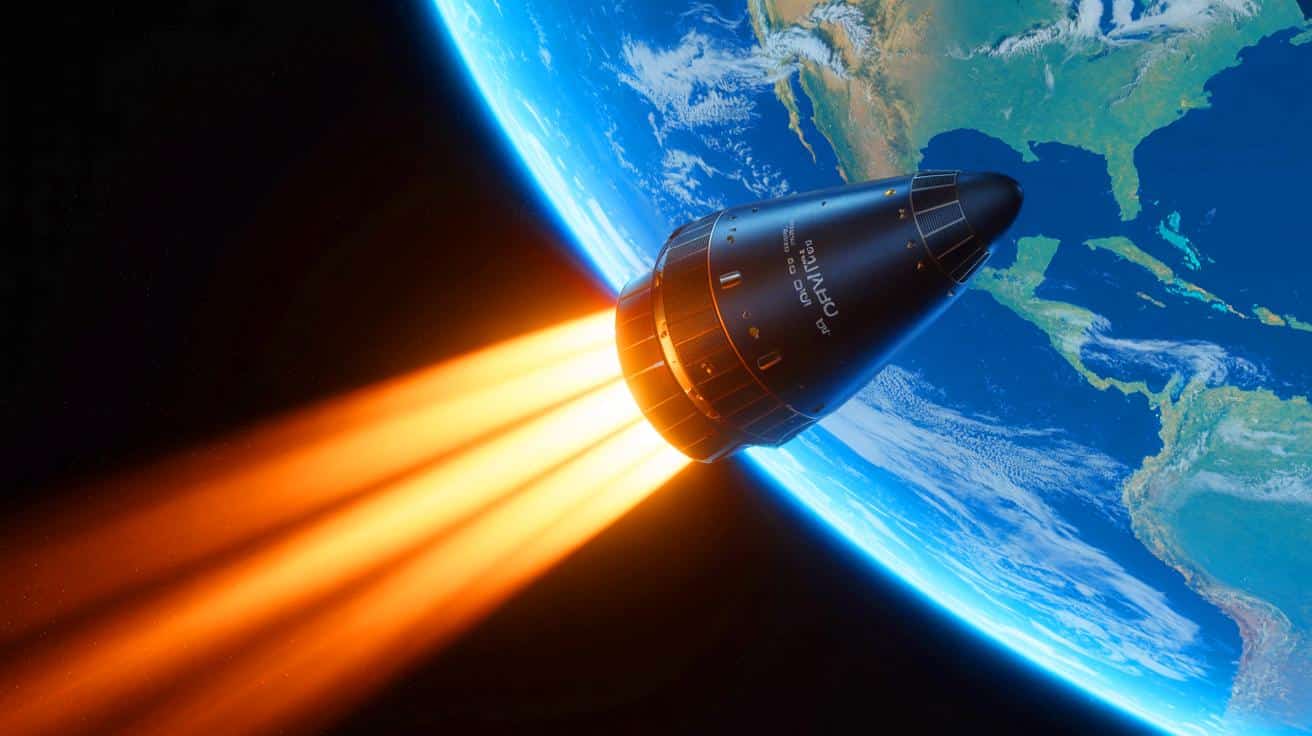
In a groundbreaking advancement for logistics and defense, Inversion has introduced its newest innovation, the Arc spacecraft. This pioneering vehicle promises to revolutionize the way mission-critical cargo is delivered across the globe. Capable of carrying significant payloads and operating without traditional runways, Arc offers unprecedented speed and flexibility. As the aerospace industry evolves, Inversion’s Arc stands out as a beacon of technological progress. The vehicle not only caters to civilian needs but also holds potential as a hypersonic research platform for military applications. With such versatile capabilities, the Arc spacecraft marks a significant milestone in space-based logistics, potentially altering the landscape of global supply chains.
Innovative Space-Based Logistics
Inversion, a Los Angeles-based company, has made waves with the unveiling of its flagship spacecraft, the Arc. This vehicle is designed to redefine the logistics landscape by offering rapid delivery of mission-critical cargo from orbit to nearly any location on Earth. With a capacity to carry up to 500 pounds, the Arc can deliver its payload in less than an hour. This speed is a game-changer for industries that rely on time-sensitive deliveries, such as healthcare and emergency response.
The Arc’s design incorporates innovative features that enable it to operate without the need for traditional runways. This capability allows it to land in diverse environments, expanding its utility across various sectors. According to co-founders Justin Fiaschetti and Austin Briggs, the vehicle represents a significant leap forward in creating a logistics network that enhances Earth’s accessibility. By maintaining Arcs in orbit for extended periods, Inversion aims to offer a ready-to-deploy solution that ensures timely and efficient delivery.
Technical Specifications and Capabilities
The Arc reentry vehicle stands at approximately 8 feet tall and 4 feet wide, dimensions comparable to a large tabletop. Despite its compact size, it is engineered to handle a diverse range of deliveries, from medical supplies to drones. This flexibility makes it an ideal choice for various industries that require prompt and reliable delivery services.
One of the Arc's key features is its ability to remain in orbit for up to five years. During this time, it can be called upon to deliver its payload to specific locations within an hour. This capability is particularly valuable for the military, as it allows for quick deployment of resources and equipment in critical situations. In an interview with Ars Technica, Fiaschetti emphasized the strategic advantage of pre-positioning Arcs in orbit, ready to descend and deliver their cargo efficiently.
Potential Military Applications
The Arc vehicle's capabilities extend beyond civilian applications, offering significant potential for military use. Its ability to serve as a hypersonic research platform positions it as a valuable asset for the U.S. military. The vehicle's rapid deployment and delivery capabilities could prove essential in various defense scenarios, where time is of the essence.
The military's interest in hypersonic technology has been growing, and the Arc's unique features align well with these interests. Its capacity to carry and deliver mission-critical cargo at high speeds could enhance military operations, providing a strategic edge in both domestic and international contexts. As global tensions rise, the demand for innovative defense technologies like the Arc is likely to increase, further highlighting its importance.
Implications for the Future of Logistics
Inversion's Arc spacecraft is poised to transform the logistics industry, offering a new model for rapid, space-based delivery. By reducing delivery times to under an hour, the Arc could significantly impact industries that depend on timely supply chains. This advancement serves as a catalyst for further innovation in the aerospace sector, encouraging other companies to explore similar technologies.
The introduction of the Arc also raises questions about the future of traditional logistics methods. As space-based delivery becomes more feasible and cost-effective, businesses may increasingly turn to this method for critical deliveries. This shift could lead to changes in how companies approach supply chain management, with a greater emphasis on speed and efficiency. As the Arc demonstrates the potential of space-based logistics, what other innovations might emerge to further revolutionize the delivery industry?

C’est incroyable, mais est-ce que ce sera vraiment abordable pour les entreprises ? 🤔
Wow, l’idée d’une livraison mondiale en une heure, c’est vraiment de la science-fiction qui devient réalité ! 🚀
Pensez-vous que le coût sera abordable pour les petites entreprises ? 🤔
Wow, je ne savais même pas que c’était possible ! Merci pour cet article fascinant.
Bravo à Inversion pour cette avancée incroyable. C’est un changement de jeu pour la logistique !
Comment comptez-vous gérer les retours de produits ? Cela semble compliqué depuis l’espace !
J’espère juste que ça ne va pas finir par tomber sur ma maison… 😅
Superbe innovation, mais qu’en est-il de l’impact environnemental ?
Pourquoi ne pas utiliser cette technologie pour les voyages humains ? Ça pourrait être révolutionnaire !
C’est fascinant, mais je suis curieux de voir comment ils géreront les retombées écologiques.
Est-ce que ce type de livraison pourrait un jour être utilisé pour des colis personnels ?
Les drones semblent déjà rapides, mais ça, c’est d’un autre niveau !
J’ai du mal à imaginer comment cela pourrait fonctionner dans la vie de tous les jours. Trop beau pour être vrai ?
Je me demande si ça pourrait révolutionner le secteur de la santé en livrant du matériel médical d’urgence.
Ce serait génial pour les situations d’urgence, mais j’espère que les coûts ne seront pas prohibitifs.
Mais est-ce vraiment nécessaire d’aller dans l’espace pour livrer des colis ? 🤨