





| IN A NUTSHELL |
|
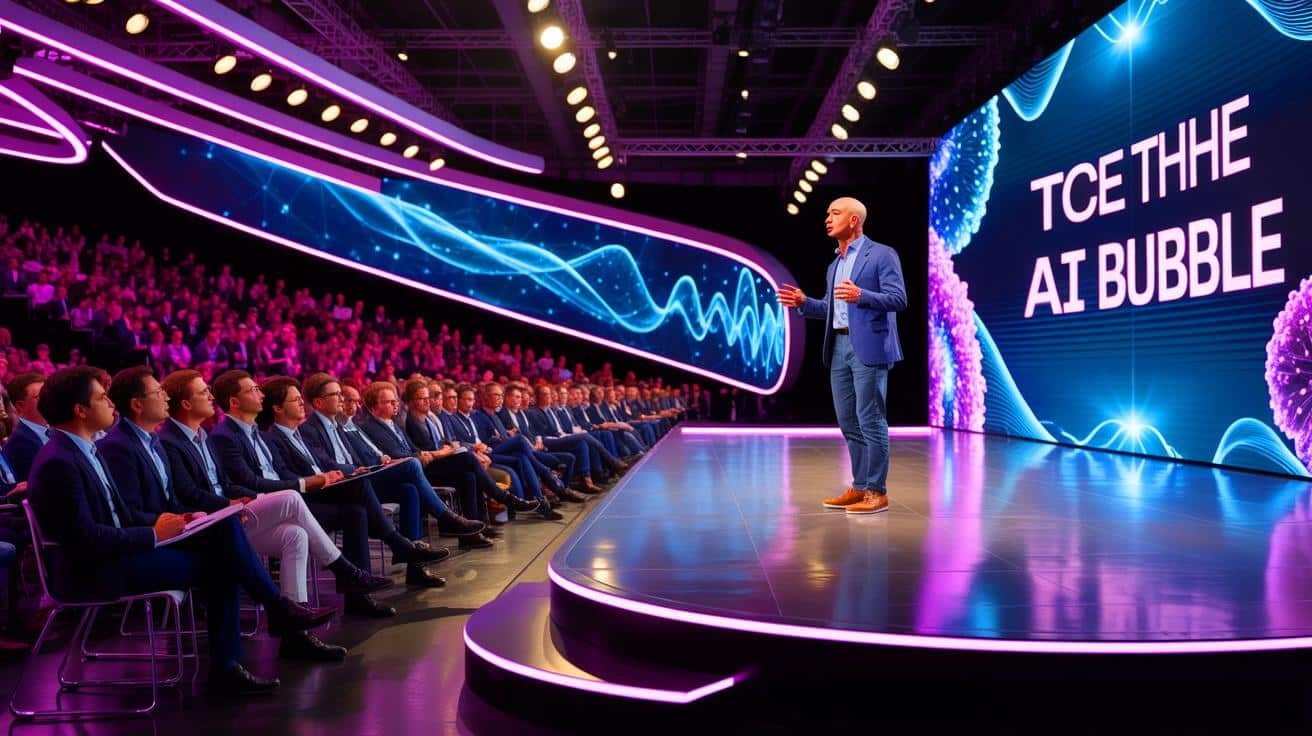
Artificial Intelligence (AI) has long promised to revolutionize industries, streamline operations, and create a future of abundance. Yet, as investments in AI surge, some industry leaders, like Jeff Bezos, are expressing a mix of optimism and caution. Bezos, speaking at a recent tech conference in Italy, suggested that the current AI bubble might be beneficial in the long run. His stance is not isolated; other tech luminaries like Sam Altman of OpenAI share similar views. The debate centers on whether the inevitable burst of this bubble could serve as a cleansing force in the market, eliminating weaker players while fostering innovation and growth among the resilient.
Jeff Bezos’ Perspective on the AI Bubble
Jeff Bezos, the founder of Amazon and a pivotal figure in the tech industry, has an intriguing take on the burgeoning AI bubble. At a tech conference in Italy, Bezos acknowledged the inflated valuations within the AI industry, suggesting that they are detached from business fundamentals. However, he views this bubble as potentially positive. He believes that when the bubble bursts, it will leave behind only the strongest innovators, which could benefit society as a whole. This perspective is rooted in the idea that technological advancements, once purified of weaker elements, can drive significant societal benefits.
Bezos emphasizes the profound potential of AI, asserting that its societal benefits will be immense. He envisions a future where AI contributes to greater productivity, lower costs, and healthier living. This optimism fuels continued investment and interest in AI, despite the industry’s current challenges. Bezos’ approach reflects a broader sentiment among tech leaders who are willing to endure short-term disruptions for long-term gains.
Sam Altman’s Optimism and Caution
Sam Altman, CEO of OpenAI, echoes Bezos’ sentiments about the AI bubble. In discussions with reporters, Altman admitted that the excitement surrounding AI might lead to excessive investments and inevitable financial losses for some. He acknowledges that the current phase is characterized by overinvestment driven by the belief in AI’s transformative potential. Altman is candid about the likelihood of “dumb capital allocations,” but remains confident that AI will ultimately usher in an era of unprecedented economic growth.
Altman’s confidence is not without caution. He recognizes that the industry must navigate a complex landscape of expectations versus reality. While some investors may face losses, Altman believes the broader economy will benefit. This perspective underscores a critical tension in the tech world: balancing the hype with the actual capabilities of AI. Altman’s insights highlight a pragmatic optimism that anticipates both challenges and triumphs.
Financial Leaders Weigh In
Financial experts, including Goldman Sachs CEO David Solomon, offer a more tempered view of the AI bubble. Solomon, speaking at the same conference as Bezos, cautioned against the unchecked enthusiasm that often accompanies emerging technologies. He warned that significant capital might be deployed without yielding expected returns, leading to a market reset. Solomon’s remarks reflect a broader skepticism about the sustainability of the current AI investment frenzy.
Solomon predicts a market correction, suggesting that the extent of this adjustment will depend on the duration of the current bull market. His analysis serves as a reminder that while technological advancements hold promise, they are not immune to economic realities. The insights from financial leaders provide a counterbalance to the optimism of tech innovators, emphasizing the need for prudent investment strategies.
The Divergence Between Expectations and Reality
The contrasting viewpoints of tech and financial leaders highlight a growing divergence between the promises of AI and actual market performance. While figures like Bezos and Altman emphasize the potential for a transformative impact, studies reveal a different narrative. A recent MIT study found that 95 percent of generative AI initiatives are failing to deliver rapid revenue growth. This gap between expectation and reality raises questions about the timing and nature of AI’s impact on the economy.
This divergence underscores the complexity of the AI landscape. As companies continue to invest heavily in AI, the industry must address challenges related to implementation and scalability. The discrepancy between lofty promises and tangible outcomes invites further scrutiny and analysis. How will the tech industry reconcile these differences, and what does this mean for the future of AI-driven innovation?
As the AI industry navigates this pivotal moment, the stakes are high for both investors and society at large. The optimistic visions of tech leaders like Jeff Bezos and Sam Altman stand in contrast to the cautionary notes from financial experts. The debate over the AI bubble’s implications underscores the broader tension between innovation and economic realities. As the industry evolves, a critical question emerges: Will the AI bubble’s eventual burst lead to a more sustainable and impactful technological future, or will it expose vulnerabilities that derail its potential?



Je me demande si Bezos a prévu de nouvelles stratégies pour Amazon face à cette crise imminente ? 🤔
Is this AI crash really inevitable, or just a matter of speculation? 🤔
Jeff Bezos always has an interesting perspective. Thanks for sharing!
Ça me rappelle la bulle internet des années 2000. Espérons que cette fois, les entreprises sauront mieux se préparer.
Do you think the AI bubble burst will be as significant as the dot-com crash?
Seems like a natural market correction to me. No need to panic.
Merci pour cet article éclairant. J’apprends toujours quelque chose de nouveau ici ! 😊
I’m curious if Bezos is investing in AI or pulling back. 🤷♂️
It’s about time someone acknowledged the overinvestment in AI. Kudos to Bezos!
Les entreprises faibles seront-elles vraiment éliminées ou juste rachetées par les plus grandes ?
Will the strong companies be the ones who adapt AI the fastest?
C’est toujours facile de parler de “faibles entreprises” quand on est multimilliardaire !
This might be a good thing in the long run. Survival of the fittest, right?
Are we just repeating history with another tech bubble?
Si 95% des initiatives échouent, pourquoi continue-t-on à investir autant dans l’IA ?
Jeff Bezos is always ahead of the curve. I wonder what his predictions will be next.