





| IN A NUTSHELL |
|
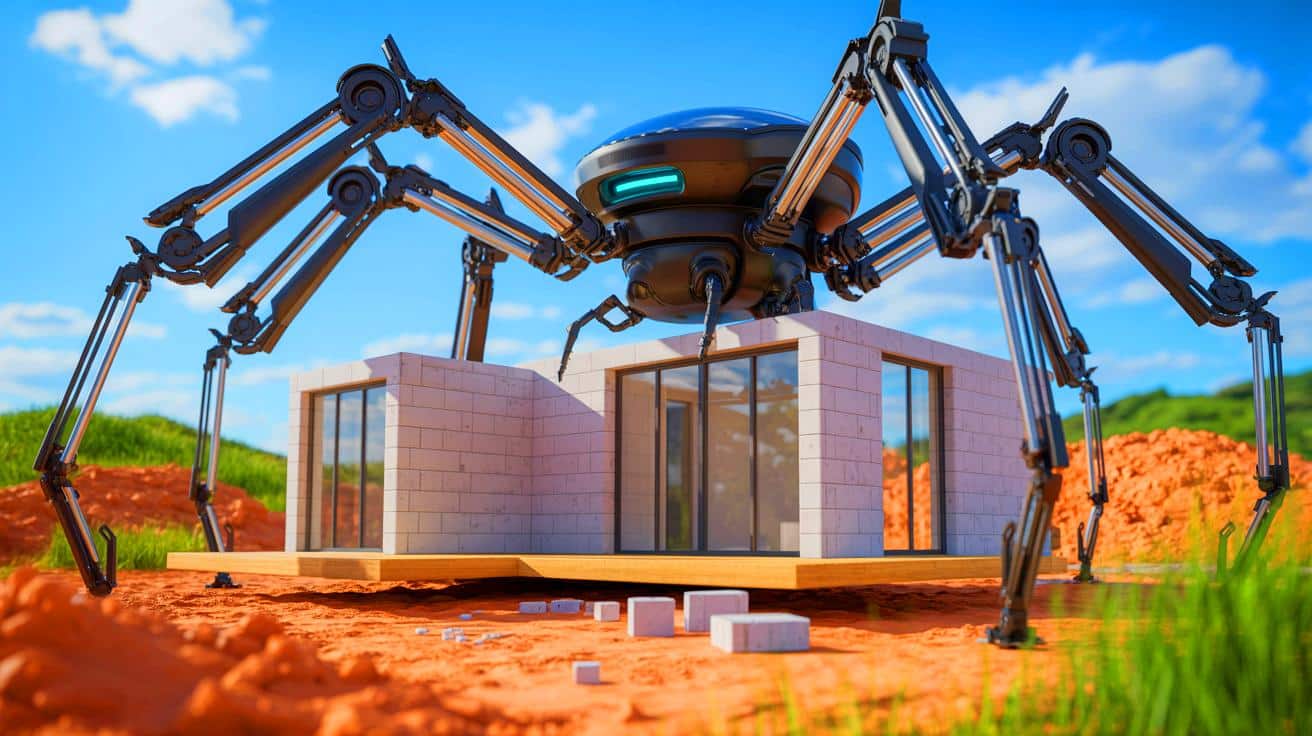
An innovative leap in construction technology is on the horizon, promising to reshape how we approach building on Earth and beyond. Developed by Australian firms Crest Robotics and Earthbuilt Technology, a spider-like robot named Charlotte aims to address pressing housing issues and future lunar construction challenges. With its ability to autonomously 3D print a 2,100-square-foot house in just 24 hours, Charlotte is poised to revolutionize the construction industry. This technology combines advanced robotics with sustainable building techniques, offering a glimpse into the future of construction both on our planet and on the Moon.
Solving the Housing Crisis on Earth
The global housing crisis is a multifaceted issue, exacerbated by high costs and slow construction speeds that fail to meet growing demand. Charlotte is engineered to counter these challenges by providing a faster, more efficient building process. The fully autonomous robot utilizes Crest Robotics’ cutting-edge capabilities and Earthbuilt Technology’s innovative extrusion and compaction systems. This combination allows Charlotte to transform raw materials into structural walls with remarkable efficiency.
Charlotte employs a method akin to Earthbagging, a sustainable construction technique that involves packing loose materials into large tubes or bags and compacting them to form structural layers. The robot collects readily available materials such as sand, earth, and even waste products like crushed brick. These materials are then bound in fabric and compressed to create robust wall layers. This approach not only speeds up construction but also reduces costs and carbon emissions, presenting a practical solution to housing shortages.
Lunar Construction: A New Frontier
Beyond Earth, Charlotte is set to play a crucial role in the construction of lunar habitats. As space agencies like NASA prepare for a sustainable presence on the Moon, the need for efficient, autonomous building solutions becomes evident. Charlotte’s unique design is tailored for this off-world application. Its six-legged, spider-like structure provides the agility and stability necessary for construction on the Moon’s challenging terrain.
The robot’s lightweight and foldable design makes it ideal for space travel, where every pound and cubic inch counts. Once on the lunar surface, Charlotte can efficiently extrude and compact lunar soil to build structures like domed shelters. This capability positions it as a valuable asset in the race to establish a permanent base on the Moon, highlighting the intersection of technological innovation and space exploration.
The Race to Build on the Moon
Charlotte is part of a larger global effort to master off-world construction, joining other companies and organizations striving to develop 3D printing technology for use on the Moon and beyond. Among these is ICON, a leader in the field working with NASA on Project Olympus, which aims to 3D print infrastructure using local lunar soil. ICON has already demonstrated its expertise by 3D-printing the Mars Dune Alpha habitat for NASA’s Earth-based simulations.
Similarly, AI SpaceFactory, another key player, won NASA’s 3D-Printed Habitat Challenge in 2019. The U.S.-based company is developing large-scale 3D printers and building materials from simulated lunar or Martian soil. These efforts, alongside Charlotte’s potential, underscore the competitive race to develop autonomous construction technologies that can operate in extraterrestrial environments.
The Future of Autonomous Construction
If successful, Charlotte and similar technologies could mark a significant advancement in autonomous construction, with implications both on Earth and the Moon. The ability to quickly and efficiently build using local materials not only addresses immediate housing shortages but also prepares us for future interplanetary habitation. The integration of robotics and sustainable building techniques exemplifies the innovative spirit driving this field forward.
As we look to the future, the potential for such technologies extends beyond construction. They could transform how we think about resource management, environmental impact, and sustainable living. The question remains: how will societies adapt to and integrate these groundbreaking technologies into everyday life?
Wow, construire une maison en 24h ?! C’est comme une imprimante à pizza pour les bâtiments ! 🍕🏠
Impressionnant ! Charlotte pourrait bien changer la donne pour l’industrie de la construction. 🏗️
Est-ce que ce robot fonctionne également dans des climats extrêmes ?
Est-ce que Charlotte peut aussi peindre les murs ou c’est juste la structure ? 🤔
Je suis curieux de savoir combien coûterait une maison imprimée en 3D par Charlotte.
Génial, mais est-ce que ce robot peut aussi gérer la plomberie et l’électricité ? 🛠️
Wow, construire sur la Lune ! C’est comme de la science-fiction qui devient réalité. 🚀
J’espère que ces robots ne prennent pas trop de travail aux ouvriers du bâtiment ! 😟
J’espère que Charlotte ne se dérègle pas et ne commence pas à imprimer des maisons à l’envers. 😂
Incroyable ! On dirait que la science-fiction devient réalité. Merci pour cet article fascinant.