





| IN A NUTSHELL |
|
Elon Musk’s ventures are no strangers to the spotlight, often due to groundbreaking innovations or bold business moves. Recently, however, Tesla’s Cybertruck has caught attention for less triumphant reasons. The electric vehicle, once heralded as a revolutionary leap in automotive design, is now facing significant hurdles in the market. In an unexpected twist, unsold Cybertrucks are being redirected to SpaceX and xAI, two of Musk’s other companies. Officially, this move is part of a shift towards more sustainable transportation solutions. Yet, beneath the surface lies a more complex narrative of strategic maneuvering aimed at managing overproduction and investor concerns.
Cybertrucks at SpaceX and xAI: Logistics Recycling or Facade?
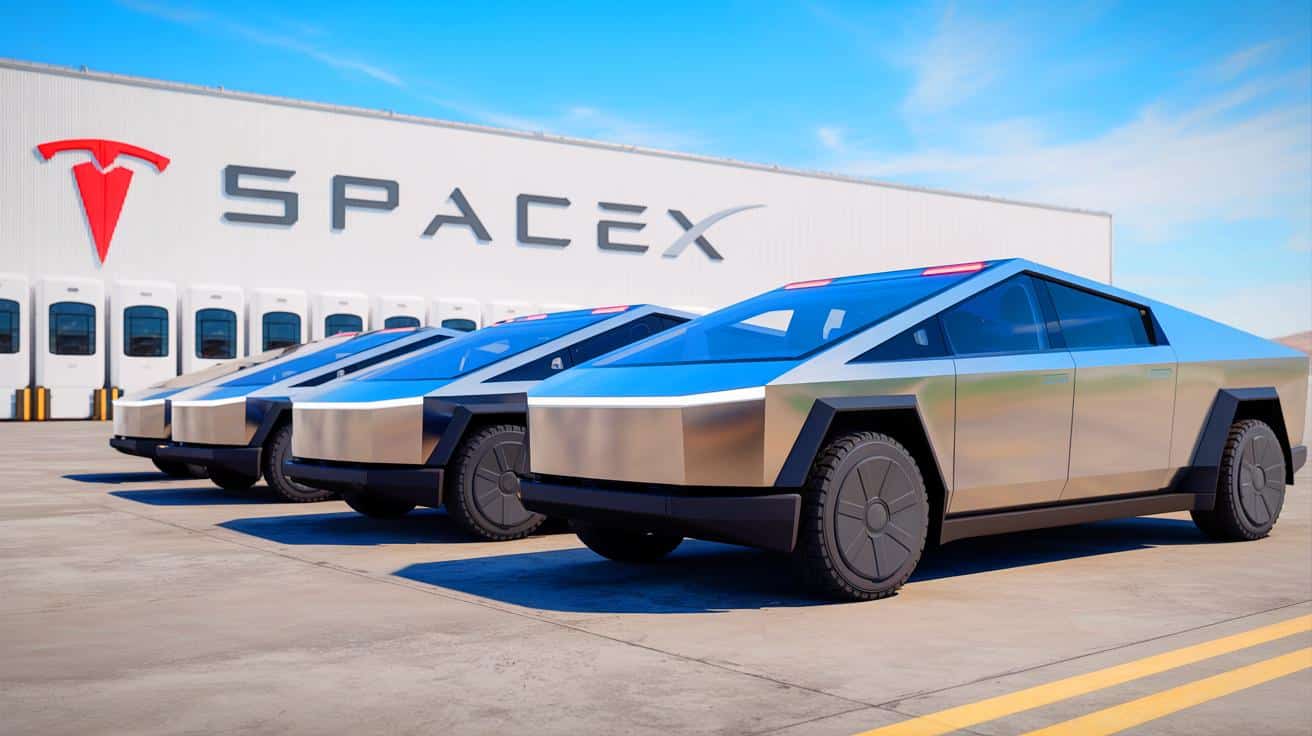
In recent weeks, observant insiders have noted a flurry of Cybertruck deliveries to SpaceX facilities in Texas and xAI. These futuristic pickups, numbering in the hundreds, are ostensibly ordered for logistical purposes at both entities. The official line promotes this as a transition to environmentally friendly mobility, with Wes Morrill, the chief engineer of the Cybertruck project, enthusiastically supporting the move. He stated, “I love seeing the combustion fleets of Tesla and SpaceX replaced by Cybertrucks.”
However, there is scant concrete data regarding the sales conditions or the exact volume of this internal transaction. This lack of transparency coincides with a pivotal moment for Tesla, as the Cybertruck struggles to gain traction in the consumer market. The internal distribution of these vehicles appears to be a strategic effort to manage inventory and uphold production activities amidst waning market enthusiasm.
The Cybertruck: From Futuristic Icon to Industrial Burden?
Initially envisioned as a groundbreaking vehicle, the Cybertruck was expected to significantly boost Tesla’s growth. Yet, since its launch, sales figures have failed to meet expectations. The Texas factory, designed to produce 250,000 units annually, is operating at a mere 10 percent of its capacity. With sales hovering around 20,000 units annually, the numbers fall starkly short of the ambitious goals set forth by Tesla.
As a result of this overproduction, costs are escalating. Rather than curtail production, Tesla has chosen to integrate the surplus vehicles into its own operations. This approach maintains minimal industrial activity while camouflaging the lack of market demand. The Cybertruck, once a symbol of automotive innovation, now represents a significant logistical challenge for the company.
A Defensive Strategy or Genuine Industrial Synergy?
Redirecting Cybertrucks to SpaceX and xAI is not an illegal maneuver, yet it raises several questions. Is this an attempt to test the vehicle under extreme conditions? A genuine effort to demonstrate their utility internally? Or merely a tactic to maintain appearances and appease investors?
Some internal voices frame this decision as an ecologically coherent strategy, while others perceive it as an effort to mask a commercial failure amidst Elon Musk’s vast array of ventures. Regardless of the interpretation, one thing is clear: the Cybertruck, once touted as a herald of a new automotive era, has become more of a logistical puzzle than a commercial triumph.
Investor Concerns and Market Implications
The reallocation of Cybertrucks has not gone unnoticed by investors, who are keenly observing Tesla’s stock performance. The recent dip in Tesla’s stock price reflects broader concerns about the company’s market strategy and product viability. Investors are wary of the implications of shifting unsold inventory internally, questioning whether this signifies deeper systemic issues within Tesla’s production and sales approach.
The broader market impact remains uncertain. If Tesla can successfully integrate the Cybertruck into its operational ecosystem, it could provide a temporary reprieve. However, long-term success hinges on the vehicle’s ability to regain consumer interest and market share. For now, the Cybertruck’s journey from a futuristic icon to a logistical challenge continues to unfold, leaving stakeholders and industry observers alike contemplating its future trajectory.
As Tesla navigates the complexities surrounding the Cybertruck, it faces critical questions about its strategic direction and market positioning. Will the company manage to revitalize interest in the Cybertruck, or will this innovative vehicle remain a burden on its resources? The coming months will reveal whether Tesla can transform this challenge into an opportunity, or if it will need to reconsider its approach to this once-promising venture.

Is this strategy of redirecting unsold Cybertrucks really sustainable in the long run? 🤔
Is this move to SpaceX and xAI a sign of desperation or innovation? 🤔
Elon Musk always surprises us with his moves. But is this one a little too out there? 🚀
Why not just offer discounts on these Cybertrucks instead of moving them around?
So, are we gonna see Cybertrucks on Mars now? 😂
Seems like a patchwork solution to a bigger problem. What about focusing on boosting consumer interest instead?
Thx, Elon, for always keeping things interesting! 🚀
Thank you for addressing the overproduction issue, but is this the best solution? 🤨
How does this affect Tesla’s long-term brand image?
Good to see innovation in recycling products internally. Keep it up, Tesla! 🚗✨
Elon is always thinking outside the box, but this time the box seems pretty big!
This sounds like a logistical nightmare. Good luck, Tesla!
What exactly are SpaceX and xAI going to do with all those Cybertrucks?
An interesting way to maintain production levels. Wouldn’t reducing production make more sense?
Wait, so they’re just shuffling cars between companies? LOL!
Can we get a Cybertruck rocket launch next? 😂🛸