





| IN A NUTSHELL |
|
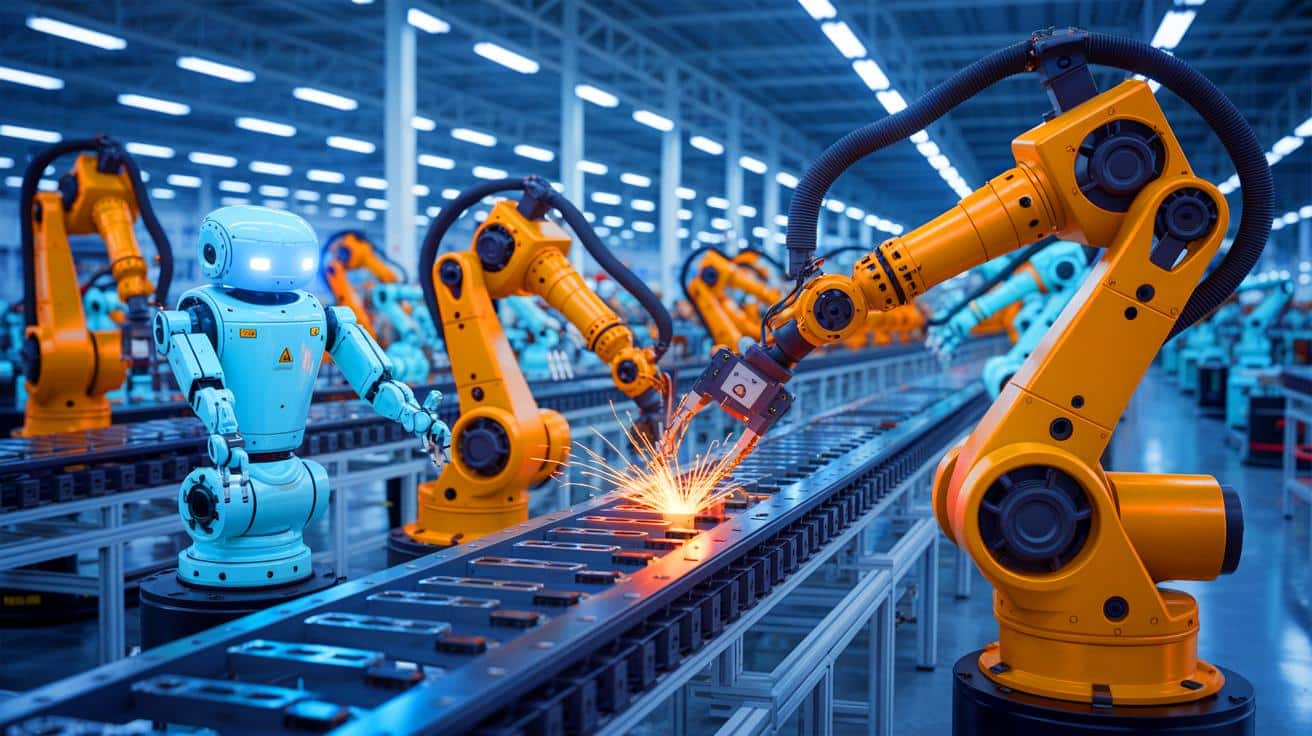
China’s rapid adoption of robotics in manufacturing has positioned it as a global leader in this technological arena. The recent installation of 300,000 robots in Chinese factories underscores the nation’s commitment to automation. This figure not only surpasses the combined efforts of other leading countries but also highlights China’s strategic vision for the future. As Beijing continues to prioritize innovation, the implications are vast for both domestic and international markets. The country’s efforts to reduce reliance on imported technology have been met with significant success, setting a new standard in the global manufacturing landscape.
The Vision Behind China’s Robotics Surge
China’s ascent as a leader in robotics is no accident. In 2015, the government unveiled the Made in China 2025 initiative, aiming to bolster its manufacturing capabilities and reduce dependence on foreign technology. This plan was not merely a declaration of intent but a comprehensive strategy that involved significant government investment and support. Policies were designed to provide almost limitless funding to industries willing to adopt and advance robotic technologies. State banks offered loans at low interest rates, and government funds facilitated acquisitions of foreign companies.
The results have been profound. Chinese companies have not only caught up with their Western counterparts but, in many cases, surpassed them. Lian Jye Su, an analyst at Omdia, noted that the government’s sustained support was crucial for this growth. By 2021, China had introduced a detailed plan to expand robot usage further, cementing its commitment to this technological path. This long-term vision has set the stage for China to dominate the robotics industry in the coming decades.
Comparing Global Robotics Efforts
China’s focus on automation is reshaping the global manufacturing landscape. In stark contrast to its rapid growth, other leading nations have seen a decline in robotic installations. The United States, Japan, South Korea, and Germany, which once led in robotics, now lag behind China’s aggressive expansion. Chinese factories account for a third of all manufactured goods worldwide, a testament to their advanced automation.
Interestingly, while China initially relied heavily on imported robots, recent trends show a shift towards domestically produced units. Last year, three-fifths of the installed robots in China were produced within its borders. This shift not only enhances self-reliance but also strengthens China’s position as a major player in the global robotics market. With five times as many robots as the United States, China’s lead in this field continues to grow.
The Rise of Humanoid Robots
While the International Federation of Robotics’ data does not account for humanoid robots, China’s efforts in this area are noteworthy. The government has supported the development of humanoids, and companies like Unitree Robotics are emerging as leaders. Unitree, based in Hangzhou, is producing humanoids at a fraction of the cost of their American counterparts, such as Boston Dynamics.
The affordability and scalability of Unitree’s products are game-changers in the humanoid market. Priced at $6,000, these robots are accessible to a broader range of industries. With plans to go public by the end of 2025, Unitree is poised to expand its influence further. This focus on humanoids complements China’s broader robotics strategy, positioning it as a comprehensive leader in automation technology.
The Role of Skilled Manpower and AI
China’s success in robotics is not solely due to technological investments. The country benefits from a vast pool of skilled electricians and computer programmers essential for robot installation and maintenance. However, the demand for specialists has led to a shortage, driving salaries to nearly $60,000 annually. This increase reflects the high value placed on expertise in the robotics field.
Moreover, China’s robust AI industry plays a critical role in enhancing factory efficiency. AI technologies are employed to monitor and optimize equipment performance, ensuring maximum productivity. This integration of AI and robotics accelerates China’s automation efforts, setting a high bar for other countries. As China continues to refine its approach, the interplay between skilled manpower and AI remains a cornerstone of its strategy.
As China continues to lead the world in robotic installations and innovation, the global manufacturing landscape is undergoing significant change. The country’s strategic vision and investment in technology have paid off, setting a new standard for automation. However, as China advances, questions arise about the long-term implications for global competition and technological development. How will other nations respond to China’s dominance in robotics, and what does the future hold for international collaboration and competition in this rapidly evolving field?



Will this mean more affordable products for consumers worldwide? 🤔
Wow, 300,000 robots! Are they planning to replace all human workers or what? 🤔
Impressive numbers, but what happens to the workers being replaced?
Impressive but a bit scary. What happens to the people who lose their jobs?
China is truly leading the charge in robotics. Kudos to their vision!
Are these robots environmentally friendly or adding to pollution issues?
China’s strategy is bold and ambitious. Will other countries be able to catch up?
Unbelievable! 300,000 robots in one year?! That’s insane!
Est-ce que ces robots consomment plus d’énergie que les humains ? 🌍
How can other countries catch up with China’s robotic advancements?
Looks like the future is here, and it’s robotic! 🤖
It’s incredible how fast technology is advancing. What a time to be alive!
Thank you, China, for pushing the boundaries of technology.