




| IN A NUTSHELL |
|
A peculiar ecological phenomenon is sweeping across the Atlantic Ocean, drawing the attention of scientists and policymakers alike. This vast expanse of floating seaweed, known as the Great Atlantic Sargassum Belt, is not merely a natural curiosity but a potent indicator of the profound ways human activities are reshaping marine environments. The bloom, which now stretches from West Africa to the Gulf of Mexico, has reached unprecedented levels, posing significant challenges to coastal communities and ecosystems. As researchers strive to understand this phenomenon, the implications for our oceans—and the people who rely on them—are becoming increasingly urgent.
The Rise Of The Great Atlantic Sargassum Belt
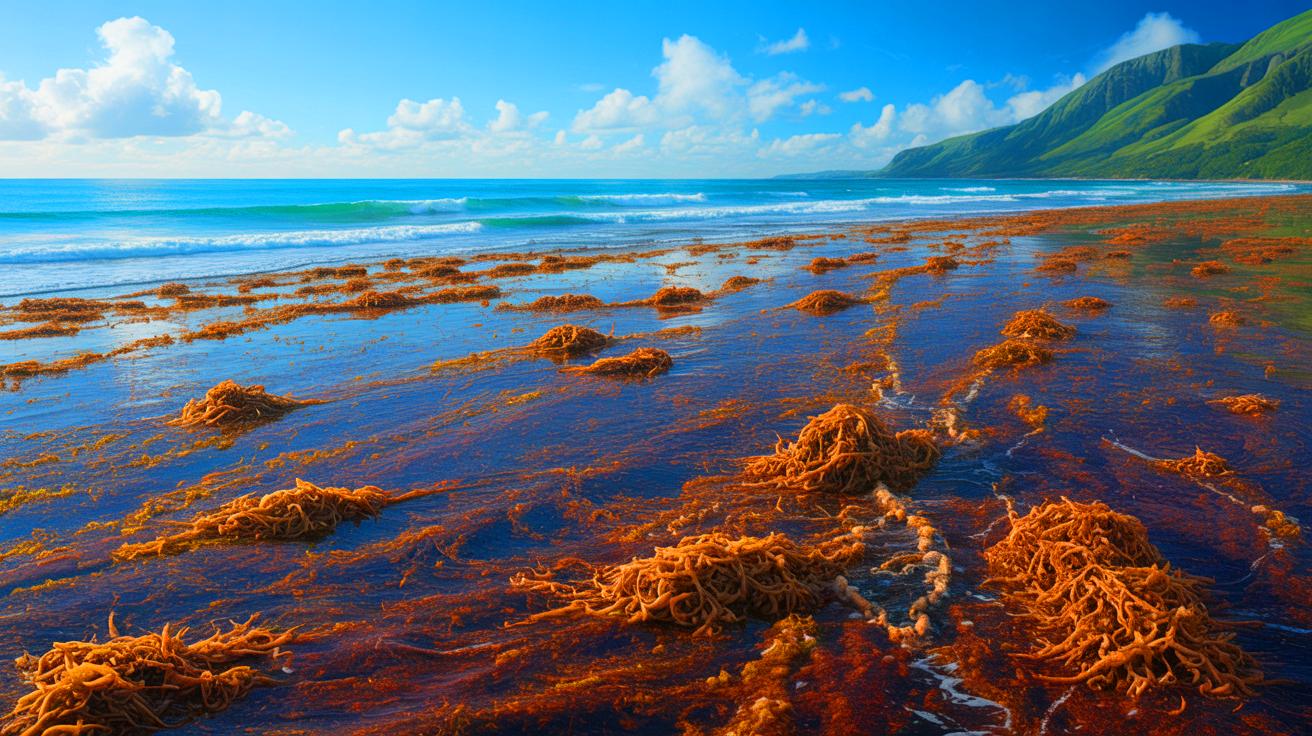
Since 2011, the Great Atlantic Sargassum Belt has been expanding dramatically, transforming from a localized phenomenon into a massive oceanic bloom. This belt of floating sargassum has spread from its traditional habitat in the Sargasso Sea to encompass a vast swath of the Atlantic Ocean. Ocean currents like the Loop Current and the Gulf Stream play a crucial role in this expansion, distributing nutrient-rich waters that fuel the seaweed’s growth. Satellite imagery has captured the rapid increase in sargassum biomass, doubling in just days under optimal conditions.
The influx of nutrients from major rivers, including the Mississippi and the Amazon, acts as a catalyst for this growth. Researchers have identified these rivers as key drivers of the bloom’s expansion, providing the necessary nutrients that allow sargassum to thrive. The scale of this bloom is unprecedented, with the biomass reaching a record 37.5 million tons in May 2025. This massive accumulation of seaweed is reshaping entire ocean basins and challenging our understanding of marine ecosystems.
Human Activity And Nutrient Pollution
The surge in sargassum biomass can be traced back to human activities that introduce excessive nutrients into the ocean. According to Brian Lapointe, a leading researcher at the FAU Harbor Branch Oceanographic Institute, land-based nutrient inputs are the primary drivers of this growth. Agricultural runoff, wastewater discharge, and atmospheric deposition contribute to the nutrient-rich conditions that favor sargassum blooms.
The chemical composition of sargassum has changed over the years, with nitrogen levels increasing significantly while phosphorus has declined. This shift indicates the profound impact of terrestrial processes on marine ecosystems. By altering the nutrient balance in the ocean, human activities are reshaping the growth patterns of marine species, with sargassum being a prime example. The seaweed’s ability to thrive in nutrient-poor waters by recycling marine waste further complicates management efforts and underscores the interconnectedness of terrestrial and marine ecosystems.
Coastal Impacts And Risks To Communities
The spread of the Great Atlantic Sargassum Belt has far-reaching consequences for coastal communities. The dense mats of seaweed can clog beaches, disrupt fisheries, and pose health risks to local populations. Popular tourist destinations in the Caribbean, Mexico, and Florida have experienced significant economic losses due to emergency cleanups and decreased tourism revenue.
Sargassum blooms also create oxygen-depleted zones beneath the dense mats, affecting marine life and fisheries. The decomposing seaweed releases hydrogen sulfide gas, which can cause respiratory problems for nearby residents. In extreme cases, such as the 1991 shutdown of a Florida nuclear power plant, the impacts of these blooms have disrupted critical infrastructure. As the belt continues to expand, these disruptions are likely to become more frequent, posing ongoing challenges to coastal economies and public health.
The Science Behind The Growth
Understanding the dynamics of sargassum growth requires an examination of its nutrient composition over time. Researchers have studied the changes in nitrogen, phosphorus, and carbon levels across different regions of the Atlantic to identify the environmental forces driving this phenomenon. Factors such as river flows, rainfall, and Amazon basin floods play a significant role in influencing the bloom’s biomass.
By analyzing the nutrient composition of sargassum, scientists are gaining insights into the complex interactions between terrestrial and marine ecosystems. The seaweed’s ability to adapt to varying nutrient levels and recycle marine waste highlights its resilience and complicates management strategies. As researchers continue to investigate the factors driving sargassum growth, the findings hold important implications for understanding how human activities influence marine environments on a global scale.
The Great Atlantic Sargassum Belt serves as a stark reminder of the interconnectedness of global ecosystems. The bloom’s expansion reflects how human activities, such as nutrient pollution from agriculture and urban development, can have far-reaching impacts on marine environments. As scientists work to unravel the complexities of this ecological phenomenon, the broader implications for ocean health and coastal communities remain a pressing concern. How will policymakers and communities address the challenges posed by this evolving environmental reality?

Wow, ça fait vraiment peur ! Comment peut-on aider à réduire ces blooms de sargasses ? 🌊
Is it possible to use this seaweed for something productive, like biofuel? 🤔
Oh great, now the ocean has its own brown tide. What’s next, a purple cyclone? 😅
Je n’avais jamais entendu parler de ça avant, c’est fascinant et effrayant à la fois. Quelqu’un a une solution miracle ?
Merci pour cet article! C’est inquiétant de voir à quel point les activités humaines affectent nos océans. 🌍
C’est triste de voir l’impact de nos actions sur l’environnement. Espérons que des mesures seront prises rapidement.
How can coastal communities adapt to this recurring issue? Are there any long-term solutions?
La nature se rebelle, et je suis sûr qu’elle a ses raisons. Peut-être devrions-nous écouter plutôt que d’ignorer les signes.
La mer devient un endroit assez dangereux, entre les déchets plastiques et maintenant ça. 😟
I wonder if this could be an opportunity for researchers to develop new technologies for cleaning up the seaweed?
Les plages des Caraïbes ne seront plus jamais les mêmes… 😢
The interconnectedness of ecosystems is fascinating, but also terrifying when you see the impact. 😬
Les sargasses apportent-elles au moins des bénéfices écologiques ou est-ce que c’est uniquement nuisible ?
Quel cauchemar pour les plages des Caraïbes! Le tourisme doit en souffrir énormément.