





| IN A NUTSHELL |
|
In the ever-evolving world of online shopping, a surprising narrative has emerged from the digital sphere. Carter Sharer, a well-known American YouTuber with over 11 million subscribers, embarked on an audacious experiment: purchasing a Bugatti for $30,000 from a Chinese platform. Known for his extravagant content, Sharer’s latest venture has captured the attention of many. This episode highlights not only the allure of luxury cars but also the unpredictable nature of online marketplaces that often promise more than they deliver. As the story unfolds, it provides a compelling glimpse into the complexities and potential pitfalls of global e-commerce.
The Temptation of a $30,000 Bugatti
Carter Sharer, celebrated for his sensational videos, decided to push the envelope by purchasing a Bugatti at an astonishingly low price. The vehicle was listed for $30,000 on Alibaba, a platform known for its vast array of products, and an antecedent to the popular Temu. The listing described the car as “neatly used,” a detail that convinced Sharer of its legitimacy. However, the notion of acquiring such a high-end vehicle at a fraction of its regular price seemed implausibly ambitious.
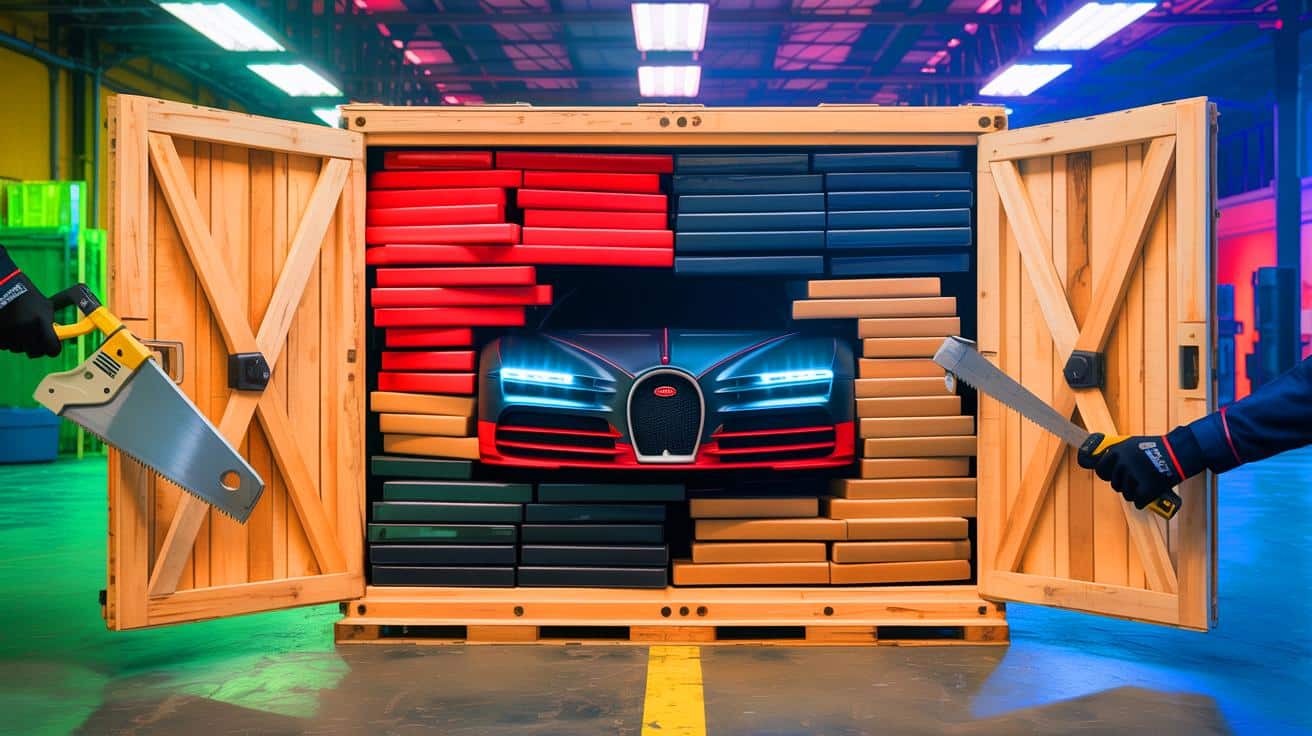
Typically, even damaged models of the Molsheim-manufactured Bugattis are valued at no less than $300,000, ten times the price Sharer paid. Despite this glaring discrepancy, Sharer proceeded with the purchase, and anticipation built as he awaited delivery. Months later, the package arrived, encased in a large wooden crate adorned with an image of a sleek black and red Bugatti, adding to the theatrics of the moment.
Unveiling the Hollow Dream
The unboxing process was nothing short of dramatic. Utilizing electric saws, hammers, and screwdrivers, the team set to work on the massive crate, creating an expectation of uncovering a complete vehicle. The initial layers of plastic and kraft paper hinted at a two-toned body matching the advertised description. Yet, as the layers peeled away, the mirage began to crumble. The paint quality was poor, with uneven application starkly contrasting the polished finish of genuine Bugatti models.
Ultimately, the vehicle’s front revealed a crude grille, devoid of any resemblance to the authentic Alsatian designs. The discovery was anticlimactic: the crate contained a hollow replica, entirely made of foam. Inside, there were no engines or mechanical parts, just a fragile shell with craftsmanship inferior to the crate that housed it. This revelation turned Sharer’s hopeful anticipation into a stark realization of the limitations of online shopping.
Lessons from an Online Shopping Misadventure
The video documenting this experience, titled “I Bought a Bugatti on TEMU,” captures Sharer’s journey from amusement to resignation. Initially entertained by the spectacle, Sharer’s demeanor shifted as the reality of the situation became apparent. The experience serves as a tangible lesson on the unpredictable nature of online marketplaces, particularly those based in China.
Platforms like Alibaba and Temu offer an overwhelming variety of products, yet the quality can vary significantly. This incident underscores the importance of consumer vigilance and the need for rigorous due diligence when engaging in such transactions. As global e-commerce continues to expand, consumers must navigate this landscape with both curiosity and caution.
The Broader Implications of E-commerce Adventures
This incident raises important questions about the integrity and reliability of online marketplaces. While the digital age provides unprecedented access to goods worldwide, it also presents challenges regarding authenticity and quality control. The allure of a bargain can often overshadow potential red flags, as was evident in Sharer’s case.
The proliferation of such platforms necessitates improved regulatory frameworks to protect consumers. Retailers, too, must strive for greater transparency in their offerings. As consumers become more savvy, the demand for accountability in online commerce will only grow. This situation invites a broader discussion on how these platforms can evolve to better serve and protect their users.
The tale of Carter Sharer’s Bugatti purchase is a cautionary one, reflecting the broader dynamics of e-commerce in the modern age. It illustrates the blend of opportunity and risk inherent in online shopping, where reality can often differ starkly from expectation. As e-commerce platforms continue to evolve, how can consumers and retailers work together to ensure trust and authenticity in this rapidly changing marketplace?



Wow, I can’t believe he actually thought a $30,000 Bugatti was real! 🤣
Wow, Carter really thought he could get a Bugatti for $30,000? 🤔
This is a classic case of “if it sounds too good to be true, it probably is.” 😅
Did he seriously expect it to have an engine at that price? 😅
Thank you for sharing this story. It’s a great reminder to always do our research before buying online!
Did Carter really believe he was getting a real Bugatti or was it just for the views?
Thanks for sharing this story! It’s a good reminder to double-check online purchases. 😊
Les gens sont vraiment prêts à croire n’importe quoi sur Internet de nos jours… 😒
How did he even manage to unpack such a huge crate? Must have been quite the spectacle!
C’est une leçon précieuse sur les dangers du shopping en ligne. Merci Carter!
I’d love to see a follow-up video where Carter tries to sell the foam replica. 😂
Haha, that must have been a hilarious unboxing moment! 😂