





| IN A NUTSHELL |
|
The race to return samples from Mars has taken a surprising turn, with China emerging as a formidable contender against NASA. The U.S.-led Mars Sample Return (MSR) mission, initially a flagship project, has encountered numerous setbacks, casting doubt on its timeline and budget. Meanwhile, China’s Tianwen-3 mission is poised to achieve this interplanetary milestone sooner than expected. As geopolitical and scientific stakes intertwine, the possibility of China’s success raises critical questions about the future of space exploration and the potential implications for international collaborations in the field.
Technical and Financial Challenges Facing NASA
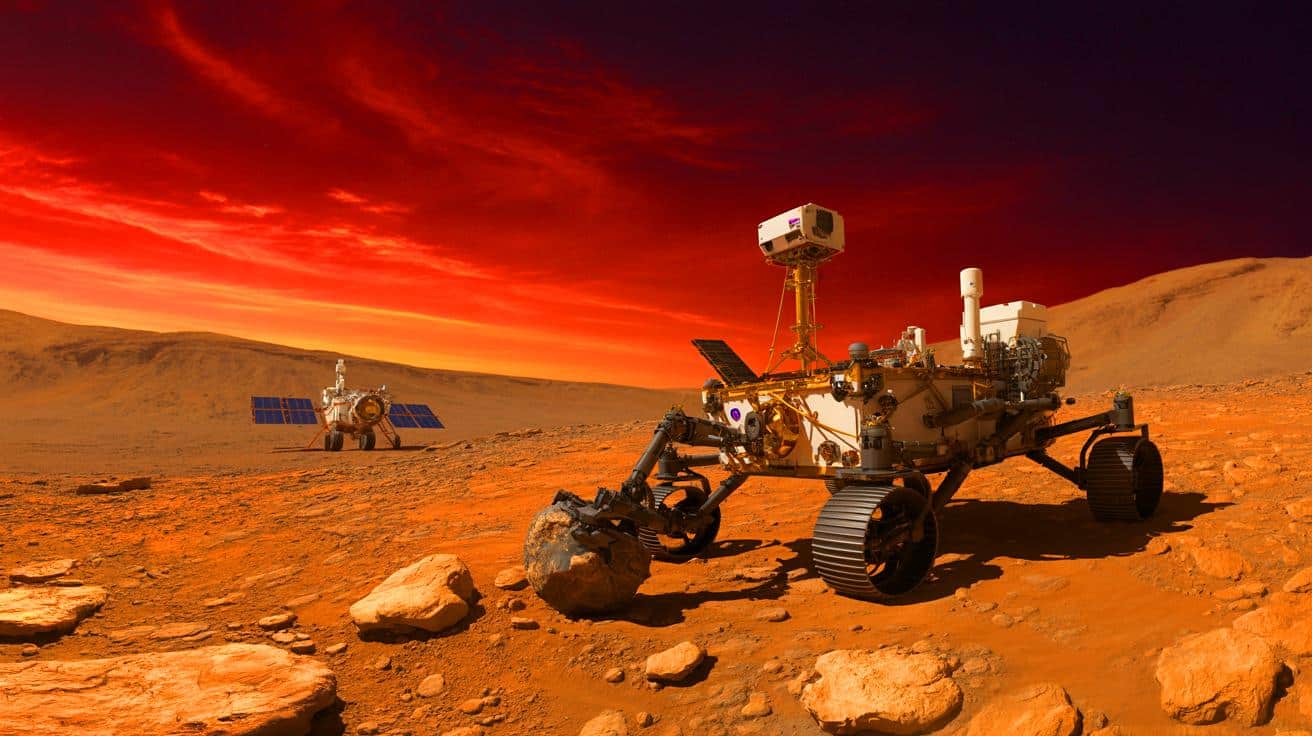
NASA’s ambitious MSR mission was designed as a complex sequence of operations involving multiple spacecraft and international collaborations. The plan includes retrieving samples collected by the Perseverance rover from Mars’ Jezero Crater and returning them to Earth. However, this intricate choreography has proven to be both financially and technically daunting. Costs have ballooned to over $11 billion, and the timeline has slipped toward the 2040s, prompting NASA to reconsider its approach.
Originally, the mission involved a series of handoffs, including a “fetch rover” to collect the samples. This plan was revised to use miniature helicopters instead, but the overall complexity remained high. Budgetary constraints have further complicated matters, with NASA requiring an additional $300 million from Congress to proceed with scaled-back alternatives. These alternatives aim for a launch around 2030, with samples returning between 2035 and 2039. Despite these efforts, many experts, such as astronomer Chris Impey, express skepticism about NASA’s ability to meet these revised goals.
China’s Streamlined Approach
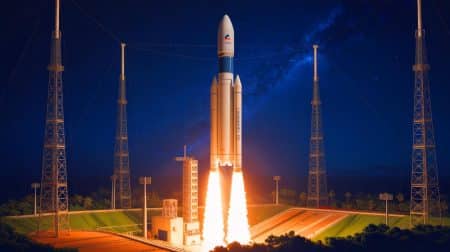
In contrast to NASA’s multifaceted mission, China’s Tianwen-3 is a more streamlined endeavor. Scheduled for launch in 2028, it aims to return Mars samples by 2031. The mission leverages China’s recent successes in lunar exploration, including the Chang’e-5 mission, which returned lunar samples in 2020. The Tianwen-3 mission plan involves two launches: one for a lander equipped with a drill and helicopter scout and another for an orbiter-returner spacecraft.
The Chinese mission is designed to be self-contained, with a “grab-and-go” approach for collecting samples. The lander will directly load collected materials into its ascent vehicle, which will rendezvous with the orbiter-returner in Mars orbit. This approach minimizes complexity and enhances the likelihood of staying on schedule. While the mission targets a less geologically diverse site than Jezero Crater, it aligns with China’s long-term space strategy, backed by robust funding and clear goals for future exploration.
Geopolitical Implications of a New Space Race
The potential for China to return Mars samples before NASA carries significant geopolitical implications. Such an achievement could be seen as a modern “Sputnik moment,” reminiscent of the Soviet Union’s launch of the first artificial satellite in 1957. That event spurred the U.S. to bolster its space program, leading to the creation of NASA and the eventual Apollo moon landings. A similar outcome today could galvanize renewed investment in U.S. science and technology sectors.
However, the geopolitical stakes extend beyond national pride. The perception of leadership in space exploration can influence international partnerships and collaborations. As Gerard van Belle of Lowell Observatory notes, being first can shape public perception, which in turn affects geopolitical standing. The outcome of this new space race could impact future collaborations in planetary science and beyond.
The Scientific Quest for Mars’ Secrets
At the heart of the Mars sample return missions lies a profound scientific quest: determining whether life ever existed on Mars. The samples collected by Perseverance could offer insights into the planet’s past habitability, providing data that is impossible to obtain with rover-based instruments alone. Laboratories on Earth could analyze these samples at atomic and molecular levels, searching for organic compounds and fossilized microbes.
Despite the challenges, scientists emphasize the importance of returning samples from multiple Martian sites. Each mission, whether by NASA or China, represents a piece of a larger puzzle. The diversity of samples could provide complementary insights, helping to answer fundamental questions about Mars’ history and potential for life. As Chris Impey notes, even the perfect sample might not settle the question of life on Mars, underscoring the need for continued exploration.
The unfolding scenario in the quest to return Mars samples raises critical questions about the future of space exploration. With China potentially poised to outpace NASA, the dynamics of international collaboration, scientific discovery, and geopolitical influence are all at play. As both nations advance their missions, what role will international partnerships play in shaping the future of planetary exploration?

Bravo à la Chine pour cette avancée spectaculaire dans l’exploration spatiale ! 🚀
Wow, China is really stepping up their space game! 🚀
Est-ce que l’échec de la NASA signifie la fin de la domination américaine dans l’espace ? 🤔
Is this really the end for NASA’s Mars ambitions? 😢
Wow, 2031 c’est juste demain ! Allez, NASA, réveillez-vous !
China’s streamlined approach sounds impressive, but will it be enough?
Je suis sceptique. Est-ce que la Chine peut vraiment surpasser la NASA ?
How did NASA let their budget get so out of control? 🤔
La collaboration internationale est-elle définitivement morte dans l’espace ?
I’m skeptical about China returning samples by 2031. Seems too optimistic.
Les budgets de la NASA sont-ils vraiment si serrés ? 😟
La course à Mars devient aussi passionnante que la course à la Lune des années 60 !
Thanks for the article! It’s amazing to see the progress in space exploration.
Comment la Chine a-t-elle simplifié sa mission par rapport à la NASA ?
Why is everyone so sure that China will succeed? They have their own challenges too.
La géopolitique envahit même l’espace maintenant… 😒