





| IN A NUTSHELL |
|
NASA’s Lunar Trailblazer mission, a small satellite initiative aimed at mapping water on the Moon, recently faced a premature end. The mission, which sought to provide high-resolution maps of lunar water, lost contact a day after its launch on February 26. Despite extensive efforts to re-establish communication, the spacecraft remained unreachable, resulting in the mission’s official termination on July 31. This unfortunate outcome not only impacts future lunar exploration endeavors but also offers valuable lessons for subsequent low-cost space missions.
The Ambitious Goals of Lunar Trailblazer
The Lunar Trailblazer mission was designed with the ambitious goal of enhancing our understanding of water on the Moon. By creating detailed maps, the mission aimed to determine the form, quantity, and temporal changes of lunar water. Such data would have been invaluable for future robotic and human lunar expeditions, as well as commercial interests. Furthermore, the insights gained would have contributed to a broader comprehension of water cycles on airless celestial bodies across the solar system.
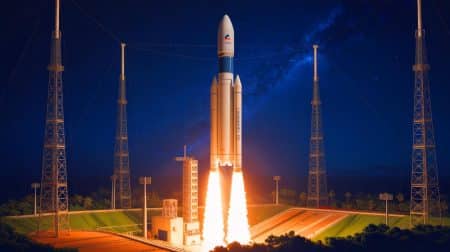
Sharing a ride on the second Intuitive Machines robotic lunar lander mission, IM-2, Lunar Trailblazer lifted off aboard a SpaceX Falcon 9 rocket from the Kennedy Space Center. The small satellite separated from the rocket as planned and made initial contact with mission operators at Caltech’s IPAC in Pasadena. However, this contact was short-lived, as communication was lost the following day. The inability to restore communication prevented the team from conducting necessary thruster operations to maintain the spacecraft’s trajectory.
Challenges and Efforts in Restoring Communication
Once communication was lost, mission operators faced the daunting task of troubleshooting without direct feedback from the spacecraft. The limited data indicated that the solar arrays were not properly aligned, leading to depleted batteries. This misalignment was likely the result of the spacecraft being in a slow spin as it drifted further into deep space.
In an effort to recover the mission, a global collaboration emerged. Organizations worldwide volunteered their assistance, using ground radar and optical observations to track the spacecraft's position and spin. The hope was that as Lunar Trailblazer moved farther from the Moon, its solar panels might receive enough sunlight to recharge the batteries, potentially allowing the spacecraft to power its radio. Despite these efforts, the spacecraft eventually moved beyond a recoverable range, rendering its telecommunications signals too weak for further operations.
Technological Advances and Legacy
Despite the mission's unfortunate end, the technological advancements developed for Lunar Trailblazer are expected to have lasting impacts. The spacecraft was equipped with the High-resolution Volatiles and Minerals Moon Mapper (HVM3) imaging spectrometer and the Lunar Thermal Mapper (LTM) instrument. These instruments were designed to detect and map lunar water and minerals, as well as analyze temperature data and surface composition.
While the mission did not achieve its primary objectives, the technology and knowledge gained will benefit future projects. The JPL-built Ultra Compact Imaging Spectrometer for the Moon (UCIS-Moon), which shares design elements with the HVM3, has already been selected for a future orbital flight. This instrument aims to provide the highest spatial resolution data of lunar water and minerals, continuing the scientific legacy of Lunar Trailblazer.
Understanding SIMPLEx and Its Role
Lunar Trailblazer was part of NASA's Small Innovative Missions for Planetary Exploration (SIMPLEx) program. This initiative provides opportunities for low-cost science missions to ride-share with primary missions, allowing for innovative approaches to planetary exploration. With a higher risk tolerance and less stringent requirements, SIMPLEx missions aim to broaden NASA's portfolio of targeted science endeavors.
Caltech and its Jet Propulsion Laboratory (JPL) played significant roles in the mission, overseeing science investigations, mission operations, and system engineering. Lockheed Martin Space contributed by providing the spacecraft and supporting operations, while the University of Oxford developed the LTM instrument. Despite the mission's challenges, the collaboration and technology developed set a foundation for future exploratory efforts.
The abrupt end of NASA's Lunar Trailblazer mission reminds us of the challenges inherent in space exploration. While the mission did not achieve its intended goals, the lessons learned will inform future endeavors. As technology continues to advance, the scientific community must consider how to balance risk and innovation in low-cost missions. What strategies can be employed to ensure the success of similar missions in the future?

Wow, I can’t believe they lost it! How does a spacecraft just disappear? 🤔
Wow, losing a spacecraft sounds like misplacing your keys but on a galactic scale! 🚀🔑
Great effort by NASA, even if it didn’t go as planned. Thanks for sharing the insights!
Why isn’t there a backup battery system for these missions? Seems like a big oversight.
This sounds like a plot twist in a sci-fi movie! 😅
Why didn’t they have a backup communication system? Seems like a big oversight.
Thank you for sharing this detailed article! It’s fascinating to learn about the challenges of space exploration. 😊
Is this common for space missions, or was this just bad luck?
Thank goodness for international collaboration! Good to see countries working together.
Can’t believe they just lost it like that. How often does something like this happen? 🤔
How long was the mission supposed to last initially?
Are international collaborations common in these types of missions? Seems like a good idea.
Sounds like a learning opportunity. Failures lead to future successes!
Maybe they should’ve installed better GPS tracking on that thing! 😆