




| IN A NUTSHELL |
|
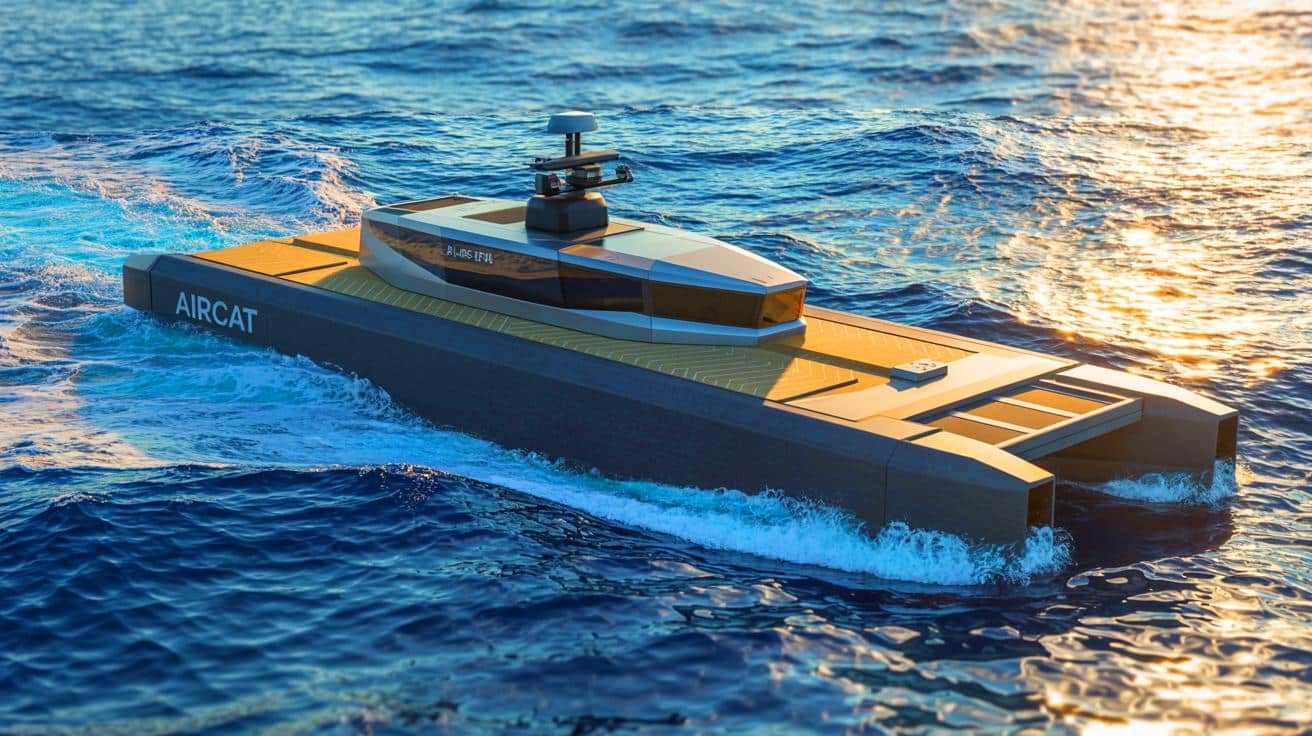
The launch of the AIRCAT Bengal MC represents a significant progression in naval technology, offering unparalleled capabilities that could redefine modern warfare. This cutting-edge autonomous vessel, developed by Eureka Naval Craft alongside Australian marine autonomy experts, is a testament to the growing importance of advanced naval strategies in a world facing increasing geopolitical tensions. The Bengal MC is designed to operate both autonomously and with a crew, providing flexibility and cost-effectiveness. As global military powers look to maintain strategic advantages, this vessel stands as a beacon of the future of naval warfare.
Revolutionizing Naval Warfare with Advanced Capabilities
The AIRCAT Bengal MC is not just another ship in the fleet; it signifies a transformation in naval warfare technology. With the capacity to carry a payload of 44 tons, it can transport two 40-foot modules at speeds exceeding 50 knots. This autonomous vessel has a range of 1,000 nautical miles, allowing it to reach far-flung operational theaters without frequent refueling. Armed with the ability to launch Tomahawk cruise missiles and Naval Strike Missiles, the Bengal MC reduces the reliance on larger, more costly warships, making it a strategic asset for navies worldwide.
Targeted at major naval powers, including the US Navy and Marine Corps, as well as allies such as AUKUS and NATO countries, the vessel is also attractive to nations like Japan, South Korea, and the Philippines. Its autonomous operations and compatibility with advanced missile systems make it a formidable force in the arena of modern naval warfare, offering capabilities that were previously the domain of much larger vessels.
Enhanced Lethality with Missile Launch Capabilities
The Bengal MC’s missile launch capabilities are pivotal in reshaping naval strategies. The ability to deploy Tomahawk cruise missiles and anti-ship Naval Strike Missiles from a vessel of this size is revolutionary. This capability allows for the execution of missions that traditionally required larger ships, thus reducing operational costs while enhancing efficiency. The vessel’s design challenges the conventional naval market by providing a swift, heavily armed alternative to older, less agile ships.
Beyond speed and firepower, the Bengal MC enhances strategic flexibility. Its capacity to carry heavier payloads at high speeds increases the effectiveness of naval operations. With advanced autonomy features, it can respond rapidly to threats and opportunities, providing a significant tactical edge. This innovative approach is crucial in a naval landscape that demands adaptability and quick decision-making.
Unmatched Efficiency and Versatility
The Bengal MC sets a new benchmark for fuel efficiency and operational economy, making it an asset for budget-conscious navies. Its modular design enables it to fulfill various roles, from troop transport and landing support to electronic warfare and mine operations. This adaptability ensures it can be customized to meet specific operational requirements, offering a tailored solution for a wide range of maritime challenges.
The partnership with Greenroom Robotics enhances the vessel’s capabilities through the integration of the most advanced autonomous navigation system available. This software enables seamless operation throughout all mission phases, ensuring human operators are supported by cutting-edge technology. The Greenroom Advanced Maritime Autonomy Software system, validated through extensive trials, guarantees reliability and performance, setting new standards in naval operations.
Expanding the Fleet with Modular Design
The AIRCAT Bengal MC is a member of a prestigious fleet of vessels, each designed for specific missions such as fast attack, reconnaissance, and high-speed troop transport. The modular design philosophy allows for customization, ensuring each vessel is tailored to the unique demands of its mission. This flexibility is essential in an era where naval forces must be ready to respond to diverse threats and opportunities.
Eureka Naval Craft’s dedication to innovation is evident in its expanding fleet and strategic partnerships. The collaboration with Greenroom Robotics exemplifies a forward-thinking approach to maritime autonomy, establishing a new standard for naval operations globally. As the naval landscape continues to evolve, the Bengal MC represents a bold step forward in military technology, offering strategic advantages that are difficult to overlook.
As the AIRCAT Bengal MC takes to the seas, it prompts important questions about the future of naval warfare. How will autonomous technology reshape global naval strategies, and what challenges and opportunities will emerge as a result? The answers to these questions will undoubtedly shape the next generation of military innovation and strategic planning.
Wow, 44 tons of payload? That’s like carrying my entire family on vacation! 😂
Isn’t this just escalating the arms race even further? 🤔
Impressive tech, but how much does it cost to build one of these?
Thank you for the detailed article. This ship seems like a game-changer for naval warfare.
Avec toutes ces innovations, est-ce qu’on se dirige vers une guerre entièrement automatisée? 😨
Why do we need more warships? Shouldn’t we be focusing on peace? 🌍
Le design modulaire est une idée géniale! Ça permet une grande flexibilité.
Can this ship really operate autonomously in all situations? Seems risky to me.