




| IN A NUTSHELL |
|
Nuclear fusion, a long-sought goal in the quest for sustainable energy, is making significant strides with the ongoing ITER project. This ambitious international effort seeks to replicate the fusion process that powers the sun, promising a potential revolution in how we generate power. A key development has been the delivery of a massive superconducting magnet from the United States to the ITER site in France. Standing at 59 feet tall, this central solenoid is critical to sustaining the plasma necessary for fusion reactions. The project, involving nations worldwide, exemplifies the collaborative spirit and technological innovation needed to tackle global energy challenges.
The Central Solenoid: A Technological Marvel
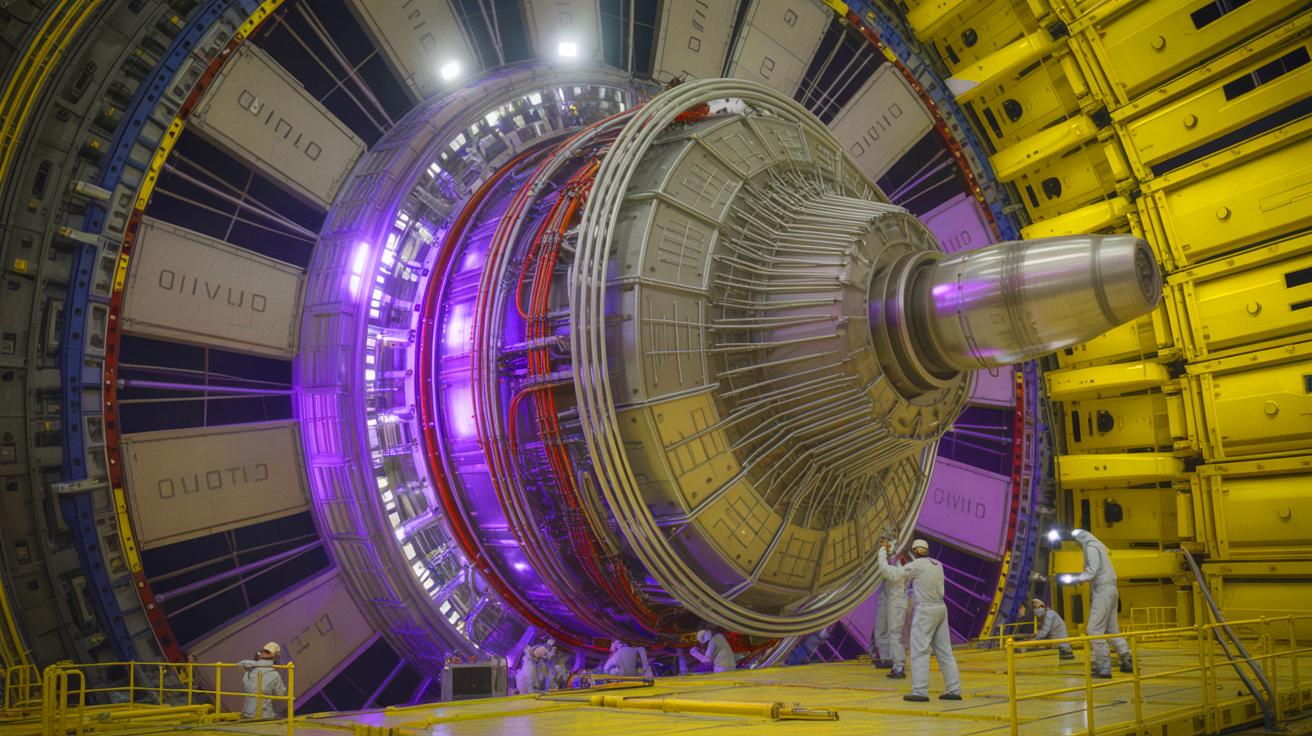
The central solenoid is a towering feat of engineering, designed to initiate and maintain the plasma within the ITER reactor. Comprised of six magnetic modules, each weighing approximately 266,800 pounds, the solenoid must endure immense forces during the fusion process. A robust exoskeleton is essential to support it, ensuring structural integrity under extreme conditions. The exoskeleton, often called a magnetic cage, is a testament to the complexity of fusion technology.
David Vandergriff, a principal engineer, highlights the solenoid’s reliance on this support: “The solenoid could not perform its function without this sturdy support.” The engineering challenges in creating such a structure underscore the intricacies of nuclear fusion. This component’s successful construction marks a significant milestone in the broader ITER initiative, bringing us closer to harnessing the sun’s power here on Earth.
The Collaborative Effort Behind the Construction
The construction of the central solenoid’s support structure showcases the power of international collaboration. Eight American companies contributed to this effort, with Superbolt in Pennsylvania playing a pivotal role. A major challenge was designing tie plates, vertical connectors that are critical for maintaining the magnet’s integrity. Measuring around 49 feet in length, these connectors had to be produced with high precision to meet stringent requirements.
Freudenberg, one of the engineers, recalls the initial skepticism about manufacturing these components in a single piece. The precision required was daunting, but the team overcame these obstacles through collaboration and innovation. This achievement is a testament to the technical prowess and cooperative spirit driving the ITER project forward, demonstrating that global challenges require global solutions.
Final Assembly and the Path Ahead
The final assembly of the central solenoid is underway at the ITER site in southern France. With four of the six modules already installed, completion is expected by the end of the year. This marks the culmination of a decade-long project characterized by meticulous planning and execution. The installation is a crucial step in realizing a functional fusion reactor by 2040.
The successful integration of the central solenoid is just one of many steps toward achieving sustainable fusion energy. As the project progresses, additional components and systems will be incorporated, moving us closer to a future of clean, limitless power. The dedication and perseverance of the international teams involved highlight the project’s significance as a beacon of hope in the global quest for sustainable energy.
ITER: A Global Endeavor for Fusion Energy
ITER, the world’s largest experimental nuclear fusion reactor, represents a monumental global effort involving 35 countries. These include all EU members, as well as China, India, Japan, South Korea, Russia, and the United States. The project’s goal is to demonstrate the feasibility of producing 500 MW of power from a mere 50 MW input. Although initial cost estimates were $5.5 billion, the budget has ballooned to $24 billion, with the EU covering nearly half of the expenses.
Located in Saint-Paul-lez-Durance, France, ITER is a symbol of international scientific cooperation. Despite facing delays and cost overruns, the project continues to inspire hope in the scientific community. Thousands of scientists and engineers are working tirelessly to unlock the potential of fusion energy, which could revolutionize energy production and offer a virtually limitless power source. The world watches eagerly, hoping that this groundbreaking initiative will pave the way for a new era of energy abundance.
As the ITER project moves forward, it raises critical questions about the future of energy. Will fusion energy become a viable solution to our energy needs? Can international collaboration continue to drive technological innovations? The answers to these questions hold the potential to reshape our energy landscape profoundly, with implications for generations to come.

Wow, un aimant de 60 pieds! Comment ils ont réussi à transporter ça jusqu’en France ? 😲
Enfin, des avancées concrètes dans la fusion nucléaire! Espérons que ça paye. 💡
Est-ce que ce projet va vraiment aboutir ou est-ce juste un autre rêve scientifique ?
Impressionant! La science peut vraiment accomplir des choses incroyables.
Pourquoi avons-nous besoin de 35 pays pour construire un seul réacteur ? 🤔
Les coûts ont explosé! Qui paie pour tout ça?
La collaboration internationale est fascinante. C’est comme un épisode de Star Trek. 🌌