




| IN A NUTSHELL |
|
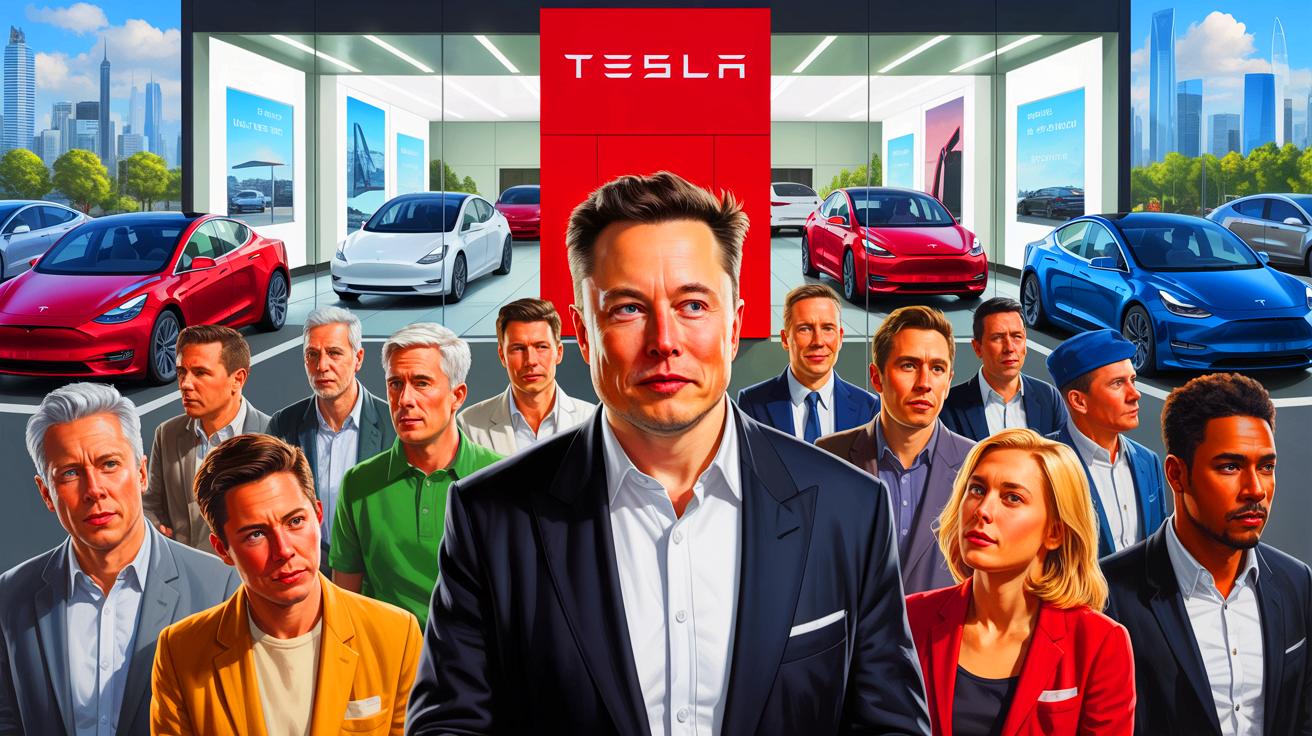
Elon Musk, the enigmatic figure behind Tesla, has always been a subject of fascination and controversy. As the face of the electric vehicle revolution, Musk’s influence on Tesla is undeniable. However, recent studies suggest that his polarizing public persona might be impacting Tesla’s sales negatively. Once a symbol of innovation and eco-consciousness, Tesla now grapples with slowing sales across the globe. From North America to Europe and Asia, the brand faces a storm. The question arises: is Musk’s controversial image sabotaging the very empire he built?
Elon Musk’s Shadow Over Tesla
In recent years, Elon Musk has transitioned from being a tech pioneer to a more politically charged figure. His acquisition of Twitter, now rebranded as X, and his staunch advocacy for absolute freedom of speech marked a significant shift to the right. This change in direction has alienated many who once viewed him as a tech visionary. Public associations with figures like Donald Trump and provocative statements have further muddied his image. A recent study published in Humanities & Social Sciences Communications confirms what many suspected: Musk’s behavior has a direct negative impact on Tesla’s sales.
Interestingly, this impact transcends political affiliations. Historically, liberals, a key demographic for electric vehicles, now view Tesla as a politically charged brand. On the other hand, conservatives remain largely resistant to electric mobility despite Musk’s rightward shift. This dual alienation has made it challenging for Tesla to attract new buyers while retaining its existing customer base. Musk’s personal brand seems to overshadow Tesla’s technological and ecological offerings, complicating the company’s market position.
The Musk Effect: When Leadership Becomes a Liability
The phenomenon where Musk’s persona influences Tesla’s market performance has been dubbed the “Musk Effect.” Alexandra Flores, the researcher behind the study, argues that Musk’s image is inextricably linked with electric vehicles in the United States. Owning a Tesla is no longer a mere technological or ecological choice; it is seen as implicit support for Musk’s ideologies. Flores highlights how the influence of a single individual can shape, or even distort, an entire industry’s perception. This situation exemplifies how a leader’s personality can overshadow a brand, potentially harming it.
Musk’s outspoken stance on various issues, including his declaration of being a “freedom of speech absolutist,” has sparked numerous controversies. While this position might seem principled, it has opened the door to many debates that reflect directly on Tesla. The implications of such statements extend beyond Musk’s personal brand, affecting Tesla’s public perception and, consequently, its sales figures.
Tesla at a Crossroads: More Than Just Image Issues?
While Musk’s persona plays a significant role in Tesla’s challenges, it would be simplistic to attribute declining sales solely to the “Musk Problem.” Several other practical factors contribute to the downturn. In France, for instance, the decrease in purchasing power and the reduction of government incentives, such as eco-bonuses, have heavily impacted sales. Additionally, social leasing programs aimed at making electric cars more accessible exclude Tesla’s range, as none of its models meet the eligibility criteria.
Data reflects these challenges starkly: Tesla’s French subsidiary saw a 31% drop in revenue to 854 million USD in 2024 compared to 2023. Despite this, the brand remains profitable, with the Model Y leading electric vehicle sales in Europe as of June 2025. However, the situation is undeniably precarious. Tesla’s future hinges on its ability to navigate the overwhelming influence of its founder and increasing market competition. The company may need to redefine itself beyond Musk, focusing on innovation and adapting strategies to an evolving marketplace.
Rethinking Tesla’s Future Beyond Musk
Given the current landscape, Tesla finds itself at a pivotal moment. The company must decide whether to continue being synonymous with Musk or to establish an identity separate from its charismatic leader. This involves highlighting its technological advancements and sustainability efforts, which were the original pillars of its success. As competitors advance and the electric vehicle market becomes more saturated, Tesla’s ability to adapt will be crucial.
Emphasizing innovation and maintaining a clear distinction between the brand and Musk’s personal views could help Tesla regain its footing. This shift might involve a strategic refocus on core values and customer needs, unclouded by external perceptions of its CEO. As Tesla maneuvers through these challenges, the broader question remains: can the company successfully differentiate itself in a rapidly changing market while remaining true to its founding principles?
Tesla’s journey is a testament to how closely a brand’s fortunes can be tied to its leadership. As the company navigates these complex dynamics, it must address both internal and external challenges to sustain its market position. The critical question is, how will Tesla balance innovation and leadership to secure its place in the future of the automotive industry?

Wow, who would have thought that one person’s tweets could impact car sales so much? 😲
Je me demande si Tesla serait encore plus prospère sans l’ombre de Musk.
Est-ce que quelqu’un se souvient de Tesla avant qu’Elon Musk devienne une célébrité?
Musk est un génie ou un saboteur? La ligne est mince… 🤔
Peut-être que Tesla devrait envisager une campagne de rebranding pour se distancer de Musk.
Merci pour cet article intéressant! Ça donne à réfléchir sur l’impact du leadership sur une marque.
Le “Musk Effect”, c’est du marketing gratuit, mais à quel prix?
C’est fou comme la politique peut influencer la perception d’une marque de voitures électriques.