




| IN A NUTSHELL |
|
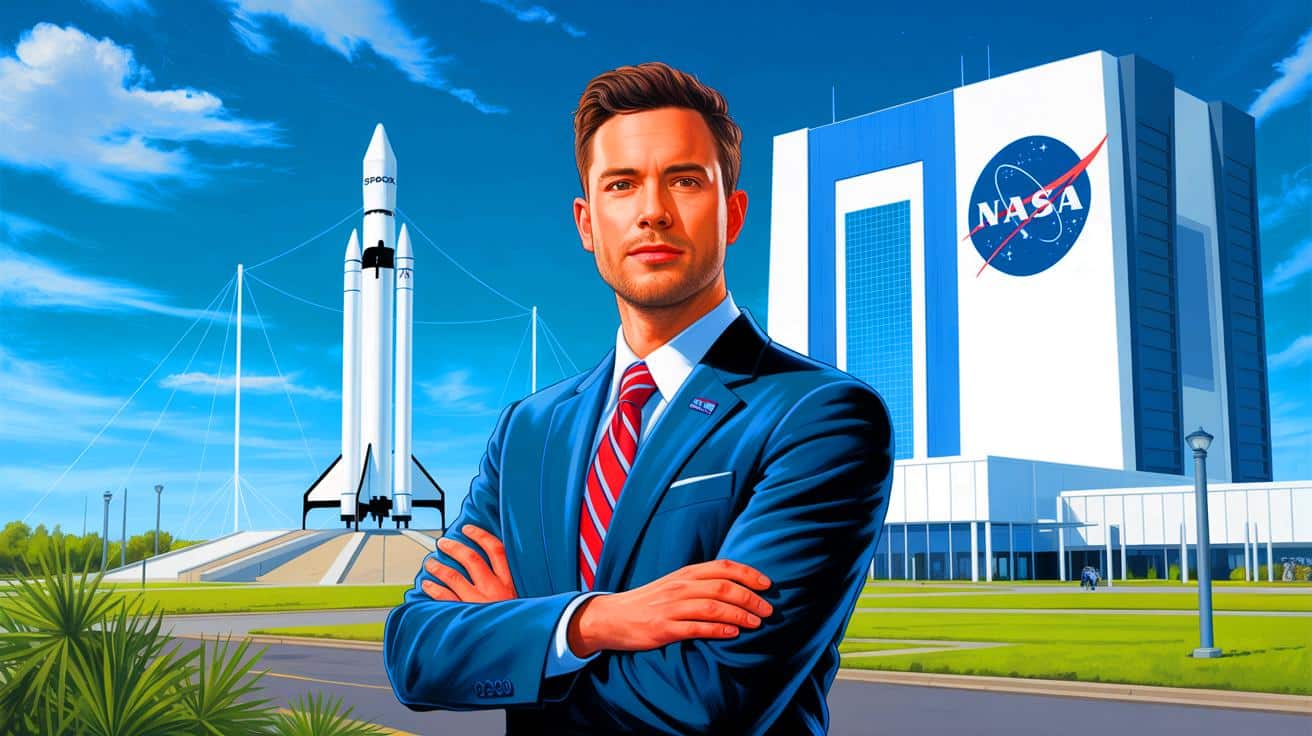
Jared Isaacman, a billionaire entrepreneur and private astronaut, has been confirmed as the new administrator of NASA by the U.S. Senate. This appointment comes after a tumultuous year marked by political maneuvering and debates about his suitability for the role. Isaacman, best known as the founder of Shift4, a payments processing platform, and for his involvement in private spaceflights, steps into leadership at a time when NASA faces significant challenges and uncertainties. Notably, his confirmation under President Trump’s administration raises questions about the future direction of America’s space exploration and policy, particularly in light of existing tensions within the space industry.
Jared Isaacman’s Road to Confirmation
The path to Isaacman’s confirmation was far from smooth. Initially nominated by President Trump over a year ago, Isaacman’s candidacy was temporarily derailed. Trump withdrew the nomination in June, citing concerns over Isaacman’s prior political donations to Democrats. This decision sparked a political whirlwind, with both supporters and detractors vocalizing their opinions. The controversy highlighted the complex interplay between politics and space exploration, as Isaacman’s nomination became a point of contention among various stakeholders.
Despite these challenges, Isaacman had significant backing from influential figures, including SpaceX CEO Elon Musk. Musk, a strong proponent of private space initiatives, publicly criticized the credibility of acting NASA administrator Sean Duffy, who opposed Isaacman’s nomination. Such endorsements played a crucial role in shaping public perception and political support, ultimately leading to Trump’s decision to re-nominate Isaacman in November. This episode underscores the intricate relationship between politics and the privatization of space, where business interests and political agendas often intersect.
Challenges Facing NASA Under Isaacman’s Leadership
As the new head of NASA, Isaacman inherits an agency tasked with ambitious goals but constrained by budgetary limitations. President Trump has mandated a return to the moon, a mission that requires substantial resources and coordination. Under Isaacman’s leadership, NASA must navigate these challenges while fostering innovation and collaboration with private companies. The agency’s relationship with SpaceX, which holds a contract to land astronauts on the moon, will be of particular interest, especially given prior threats to revoke this contract.
Isaacman’s background in both business and as a private astronaut could bring a new perspective to NASA’s operations. His experience may pave the way for increased collaboration with private space companies, potentially accelerating technological advancements and expanding the scope of NASA’s missions. However, this shift towards privatization also raises questions about accountability, transparency, and the broader implications for public space exploration. Isaacman’s ability to balance these competing interests will be critical to his success as NASA administrator.
The Role of Private Companies in Space Exploration
The involvement of private companies in space exploration has been a transformative force in recent years. Companies like SpaceX and Blue Origin are at the forefront of technological innovation, driving down costs and expanding access to space. Under Isaacman’s leadership, NASA may seek to further integrate these private entities into its strategic vision, leveraging their capabilities to achieve national objectives.
This collaboration between public and private sectors presents both opportunities and challenges. On one hand, it could lead to accelerated advancements in space technology and exploration. On the other, it may blur the lines between public interest and private profit, raising concerns about the commercialization of space. As NASA administrator, Isaacman must navigate these complexities, ensuring that the agency remains a leader in space exploration while balancing the interests of diverse stakeholders.
“The future of space exploration hinges on collaboration and innovation,” Isaacman has stated, emphasizing the need for a holistic approach to addressing these challenges.
The Future of U.S. Space Policy
Isaacman’s appointment comes at a pivotal moment for U.S. space policy. As the nation grapples with geopolitical tensions and technological advancements, NASA’s role in shaping global space exploration is more critical than ever. Under Isaacman, NASA must articulate a clear vision that aligns with national interests while fostering international collaboration. This involves not only returning to the moon but also setting sights on Mars and beyond.
The agency’s strategic direction will likely influence global space policy, impacting everything from international partnerships to the development of space law. Isaacman’s leadership will be instrumental in navigating these complex dynamics, positioning NASA as a leader in the next phase of space exploration. The decisions made under his tenure could have lasting implications for the future of humanity in space.
As Jared Isaacman steps into his role as NASA administrator, the world watches with anticipation. His leadership will undoubtedly shape the future of American space exploration and policy. The challenges are immense, but so are the opportunities for innovation and discovery. How will Isaacman balance the demands of public interest and private enterprise to propel NASA towards its ambitious goals? The answer to this question will define the contours of space exploration for years to come.


Wow, Jared Isaacman is now the NASA head! 🚀 This could be a turning point for space exploration!
Wow, Jared Isaacman at the helm of NASA? This could be a game-changer!
Do you think Isaacman’s business background will help or hinder NASA’s mission? 🤔
Do you think Isaacman’s background as an entrepreneur will benefit NASA?
Finally, some fresh leadership at NASA! Can’t wait to see what happens next. 🚀
Hope he doesn’t focus too much on privatization. Public space exploration is crucial!
Isaacman as NASA head? Sounds like a sci-fi movie plot! 🤖
Isaacman and Musk are a duo that might just take us to Mars. Exciting times ahead! 🌌
Will Isaacman’s ties to private companies compromise NASA’s public interests?
What do you think about his previous political donations? Could it affect his decisions?