




| IN A NUTSHELL |
|
In a world increasingly dominated by artificial intelligence, a playful yet profound statement has emerged from an unlikely source: Merriam-Webster. The renowned dictionary publisher recently announced the release of its latest “Collegiate Dictionary,” cleverly branding it as a “large language model” in a satirical nod to the AI craze. This bold move comes amidst a growing discourse on the pervasive incorporation of AI into everyday life, raising questions about the benefits and pitfalls of this technology. The announcement has sparked conversations about the role of AI in society, the integrity of information, and the preservation of human intelligence.
The AI Craze: A Double-Edged Sword
The current landscape is one where artificial intelligence is becoming ubiquitous, infiltrating various aspects of daily life from spell-checkers to smart appliances. This surge in AI integration is often met with a mix of excitement and skepticism. On one hand, AI offers unprecedented convenience and capabilities, automating tasks and providing insights that were previously unattainable. On the other hand, the rapid adoption of AI technologies raises concerns about their reliability, ethical implications, and potential to undermine human skills.
Merriam-Webster’s tongue-in-cheek announcement highlights these issues by contrasting the reliability of a physical dictionary with the fallibility of AI models. While AI systems have the potential to enhance communication and information processing, they also present risks such as the erosion of critical thinking and memory. The phenomenon of AI “hallucinations,” where models generate incorrect or misleading content, further underscores the importance of questioning the uncritical adoption of AI.
Education’s Uneasy Relationship With AI
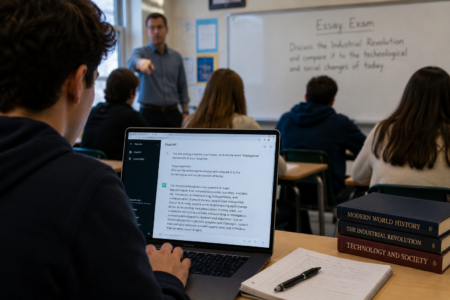
The influence of AI is particularly pronounced in the education sector, where schools and colleges are grappling with how to integrate these tools into their curricula. Some institutions are encouraging or even mandating the use of AI by students, prompting debates about the role of technology in learning. While AI can serve as a valuable educational resource, there are fears that it may also facilitate academic dishonesty and diminish the value of traditional learning methods.
Instances of students using AI chatbots to generate essays and complete assignments are becoming more common, raising concerns about academic integrity. Moreover, the reliance on AI tools can inadvertently hinder the development of essential skills such as problem-solving and independent thinking. As educators and policymakers navigate this complex terrain, the challenge lies in leveraging AI’s potential while safeguarding the foundational aspects of education.
Language and Tradition in the Digital Age
Merriam-Webster’s latest dictionary edition, featuring 5,000 new words, serves as a testament to the dynamic nature of language and the enduring relevance of traditional reference materials. By incorporating contemporary terms like “rizz” and “doomscroll,” the dictionary reflects the evolving lexicon shaped by cultural and technological trends. This endeavor underscores the importance of preserving linguistic heritage even as digital innovations reshape communication.
The juxtaposition of a physical dictionary with digital AI models invites reflection on the value of tangible resources in an increasingly virtual world. While digital platforms offer unparalleled access to information, the tactile experience of a printed book provides a sense of permanence and authenticity. Merriam-Webster’s playful branding of its dictionary as a “language model” serves as a reminder of the enduring significance of words and the power of language to transcend technological shifts.
The Broader Implications of AI Adoption
The rapid proliferation of AI technologies raises broader questions about their societal impact and the future of human intelligence. As AI systems become more sophisticated, they challenge traditional notions of knowledge, creativity, and decision-making. The potential benefits of AI, such as enhanced productivity and innovation, must be weighed against concerns about privacy, security, and ethical use.
Moreover, the reliance on AI highlights the need for digital literacy and critical evaluation skills. As individuals and institutions navigate the complexities of AI adoption, the ability to discern credible information from misleading content becomes increasingly crucial. Merriam-Webster’s satirical take on AI serves as a timely reminder of the need for a balanced approach to technology, one that embraces innovation while preserving the core tenets of human intelligence.
Merriam-Webster’s announcement of its “large language model” offers a thought-provoking commentary on the intersection of technology and language. As society grapples with the implications of AI, questions about the preservation of human skills, the integrity of information, and the role of traditional resources remain. How can we harness the benefits of AI while safeguarding the values and capabilities that define human intelligence?


Quelle ironie ! Un dictionnaire physique qui se moque de l’AI. J’adore ! 😂
Bravo Merriam-Webster! Toujours un pas d’avance sur la technologie. 📘
Pourquoi utiliser un dictionnaire quand on a un smartphone? 😅
Est-ce que quelqu’un a déjà trouvé un mot dans le dictionnaire qui n’est pas dans un modèle AI ?
J’adore l’idée de Merriam-Webster de critiquer l’AI tout en introduisant 5,000 nouveaux mots !
Est-ce que quelqu’un utilise encore des dictionnaires en papier de nos jours?
Ah, Merriam-Webster, toujours là pour nous rappeler l’importance d’un bon vieux livre. 📚
Les dictionnaires sont les vrais OG des modèles de langage. 😉
Bravo à Merriam-Webster pour leur sens de l’humour et leur réflexion sur la technologie moderne !
J’aimerais savoir quels nouveaux mots ont été ajoutés!
AI ou dictionnaire, lequel est le plus fiable? 🤔
Est-ce que ce dictionnaire inclut des emojis ? Après tout, c’est un langage aussi ! 😜
Merriam-Webster nous rappelle que l’intelligence humaine est toujours précieuse. Merci!