





| IN A NUTSHELL |
|
In a bid to revolutionize data storage and reduce energy consumption, China is testing the waters with an innovative approach: subsea data centers. By submerging data servers in the ocean, the project aims to leverage natural cooling from ocean currents, promising significant energy savings. However, this groundbreaking initiative also raises environmental concerns, particularly regarding the potential impact on marine ecosystems. As China prepares to deploy its underwater data capsule off the coast of Shanghai, the world watches closely to see if this ambitious experiment can balance technological advancement with ecological responsibility.
Harnessing Ocean Currents for Cooling
The concept behind subsea data centers is straightforward yet groundbreaking. Traditional data centers consume large amounts of energy to maintain optimal temperatures for their servers. By contrast, the ocean offers a natural cooling system that could drastically cut these energy requirements. Yang Ye, a representative from Highlander, the company behind the Shanghai project, states that underwater operations can save up to 90% of energy consumption used for cooling. This potential for energy efficiency has drawn significant interest from technology firms and environmental advocates alike.
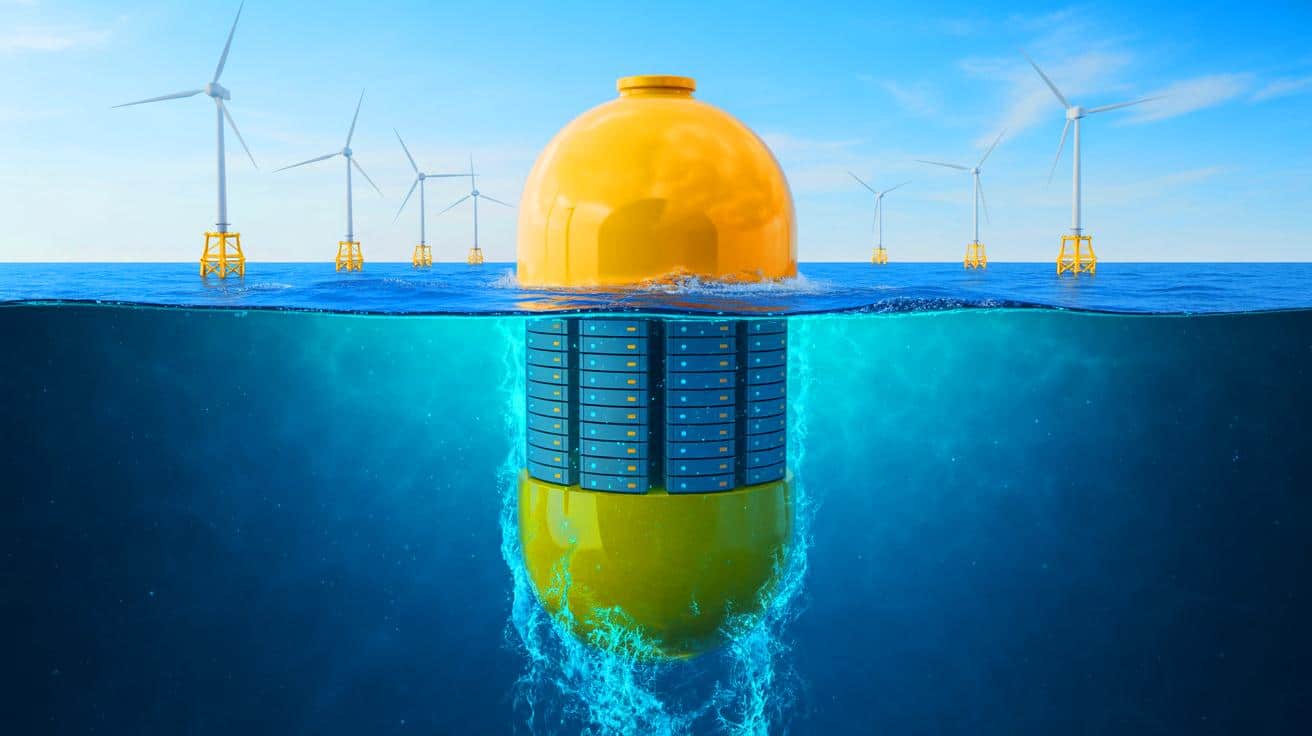
Highlander’s project in Shanghai is one of the first commercial endeavors in this field. Workers have constructed a large yellow capsule designed to house the servers, which will be submerged in the sea. The ocean’s natural currents are expected to regulate the temperature of the servers, eliminating the need for traditional, energy-intensive cooling systems. Clients like China Telecom and a state-owned AI computing company are among the first to explore this innovative service.
Past trials have laid the groundwork for such projects. For instance, Microsoft conducted a similar experiment off the coast of Scotland in 2018, although it did not proceed to commercial deployment. This Chinese initiative is part of a broader governmental effort to reduce the carbon footprint of data facilities and enhance sustainability in the tech industry.
Powered by Renewable Energy
The subsea data center project is not just about harnessing the ocean’s cooling power; it is also a step toward renewable energy integration. The Shanghai pod will source most of its power from nearby offshore wind farms, ensuring that over 95% of its energy consumption comes from renewable sources. This aligns with China’s broader strategy to transition to sustainable energy solutions.
Government subsidies have played a crucial role in enabling these ventures. Highlander received a significant financial boost from the government, amounting to $5.62 million for a similar project in Hainan. This financial support underscores the Chinese government’s commitment to supporting innovative solutions that align with their environmental goals.
However, the construction of the underwater data center presented several challenges. Zhou Jun, an engineer on the project, acknowledged that the actual completion was more complex than initially anticipated. Ensuring that the servers are protected from seawater is vital. To address this, the company uses a specially designed steel capsule coated with glass flakes to resist corrosion. An elevator system connects the underwater pod to an above-water section, allowing for maintenance and monitoring.
Environmental and Technical Risks
While the energy-saving potential of subsea data centers is promising, the environmental impact remains a significant concern. Experts warn that the heat released by these facilities could disrupt marine ecosystems. Andrew Want, a marine ecologist, points out that the emitted heat could attract some species while repelling others, although current research on these impacts is limited.
The heat emitted could in some cases attract certain species while driving away others.
Highlander references a 2020 assessment of its test project near Zhuhai, which indicated that surrounding water temperatures remained below critical thresholds. However, scaling up operations could amplify thermal effects, potentially causing unforeseen ecological consequences. Shaolei Ren from the University of California, Riverside, emphasizes the need for further study on thermal pollution from large-scale underwater data centers.
In addition to environmental concerns, technical challenges exist. Establishing internet connections between offshore servers and land-based infrastructure is more complex than with traditional data centers. Furthermore, researchers have highlighted the potential vulnerability of underwater facilities to sound-wave attacks, adding another layer of complexity to the project’s feasibility and security considerations.
The Future of Subsea Data Centers
Despite the challenges, subsea data centers represent a potential niche solution in the broader landscape of data storage. While they may not entirely replace traditional data centers, these underwater facilities could serve specific segments that prioritize energy efficiency and sustainability. Projects like Highlander’s are paving the way for more extensive exploration of subsea data infrastructure.
As the tech industry continues to grapple with increasing energy demands, innovative solutions like subsea data centers offer a glimpse into a more sustainable future. However, the balance between technological advancement and environmental preservation remains delicate. Stakeholders must carefully consider the long-term ecological impacts and technical hurdles associated with these projects.
What will it take for subsea data centers to become a viable alternative or complement to traditional data storage solutions? As the world seeks more sustainable technologies, this question remains at the forefront of industry discussions.


Wow, sinking data centers underwater? That’s some next-level innovation! 🌊
Wow, this sounds like something out of a sci-fi movie! 🌊
What if there’s a leak? Won’t the servers get water-damaged? 🤔
How do they plan to deal with potential leaks? Saltwater isn’t computer-friendly! 😅
Reducing energy is great, but what about marine life? Is it really safe?
This is an incredible idea! I hope it inspires more eco-friendly tech solutions. 🌱
Another example of China being ahead of the curve in tech innovation. Impressive!
How do they ensure the servers don’t overheat and harm the ecosystem?
Underwater data centers sound cool, but what happens during a storm?
Won’t the heat emitted harm the ocean life? That seems pretty risky.
Is there any backup plan if the offshore wind farms fail? ⚡
Thank you for sharing this fascinating article! It’s a glimpse of the future.
Can other countries replicate this model, or is it too expensive?
OMG, a data center under the sea? This sounds like a sci-fi movie! 🎬
This is a cool idea, but what about the marine life? 🐠
Hope they studied the long-term effects on marine life thoroughly.
How do they maintain these data centers? It must be quite challenging! 🔧