




| IN A NUTSHELL |
|
In an unprecedented move, China’s National Space Administration (CNSA) reached out to NASA to avert a potential collision between satellites. This marked a significant step towards international cooperation in space safety. The simple email message, “We advise you to remain stationary; we will maneuver,” represents a tacit acknowledgment by China of the shared responsibility in maintaining orbital safety. This communication comes at a crucial time as the number of satellites in low Earth orbit (LEO) continues to rise at an alarming rate. The exchange underscores a growing awareness of the need for coordination, signaling a shift in China’s approach to space diplomacy.
Growing Concerns Over Satellite Collisions
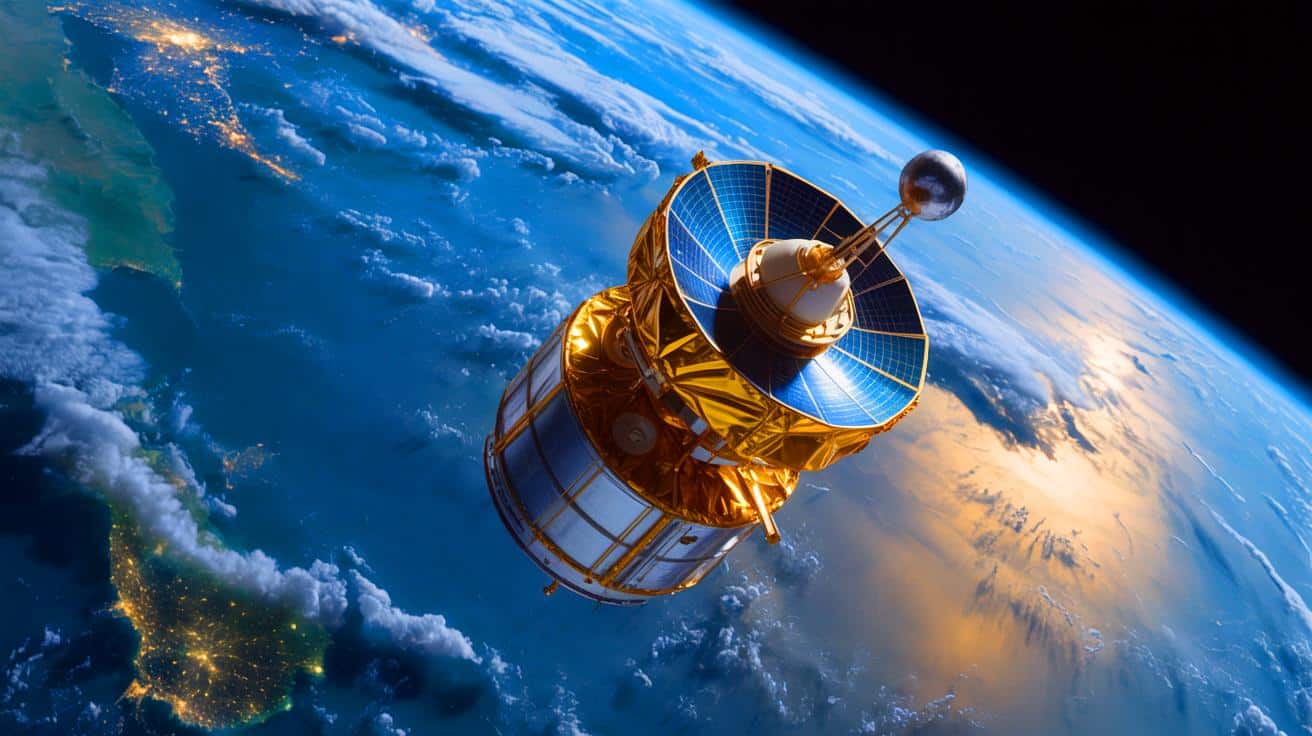
The exponential increase in satellite launches has heightened concerns about potential collisions in space. With massive constellations planned by the United States and China, the risk of accidents has become more pronounced. Currently, thousands of satellites orbit Earth, and this number is expected to grow significantly. Private companies like SpaceX and Amazon have ambitious plans to deploy tens of thousands of satellites. China’s own plans for the Guowang and Qianfan constellations add to this crowded orbital environment.
At speeds approaching 18,000 miles per hour, even small objects pose significant risks. A collision could generate space debris, further complicating navigation in space. The need for communication and coordination is becoming increasingly urgent. This recent email from CNSA to NASA highlights the necessity for cooperation to prevent catastrophic events in orbit. The message signifies a recognition that space is a shared domain requiring collective stewardship.
Private Sector Involvement in Space Coordination
Interestingly, China's outreach is not limited to government agencies. Private Chinese satellite operators have also initiated contact with their Western counterparts. Companies like OneWeb and SpaceX have received communications from Chinese constellations aiming to discuss their flight paths. This interaction illustrates an emerging trend where private entities play a crucial role in space safety and coordination.
As private companies invest billions into space technology, they too have a vested interest in avoiding collisions. The financial implications of a satellite collision are immense, potentially costing companies billions of dollars. SpaceX's Starlink and Amazon's Kuiper projects, with their expansive satellite networks, highlight the importance of private sector involvement in establishing safe orbital practices. As more companies enter this arena, the need for a collaborative framework becomes even more critical.
The Implications of China's Initiative
China's decision to communicate with NASA represents a significant shift in international space relations. Historically, attempts to contact China regarding orbital safety have gone unanswered. This lack of communication posed risks, with both sides potentially maneuvering simultaneously in dangerous proximity. The recent exchange suggests a more open approach from China, acknowledging the importance of dialogue in ensuring space safety.
While this development is promising, it is not yet indicative of full-scale cooperation. The email could be seen as a strategic move by China to protect its substantial investments in space. As China prepares to deploy thousands of satellites, maintaining a safe orbital environment is crucial for its success. By engaging in dialogue, China aims to safeguard its interests while contributing to global efforts to maintain space safety.
The Future of International Space Collaboration
The email from CNSA to NASA could be a catalyst for broader international cooperation in space. As satellite numbers continue to grow, the need for a coordinated approach to space safety is undeniable. Countries and private companies must work together to establish protocols and communication channels that ensure safe operations in orbit.
This collaboration could extend beyond collision avoidance to include broader discussions on space traffic management and debris mitigation. As global stakeholders recognize the shared nature of space, the potential for cooperative frameworks increases. The question remains whether this initial step will lead to sustained efforts for international collaboration. Will countries and companies seize this opportunity to forge lasting partnerships, or will geopolitical tensions hinder progress?
As the space landscape evolves, the need for effective communication and cooperation becomes ever more pressing. The recent outreach between China and NASA is a positive development, but it raises questions about the future of space diplomacy. How will global stakeholders navigate the complexities of space governance to ensure a safe and sustainable orbital environment for generations to come?

Wow, this is like an interstellar game of chicken! 🚀
Wow, satellites speeding at 18,000 mph! Can’t even imagine that 🚀
Finally, some cooperation in space. It’s about time!
Does this mean space is getting crowded? Should we be worried about a space traffic jam?
Is this the beginning of a new space race or a space peace treaty?
Finally, some cooperation between countries in space! Let’s hope this leads to more peaceful collaborations.
China’s move could be just PR. Are they really committed to space safety?
Why did China wait so long to reach out? Seems like common sense to communicate about potential collisions.
Why can’t they just text each other? 😅
Is this email exchange public? I’d love to see the actual message.
At 18,000 mph, they better have good brakes! 🚀
Space safety sounds important, but who’s regulating all this? 🤔
Is it just me, or does this sound like a plot for a sci-fi movie?
It’s about time countries started talking to each other more in space! Let’s avoid a cosmic bumper car situation!