




| IN A NUTSHELL |
|
The International Space Station (ISS) stands as a testament to human ingenuity and cooperation. For over two decades, it has orbited Earth at a breathtaking speed of approximately 18,000 mph. This colossal structure, weighing around 925,000 pounds and stretching 357 feet, presents daily operational challenges. For astronauts onboard, a typical six-month stay represents the pinnacle of years of preparation. Yet, life aboard the ISS is far from leisurely. It involves a rigorous schedule filled with scientific experiments, maintenance tasks, and limited communication with Earth. Essential supplies, personal items, and gifts from loved ones are eagerly awaited by the crew, making each cargo delivery a significant event.
Routine Missions: A Complex Ballet in Space
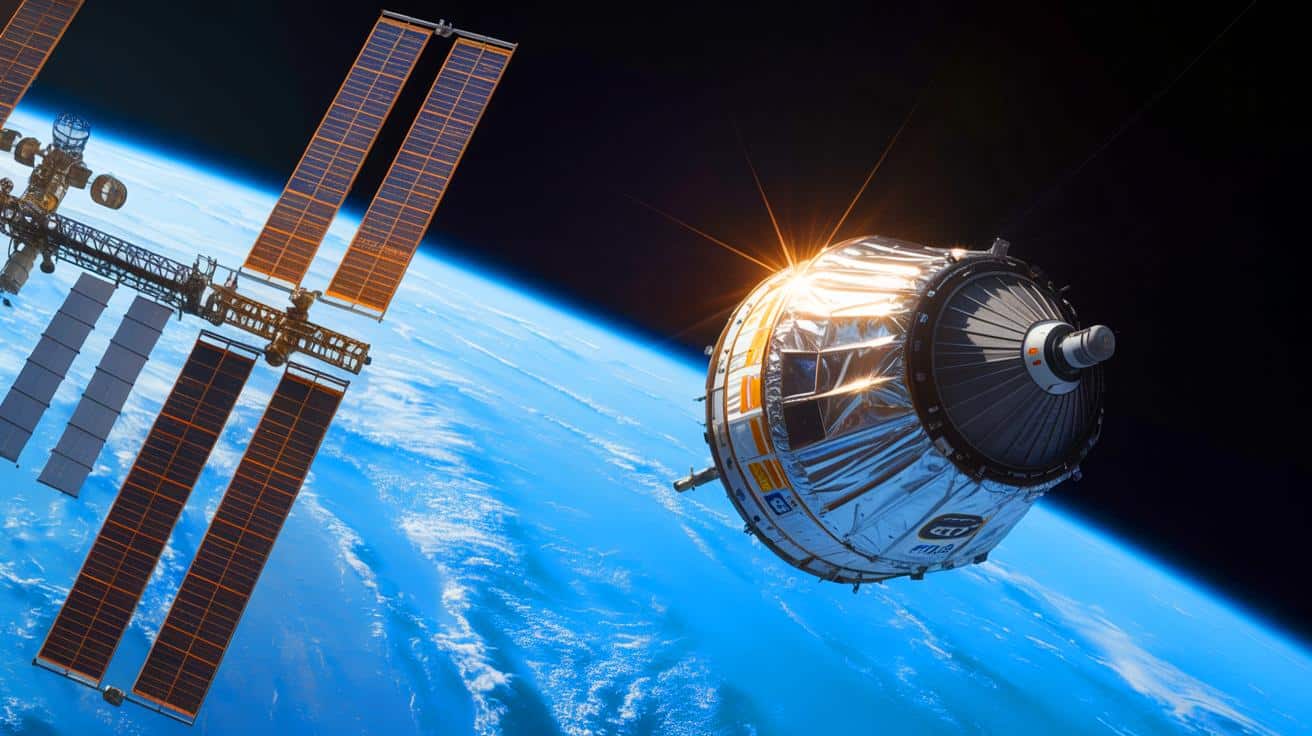
The recent launch of the Cygnus XL spacecraft, operated by Northrop Grumman, was intended to be a routine mission. Departing from Earth aboard SpaceX’s Falcon 9 rocket, it carried five tons of crucial supplies destined for the ISS. Such missions are commonplace for NASA, which has refined the art of space logistics over the years. The plan was straightforward: the cargo was to dock with the ISS, with NASA astronaut Jonny Kim tasked to maneuver the station’s robotic arm to secure it. However, space missions, no matter how routine, are fraught with uncertainties.
This particular mission encountered unforeseen difficulties. As the Cygnus XL approached the ISS, issues with its main engine caused delays. These minor setbacks, each lasting mere seconds, affected the spacecraft’s trajectory. Consequently, when it neared the station, it veered slightly off course, preventing Kim from capturing it with the robotic arm. The incident highlights the delicate precision required in space operations.
Technical Glitches and Their Implications
NASA's acknowledgment of the Cygnus XL's troubled flight underscores the intricate nature of space travel. The spacecraft's engine malfunction, although brief, had a cascading effect on its docking procedure. In space, even the smallest deviation can lead to significant challenges. NASA's press briefing revealed that the spacecraft missed its scheduled rendezvous, forcing a postponement of the cargo delivery. The agency's technical teams are actively exploring various solutions to rectify the situation.
Such incidents serve as a reminder of the complexities and risks associated with space missions. The vast distance and inhospitable environment of space demand precise coordination and flawless execution. When issues arise, they require swift and innovative responses to ensure mission success and crew safety.
Strategies for Recovery and Future Missions
In response to the current challenges, NASA is evaluating all available options to ensure the successful delivery of the cargo. The five tons of supplies are vital for the astronauts' well-being and the continuation of scientific research aboard the ISS. The agency is harnessing its expertise and resources to devise a recovery plan. While details remain scarce, NASA's commitment to overcoming these obstacles is unwavering.
Looking ahead, the incident with Cygnus XL offers valuable insights for future missions. It highlights the need for robust contingency plans and the importance of adaptive strategies in space operations. As NASA and its partners work to resolve the current situation, the lessons learned will inform practices and technologies, enhancing the reliability and safety of future endeavors.
The Human Element in Space Operations
Behind the technical challenges and sophisticated machinery lies the human element. Astronauts like Jonny Kim embody the dedication and resilience required for space exploration. Their ability to adapt to unforeseen circumstances and their relentless drive to achieve mission objectives are crucial in navigating the complexities of space.
The incident also underscores the interconnectedness of international space efforts. The ISS, a collaborative venture involving multiple countries, relies on the seamless coordination of diverse teams. As the global community continues to push the boundaries of space exploration, the importance of collaboration and shared knowledge cannot be overstated.
The current situation with the Cygnus XL mission raises questions about the future of space logistics and international cooperation. How will NASA and its partners leverage this experience to enhance the safety and efficiency of space travel? Will this incident lead to new innovations in space technology and operations? As we look to the stars, the answers to these questions will shape the next chapter of human space exploration.

Oh no, I hope they figure out a solution soon! 😮
Oh no! What happened to the cargo now? 🌌
How often do such malfunctions happen during space missions?
Hope they find a solution soon. Those supplies are crucial! 🛰️
Does anyone else feel like this is just a plot twist in a sci-fi movie? 😅
Is this the first time something like this has happened with a NASA supply ship?
Bravo to the astronauts for staying calm in such situations! 👏
Well, space is hard. We should cut them some slack. 😉
Will this delay affect the ongoing experiments on the ISS?
Could this delay affect any ongoing experiments on the ISS?
It’s amazing how even a small engine glitch can cause such big issues!
Looks like space missions are far from routine… even when they are supposed to be!
I wonder if SpaceX could have done a better job? 🤔
Thanks for the detailed report. Fingers crossed for a speedy resolution!
Space missions are always a gamble. This just proves it again.
Jonny Kim must be having a really stressful day!
Will the astronauts be okay without the cargo for a while?
Can’t they just use more duct tape? 😂
Wasn’t SpaceX involved at some point? What’s their role in this?
Good luck to NASA’s technical teams working on a fix!
The complexities of space travel never cease to amaze me.
Let’s hope this incident leads to improved future missions.
Is it possible to remotely fix the Cygnus XL’s engine issues?
This is why I love space exploration—always full of surprises! 🚀
How often do such malfunctions occur in space missions?
Maybe they should call the Martians for help! 👽
Do these delays mean more costs for NASA?
At least the astronauts have a good story to tell when they return!
Hoping for a safe docking soon. Go NASA!
Space is hard, but that’s what makes it so fascinating.
Imagine watching your supplies drift away… yikes!
Could this be a result of a design flaw in the Cygnus XL?
Keep calm and trust in NASA! 🚀
Does this affect the timeline for future ISS missions?
Why didn’t they have a backup plan for such engine failures?
How do astronauts deal with such unpredictable situations?
Hope they have enough snacks on the ISS in the meantime! 🍪
Is there any chance the cargo could be recovered later?
Maybe next time, they’ll pack a backup engine! 😂
Can they send another spacecraft quickly to deliver the supplies?
What a nail-biting situation! Best of luck to everyone involved.
Space exploration is never boring, that’s for sure!
Let’s hope the lessons learned here improve future missions.
Imagine the tension in the control room right now!