





| IN A NUTSHELL |
|
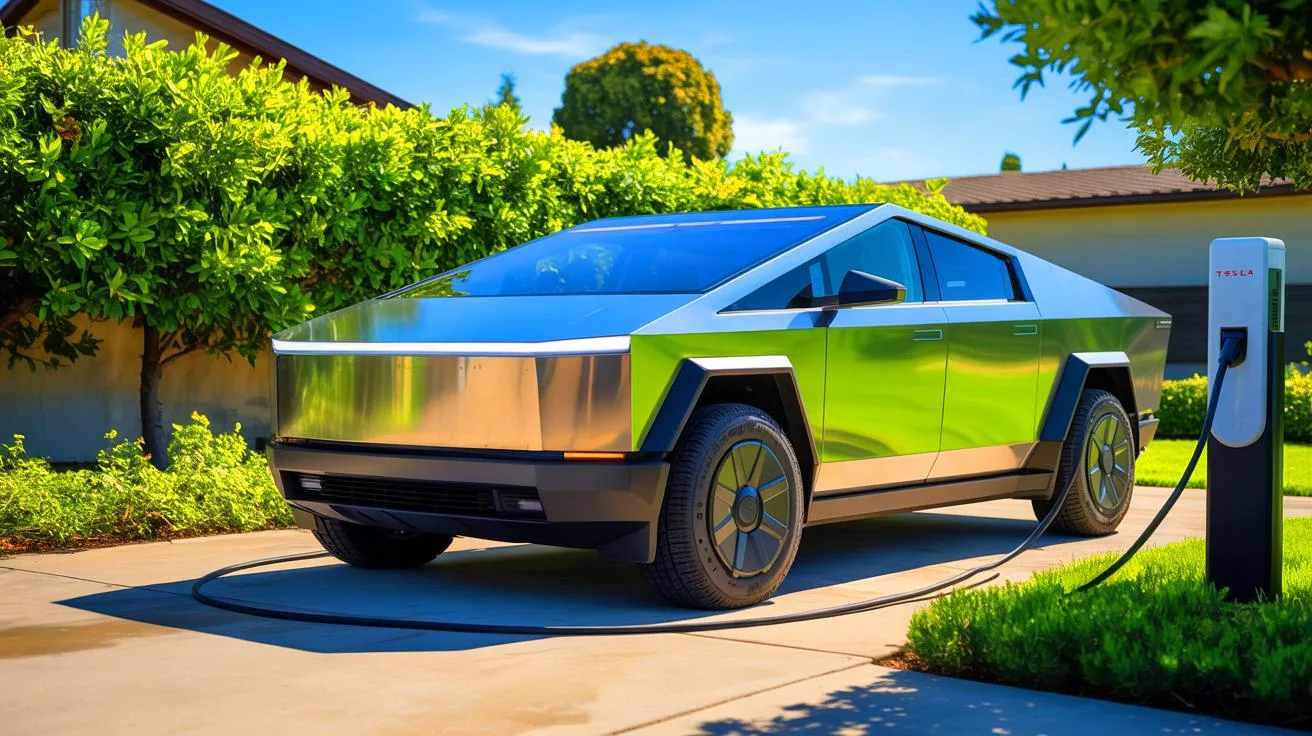
When the owner of a Tesla Cybertruck returned from a two-week vacation, he was met with an unexpected surprise: his electric vehicle, left plugged in at home, was completely unresponsive. Despite being connected to its charging station, the futuristic truck stood silent and lifeless in his driveway. The incident, initially reported by Carscoops, quickly sparked discussions online, as it appeared to highlight a potential flaw in electric vehicle technology. However, as technical evaluations later revealed, the reality was far less alarming and offered valuable insights for electric vehicle owners worldwide.
The Allure of the Apparent Failure
The owner’s move to leave the Cybertruck plugged in was rooted in established electric vehicle practices. For EVs, maintaining a steady charge level through continuous connection is not only common but recommended. The vehicle’s battery management system ensures the battery remains in an optimal state, preventing complete discharge and extending its lifespan.
Thus, the truck’s failure to power up was particularly baffling. Despite two weeks of connection to the Tesla Wall Connector, the vehicle remained unresponsive. The absence of any indication of life, such as lights or operational screens, led to initial speculation that the main battery had somehow drained entirely. Such a scenario would suggest a severe design flaw, raising questions about the reliability of Tesla’s technology.
The Real Culprit Hiding in Plain Sight
The true issue, however, was not found within the Cybertruck’s sophisticated high-voltage system. Instead, it lay with the much simpler 12-volt battery. This component, a staple in all modern vehicles, powers essential functions like the car’s computers, windows, and crucially, the systems that allow the high-voltage battery to engage.
Without a functioning 12-volt battery, the Cybertruck’s systems were effectively shut down. The vehicle could not communicate or draw power from the main battery pack. This overlooked but critical failure was the root cause of the vehicle’s inert state. Upon inspection, technicians discovered that the 12-volt lithium battery was completely drained, rendering the truck unable to start or operate.
Why the Safety Net Failed
The situation raised further questions about why the charging system did not sustain the 12-volt battery. Tesla vehicles are equipped with protocols that allow the Wall Connector to periodically charge the auxiliary battery, ensuring it remains operational. In this case, however, that process failed.
Possible explanations include a software update that might have inadvertently altered the vehicle’s sleep mode settings, or a temporary glitch that disrupted communication between the Cybertruck and the charger. Essentially, a minor lapse in the system’s communication led to the 12-volt battery depleting as it powered small, continuous energy demands.
“You’re dealing with networks of controllers that need to talk to each other perfectly every time,” an auto electrician explained. “Sometimes they don’t. It’s less about the battery itself and more about the instruction—or lack thereof—to charge it.”
The Resolution and Broader Implications
The resolution of the issue was straightforward. A Tesla technician replaced the depleted 12-volt battery and reset the vehicle’s systems. The Cybertruck immediately returned to life, with its main battery still retaining its charge. This outcome highlights an important aspect of vehicle troubleshooting: often, what seems to be a major problem can have a simple solution.
This incident underscores the importance of understanding the dual-battery system in electric vehicles. It serves as a reminder that while EV technology is advancing rapidly, the interplay between hardware and software remains complex. For manufacturers and owners alike, ensuring robust communication within these systems is crucial to prevent similar occurrences.
The case of the unresponsive Cybertruck offers a practical lesson in the challenges and intricacies of modern electric vehicles. As technology continues to evolve, what measures can manufacturers implement to ensure seamless communication within these complex systems, and how can owners better prepare for potential technical hiccups?


Pourquoi la voiture n’a-t-elle pas pu se recharger correctement pendant deux semaines ? 🤔
Wow, I guess even futuristic trucks have their hiccups! 😂
Un simple problème de batterie peut-il vraiment transformer une Tesla en presse-papiers coûteux ?
Why didn’t the main battery charge the 12-volt battery automatically? 🤔
C’est fou de penser qu’une si petite batterie peut causer tant de problèmes. 😅
Merci pour l’explication, ça me fait réfléchir à deux fois avant de laisser ma Tesla branchée pendant longtemps.
This is a good reminder of how even small components can cause big problems.
Est-ce que ça pourrait arriver à d’autres modèles de Tesla ou juste au Cybertruck ?
Je n’aurais jamais imaginé qu’une batterie de 12 volts pourrait être si cruciale !
Unbelievable that a simple 12-volt battery can bring down a whole Cybertruck!
Les Tesla sont-elles vraiment si fiables si un problème de batterie peut les rendre inutilisables ?
Glad it was just a battery issue and not something more serious.
J’espère qu’ils amélioreront la communication entre les systèmes pour éviter ce genre de problème.
Ça fait réfléchir sur la complexité des voitures électriques modernes, non ?
Maybe Cybertrucks need an AI assistant to detect these issues early! 😜
There is no 12v battery in the cybertruck people(and editor!) It’s a 48 volt system!!! Has a small 48v battery. And it could of been boasted by a 12 volt system to get it going again!!!
Boosted
Peut-être qu’ils devraient inclure un avertissement pour ce genre de problème potentiel.