





| IN A NUTSHELL |
|
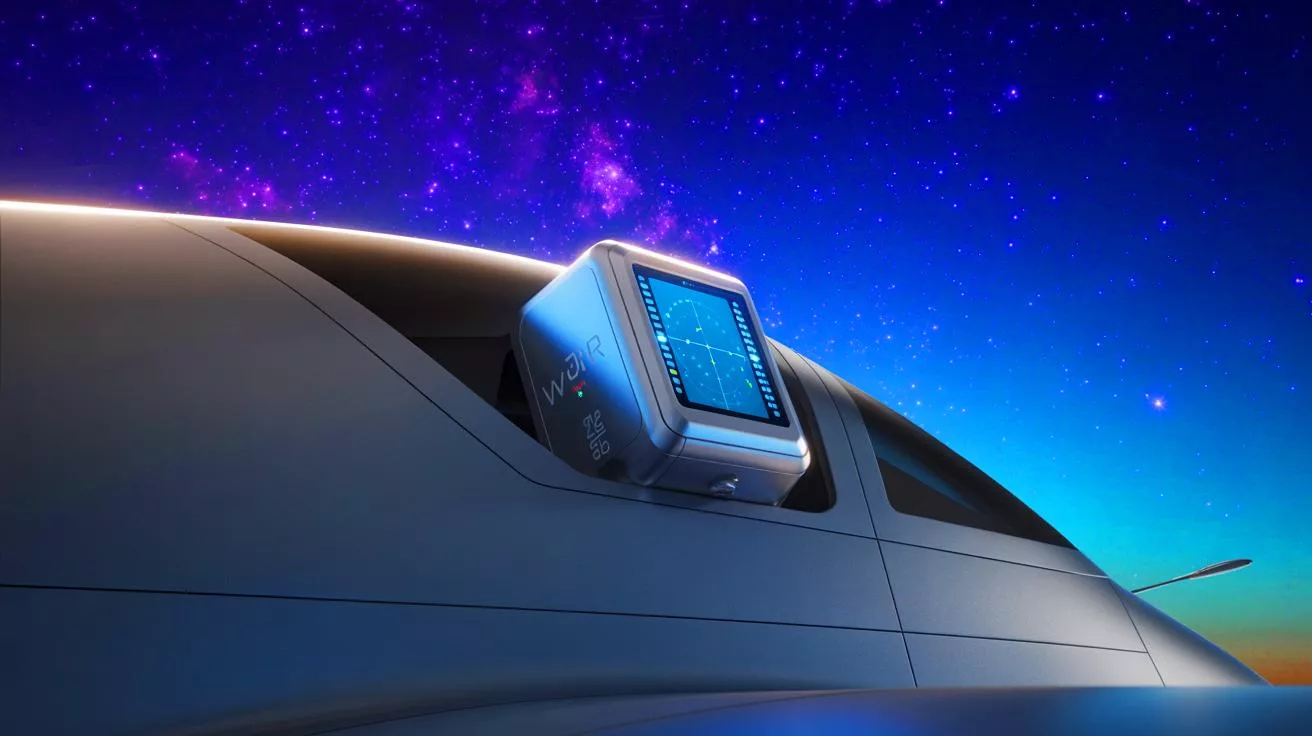
As the world continues to rely heavily on satellite navigation systems, a French start-up named Sodern is introducing a groundbreaking technology that could redefine the navigation landscape. Astradia, a star tracker developed by Sodern, operates independently of traditional GPS systems. This innovative approach offers an alternative method of navigation, both during the day and at night. Initially designed for military and aviation sectors, Astradia presents a new frontier for navigation technology, potentially enhancing the safety and security of both civilian and military aviation operations.
Revolutionizing Navigation with Stellar Guidance
Astradia, developed by Sodern, a subsidiary of ArianeGroup, is poised to transform traditional navigation systems with its cutting-edge stellar navigation technology. Unlike GPS, Galileo, and other satellite-based systems, which are vulnerable to jamming, spoofing, and sudden unavailability, Astradia provides a more secure alternative. By utilizing star tracking, including during daylight, it circumvents these vulnerabilities and offers a reliable navigation solution.
Sodern’s extensive experience in space exploration underpins this technological advancement. With thousands of star trackers already deployed in space, the company has successfully repurposed stellar detection algorithms for terrestrial use. When combined with an inertial navigation system, Astradia delivers continuous, precise attitude measurements, correcting natural drifts in the inertial sensors. This results in measurements accurate to a few arc seconds, akin to a meter’s accuracy over 43 miles, setting a new standard for precision in navigation technology.
A Discreet, Jamming-Resistant System
Weighing less than three pounds and featuring compact dimensions of approximately 7 x 7.3 x 8.1 inches, Astradia is designed for seamless integration into various aircraft types. Its miniaturized design opens up possibilities for diverse applications—from surveillance drones to commercial airliners and sensitive military operations. One of Astradia’s key advantages is its ability to operate silently, without emitting signals. This ensures complete discretion for the carrier and poses a significant strategic advantage in environments where jamming is a concern.
Moreover, Astradia’s global functionality, including over oceans, without requiring constant cartographic updates, enhances its versatility. This makes it a valuable tool for military forces focused on cybersecurity and for civilian operators seeking reliable navigation solutions. Scheduled for launch in June, alongside the Paris Air Show, Astradia will be priced at about $275,000 before taxes per unit. Although this represents a substantial investment, the increasing security demands in aviation justify the cost, potentially marking a pivotal shift in navigation technology.
Economic and Practical Implications
The introduction of Astradia poses significant questions about the economic and practical implications of adopting such technology. While its initial cost is steep, the long-term benefits could outweigh the investment, especially in sectors where security and precision are critical. The military and aviation industries, in particular, stand to gain from a navigation system immune to jamming and interference.
Astradia’s ability to function without constant updates or external signals results in lower maintenance and operational costs over time. This self-sufficiency makes it an attractive option for operators looking to reduce dependency on satellite-based systems. Whether this technology will extend to civilian use—such as in automobiles or handheld devices—is yet to be seen. However, Astradia’s potential to revolutionize navigation is undeniable, setting a precedent for future innovations in this field.
Potential Challenges and Future Prospects
Despite its promise, Astradia faces certain challenges. Its reliance on clear skies for star visibility may limit its effectiveness in cloudy or heavily polluted environments. However, its integration with inertial systems could mitigate these limitations by maintaining accuracy when direct celestial observation is not feasible.
The true test for Astradia will be its adaptability and scalability. Will it remain a specialized technology for military and aviation use, or will it find broader applications in everyday navigation? The potential to integrate this technology into consumer electronics, such as smartphones or vehicles, could herald a new era of navigation, free from the constraints of traditional GPS systems.
As we stand on the brink of a potential paradigm shift in navigation technology, one must wonder: How will innovations like Astradia transform our reliance on satellite navigation, and what new possibilities might emerge as we explore the stars for direction?


Are they really navigating with stars now? Sounds like something out of a sci-fi movie! 🌌
How does Astradia work during the daytime if it relies on stars? 🤔
This sounds like something out of a sci-fi movie! Very cool. 🚀
How does Astradia manage to track stars during the day? 🤔
Can it really work without GPS? I’m skeptical. 🤨
Big thanks to Sodern for pushing the boundaries of navigation technology! 🙌
Seems like a cool idea, but what happens when the sky is cloudy?
What happens if it’s cloudy? Does the system fail?
Thank you for the insightful article! This tech could be a game changer for aviation security. ✈️
Wow, $275,000 per unit! That’s quite an investment. 💸
Finally, a system that can’t be jammed. Military must be thrilled!
Sounds expensive at $275,000 per unit… Is it worth the cost?
Is this technology going to be available for cars anytime soon?