




| IN A NUTSHELL |
|
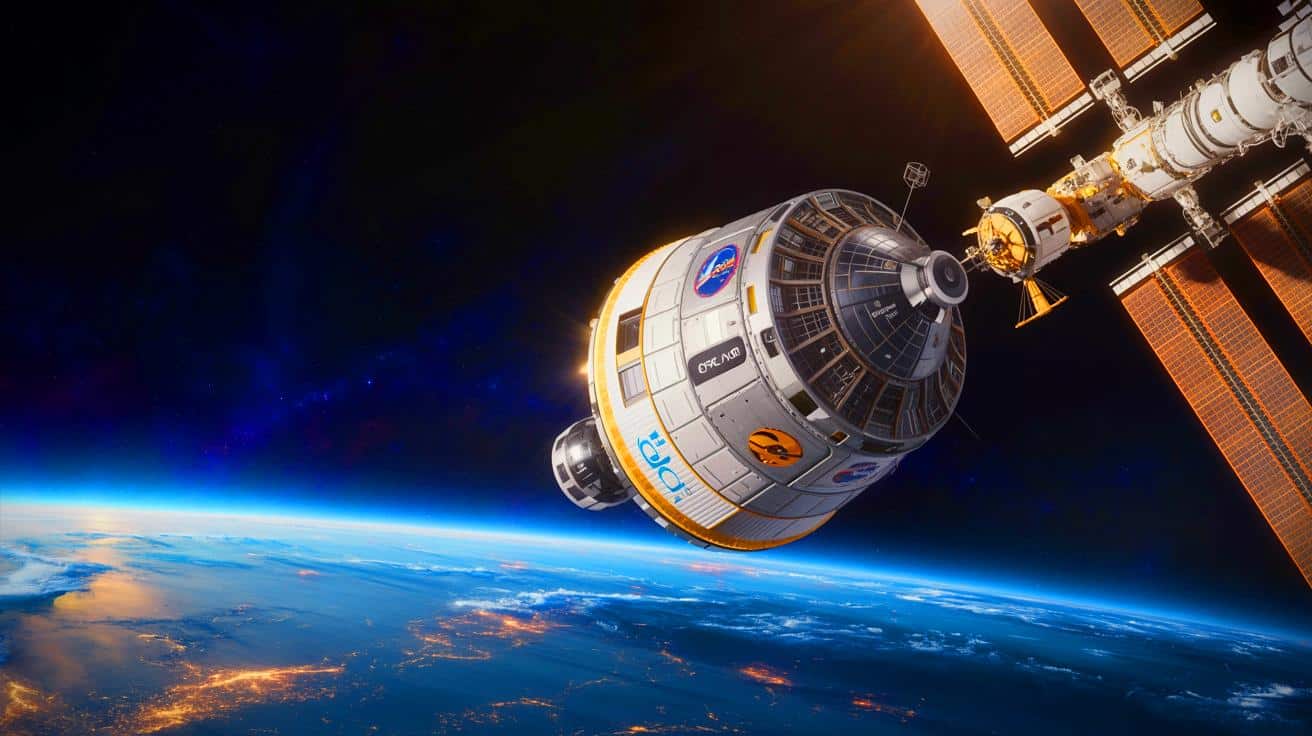
The recent setback with Northrop Grumman’s Cygnus XL spacecraft, which was scheduled to deliver 11,000 pounds of supplies to the International Space Station (ISS), highlights the complexities and challenges of space missions. This mission, crucial for its cargo and the new model of the Cygnus spacecraft, encountered an unexpected issue when its main engine shut down prematurely. The incident has prompted NASA and its partners to evaluate alternative approaches to ensure the spacecraft reaches its destination. This development not only affects the current mission but also underscores the importance of reliability and contingency planning in space exploration.
Engine Failure Raises Concerns
The Cygnus XL spacecraft’s mission encountered an unexpected complication when its main engine shut down earlier than planned during two critical burns. The burns were intended to adjust the spacecraft’s orbit to align with that of the ISS. This unexpected shutdown has delayed the delivery of essential supplies to the space station, which were initially scheduled to arrive on Wednesday. NASA has announced that ground teams are actively assessing backup plans to facilitate the spacecraft’s rendezvous with the ISS, albeit not according to the original schedule.
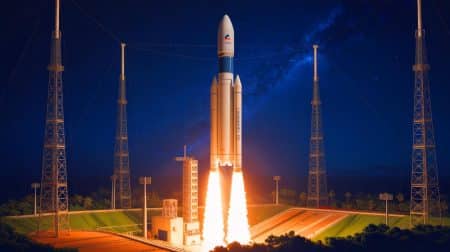
The spacecraft was launched aboard a SpaceX Falcon 9 rocket from Cape Canaveral Space Force Station in Florida. The initial stages of the mission proceeded smoothly, with Cygnus separating from the Falcon 9 rocket as planned. However, the issue with the main engine has created uncertainty regarding the timing and success of the mission. Although the exact cause of the engine problem remains undisclosed, NASA reassures that all other systems on the Cygnus XL are functioning as expected.
Significance of the Cygnus XL Mission
This mission marks Northrop Grumman's 22nd cargo resupply mission to the ISS, a testament to the company's pivotal role in supporting the space station's operations. The Cygnus XL spacecraft, an upgraded model, is designed to carry 33 percent more cargo than its predecessors. Standing 5.2 feet longer, it represents a significant advancement in the capabilities of commercial space vehicles. This mission is particularly significant as it is carrying the heaviest load of supplies ever delivered by a commercial cargo vehicle to the ISS.
The cargo on board includes fresh food, critical hardware for biological and technological experiments, and essential spare parts for the station's systems. Among these are components for the station's urine processor and toilet, vital for maintaining the crew's living conditions. The potential loss of these supplies underscores the mission's importance and the impact of any delay or failure.
Challenges and Contingency Plans
The main engine of the Cygnus spacecraft uses a hypergolic mixture of hydrazine and nitrogen tetroxide propellants, known for their reliability due to their self-igniting properties. Despite this, the engine failure has prompted consideration of alternative strategies to complete the mission. One potential solution involves using the spacecraft's smaller reaction control system thrusters. These thrusters, typically used for minor adjustments and orientation, might be employed to gradually adjust the spacecraft's orbit to enable docking with the ISS.
However, this approach presents its own challenges and uncertainties. The smaller thrusters were not designed for such extensive maneuvers, and their effectiveness in this scenario is under evaluation. NASA and Northrop Grumman are weighing these options carefully, as the success of the mission depends on a viable solution to overcome the main engine's failure.
Implications for Future Missions
The incident with the Cygnus XL spacecraft highlights the inherent risks and challenges associated with space missions. While the spacecraft is not designed to return to Earth intact, its role in delivering crucial supplies to the ISS is paramount. Any failure to reach the station could result in significant losses, not only in terms of cargo but also in the advancement of scientific experiments and station maintenance.
Northrop Grumman's ability to adapt and find solutions in such situations is critical. The lessons learned from this mission will likely influence future resupply missions and the development of more robust systems. As the demand for space exploration grows, ensuring the reliability and success of these missions becomes increasingly important. Moreover, the incident raises questions about how future missions can be safeguarded against similar technical failures.
As NASA and Northrop Grumman continue their efforts to resolve the engine issue and ensure the Cygnus XL's successful journey to the ISS, the situation prompts broader reflection on the resilience and adaptability of current space technologies. How can space agencies and companies further enhance the reliability of spacecraft to mitigate risks and ensure the success of future missions?
Oh non, c’est pas vrai ! Comment vont-ils survivre là-haut sans ces fournitures ? 😨
Que s’est-il vraiment passé avec le moteur principal? 🧐
C’est incroyable que malgré les avancées technologiques, des problèmes comme ça arrivent encore! 🤔
Peut-être que les astronautes devraient commencer à cultiver leurs propres légumes dans l’espace ! 😅
J’espère que l’équipage de l’ISS va bien et qu’ils auront bientôt leurs provisions. 🙏
Quelle est la probabilité que les plus petits propulseurs réussissent à ajuster l’orbite du vaisseau ?
Comment peut-on perdre autant de poids en espace en si peu de temps?! 😅
J’espère qu’ils trouveront une solution rapidement. Merci à toutes les équipes qui travaillent dur pour résoudre ce problème !
Merci pour l’article détaillé, c’est fascinant de voir les défis de l’exploration spatiale.
Est-ce que ça signifie que les astronautes vont manquer de nourriture?
Imaginez si on perdait 11 000 livres de chocolat… catastrophe ! 🍫
Pourquoi ne pas avoir un plan de secours plus robuste? Ça semble risqué.
C’est un rappel des risques que prennent les astronautes pour la science. Courage à eux !
11,000 livres de provisions, c’est énorme! Qu’est-ce qui était à bord exactement?
Pourquoi ne pas envoyer une autre mission en renfort ? Cela semble être une urgence.
NASA doit vraiment améliorer sa fiabilité, c’est inquiétant pour les futures missions.
Est-ce que SpaceX sera impliqué pour aider à résoudre le problème?
C’est fou de penser combien de choses peuvent mal tourner dans l’espace! 🚀
Comment les petites thrusters peuvent-elles suffire pour ajuster l’orbite? Ça semble improbable.
Espérons que cela servira de leçon pour améliorer les prochaines missions.
Le stress doit être énorme pour l’équipage de l’ISS en ce moment. 😟
J’ai toujours pensé que ces missions étaient sans problème, mais la réalité est différente.
Les problèmes mécaniques dans l’espace, c’est mon cauchemar! 😱
Merci pour cet article, il montre bien les risques de l’exploration spatiale.
Les astronautes vont-ils devoir rationner leurs ressources?
Que va faire la NASA pour éviter que cela ne se reproduise à l’avenir?
Les ingénieurs doivent être en alerte maximum, bon courage à eux!
Est-ce que cela va retarder d’autres missions prévues?
Ça doit être stressant de gérer une telle situation depuis la Terre.
Les erreurs dans l’espace coûtent cher, littéralement et figurativement.
J’espère que le prochain lancement sera sans encombres. 🤞
Les risques sont énormes, mais les récompenses le sont aussi.
Peut-on vraiment prédire tous les problèmes potentiels dans l’espace?
C’est un rappel que l’espace est encore une frontière difficile à maîtriser.
La Cygnus XL a vraiment mis la NASA dans une position difficile.
Les astronautes doivent être sacrément résilients pour faire face à ça! 💪
Peut-être que cela accélérera les recherches pour de meilleures technologies spatiales?
La technologie est incroyable, mais elle a clairement ses limites.
Je suis curieux de savoir comment ils vont résoudre ce problème.
Les missions spatiales sont fascinantes, malgré les risques énormes.
Pourquoi les moteurs hypergoliques ont-ils échoué alors qu’ils sont censés être fiables?
Ce genre d’échec doit être un cauchemar pour les ingénieurs! 😬
Les défis de l’espace ne cesseront jamais de me surprendre.
Peut-être que cela poussera à des innovations inattendues.