



| IN A NUTSHELL |
|
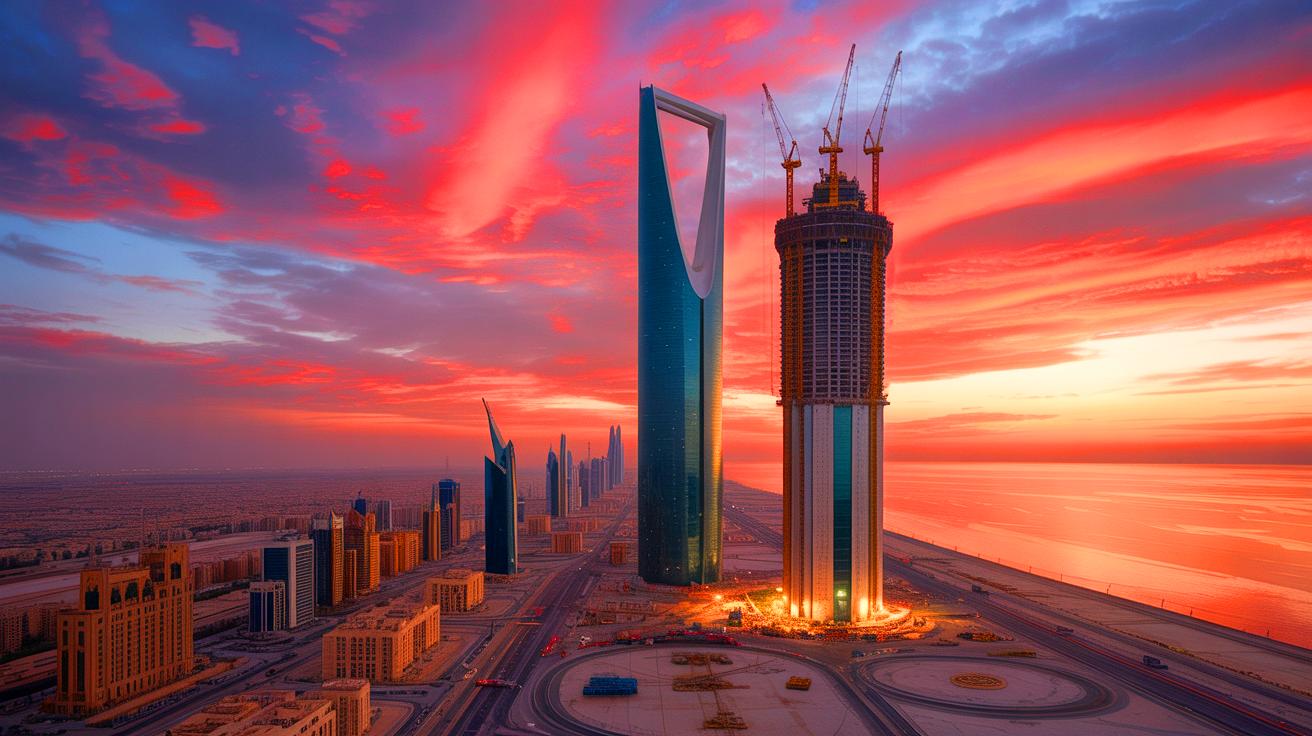
In the heart of Saudi Arabia, a towering ambition is taking shape. The Jeddah Tower, set to become the world’s tallest skyscraper, aims to redefine the skyline and symbolize the kingdom’s modernization efforts. Soaring over 3,281 feet, the tower will overshadow Dubai’s Burj Khalifa by an impressive 591 feet. This ambitious project is not just a testament to engineering prowess but also a key component of Saudi Arabia’s Vision 2030, a strategic plan to diversify its economy. As construction progresses, the Jeddah Tower is poised to become an iconic landmark, embodying both innovation and controversy.
The Vision for Jeddah Tower
The Jeddah Tower began as a bold vision, originally named the Kingdom Tower. It was conceived as a symbol of Saudi Arabia’s economic transformation and modernization. The project is spearheaded by renowned architect Adrian Smith, known for designing the Burj Khalifa. His design for the Jeddah Tower draws inspiration from nature, with a slender, asymmetrical profile resembling desert plant growth. This design is not merely aesthetic; it serves a functional purpose. The tower’s Y-shaped footprint enhances aerodynamic efficiency, crucial for withstanding intense wind forces at unprecedented heights.
Despite facing significant setbacks, construction resumed in January 2025 with renewed vigor. The Saudi Binladin Group, Dar Al-Handasah, and Turner Construction took charge, injecting fresh expertise and resources into the project. As of September 2025, the tower has reached its 70th floor, with construction progressing at a remarkable pace. Crews are completing approximately one floor every four days, keeping the project on track for its estimated 2028 completion. The Jeddah Tower is more than just an architectural marvel; it is a testament to perseverance and ambition.
Engineering Challenges and Innovations
Constructing a skyscraper of this magnitude presents unparalleled engineering challenges. The foundation is a marvel of engineering, featuring a hybrid piled raft system with 270 piles extending up to 344 feet deep. This system is designed to handle massive loads while minimizing differential settlement. The tower employs a revolutionary buttressed core system, eliminating the need for traditional structural elements. This innovative design utilizes high-performance concrete to achieve stability and strength.
Vertical concrete-pumping technology has reached unprecedented heights, marking a significant engineering milestone. The tower will host 59 elevators, including five double-deck elevators, to facilitate efficient vertical transportation. Sustainable technologies are integral to the design, with high-performance glazing, energy-efficient systems, and rainwater harvesting reducing the building’s environmental impact. The tower’s orientation and tapering shape minimize solar heat gain, addressing the challenges of Saudi Arabia’s climate. These engineering innovations make the Jeddah Tower a pioneering feat of modern architecture.
Economic Implications and Vision 2030
The Jeddah Tower is a cornerstone of Saudi Arabia’s Vision 2030, a strategic initiative aimed at diversifying the kingdom’s economy. As the global economy shifts, Saudi Arabia recognizes the need to transition away from oil dependency. Vision 2030 seeks to position the kingdom as a global hub for e-commerce, tourism, and cultural exchange. The Jeddah Tower plays a pivotal role in this transformation, serving as a beacon of economic progress.
The tower will house a Four Seasons luxury hotel, premium residential apartments, and Class A office spaces. These facilities aim to attract international businesses and tourists, boosting the local economy. The world’s highest observation deck, at 2,112 feet, will offer breathtaking views of the Red Sea, drawing visitors from around the globe. As Saudi Arabia seeks to redefine its economic landscape, the Jeddah Tower stands as a symbol of ambition and opportunity.
Environmental Concerns and Criticisms
Despite its impressive design, the Jeddah Tower has faced criticism for its environmental impact. The project requires approximately 500,000 cubic yards of concrete and 80,000 tons of steel, contributing to significant carbon emissions. The tower’s construction phase alone could produce around 200,000 tons of carbon emissions. Critics argue that the project’s symbolic value does not justify its environmental cost, labeling it as a ‘vanity construction’.
Additionally, the tower’s location on the Red Sea coast raises environmental concerns. Jeddah’s coastal waters are already stressed by pollution and inadequate wastewater treatment. The construction of such a massive structure further exacerbates these issues. As the world grapples with climate change, the Jeddah Tower serves as a focal point for discussions on sustainability and environmental responsibility. The challenge lies in balancing progress with ecological stewardship.
As the Jeddah Tower rises, it embodies the paradox of progress. It is a symbol of human ambition and engineering excellence, yet it raises questions about environmental sustainability. The tower’s completion will mark a significant milestone in architectural history, but its legacy will be shaped by how it addresses the environmental challenges it poses. As we look to the future, we must consider whether the achievements of tomorrow can coexist with the responsibilities of today. How will the Jeddah Tower influence the global conversation on sustainable development and architectural innovation?


Wow, they’re really going for it! Can’t wait to see how it turns out! 😊
Wow, la tour Jeddah va vraiment être plus haute que le Burj Khalifa ? Incroyable ! 😲
Une tour plus haute que la Burj Khalifa? Je suis sceptique. Est-ce vraiment nécessaire?
Quel coût économique pour un tel projet ? J’espère que cela en vaut la peine pour l’Arabie Saoudite.
Merci pour cet article intéressant. J’espère que le projet respecte l’environnement!
Qui aurait cru que quelqu’un surpasserait la Burj Khalifa si vite? 😲
C’est impressionnant, mais qu’en est-il de l’impact environnemental? 🌍
Est-ce que ce projet sera vraiment bénéfique pour l’économie saoudienne à long terme?
C’est incroyable ce qu’ils peuvent faire avec l’ingénierie moderne de nos jours!
Pourquoi personne n’a vu ça venir? Les projets de cette ampleur ne se font pas en secret… 🤔
Je me demande combien de temps cela va prendre pour terminer la Jeddah Tower.
Je suis curieux de voir les innovations en ingénierie utilisées pour construire cette tour.
J’espère qu’il y aura de bons restaurants là-dedans! 🤤
La vision 2030 semble ambitieuse, mais est-ce réaliste?
On dirait que l’Arabie Saoudite veut vraiment se démarquer avec sa Vision 2030.
Pourquoi toujours construire plus haut? Ne devrions-nous pas nous concentrer sur la durabilité?