




| IN A NUTSHELL |
|
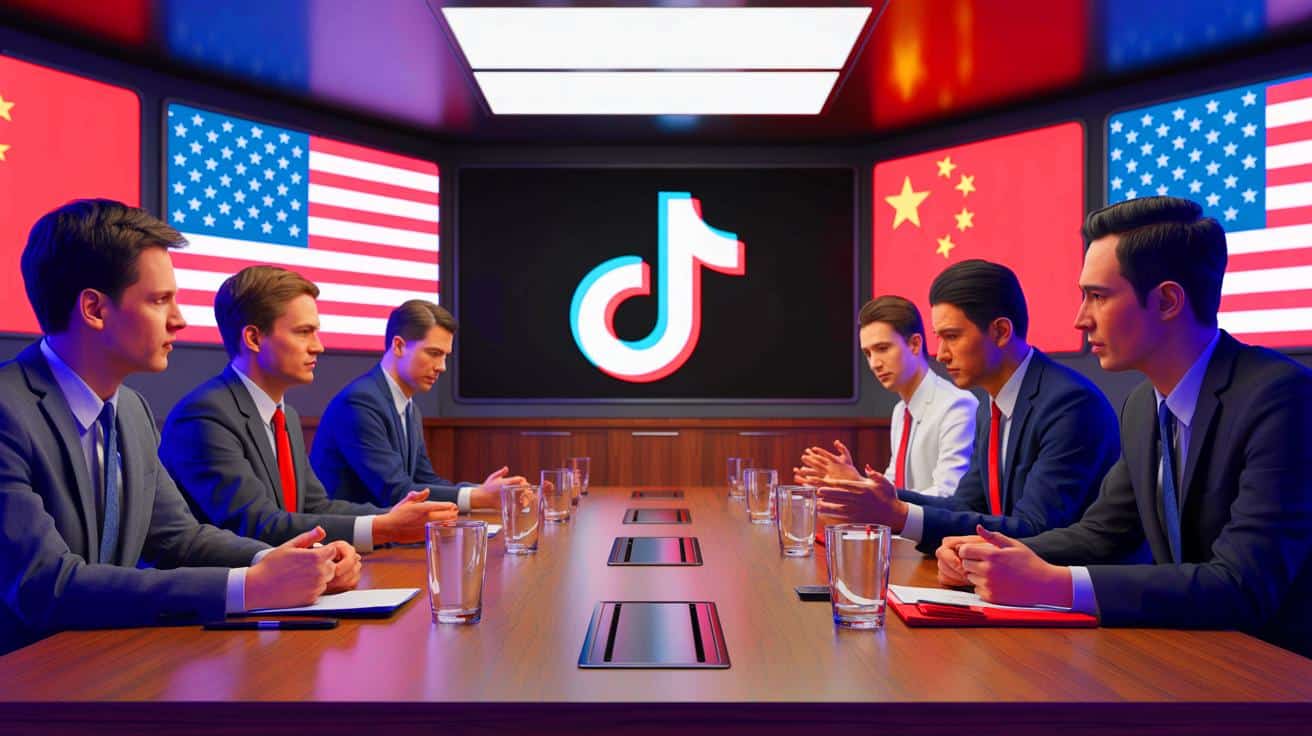
The ongoing saga involving TikTok’s presence in the United States has taken several unexpected turns, captivating global tech watchers. Initially faced with an imminent ban, the popular social media platform found itself embroiled in a complex negotiation between the Trump administration and its Chinese parent company, ByteDance. These discussions have revolved around national security concerns and the safeguarding of American user data. As both nations navigate the intricacies of this high-stakes deal, it becomes clear that the outcome could redefine the balance of technological power between the U.S. and China.
The Complex Landscape of TikTok’s U.S. Operations
The journey to resolve TikTok’s future in the United States has been fraught with tension and uncertainty. The Trump administration, citing national security risks, demanded that ByteDance sell its U.S. operations to a domestic company. This ultimatum was driven by fears that American user data could be exploited by the Chinese government for espionage or propaganda. With over 170 million users in the U.S. alone, TikTok’s fate became a matter of both economic and political significance.
Prominent companies, including Microsoft, Oracle, and Walmart, expressed interest in acquiring TikTok’s U.S. operations. However, negotiations were complicated and often shrouded in mystery. The White House remained firm in its stance, wielding the threat of a ban as leverage. For ByteDance, the challenge was to meet U.S. demands without sacrificing its technological crown jewel.
This tense geopolitical environment led to the emergence of a potential solution, one that was more nuanced than a straightforward sale. Instead of a full divestiture, discussions began to revolve around licensing and operational agreements that would satisfy both parties while maintaining some degree of Chinese influence.
Understanding the Proposed Licensing Agreement
At the heart of the negotiations is a proposed licensing agreement. Wang Jingtao, a key figure in China’s cybersecurity regulatory framework, revealed that the deal involves licensing TikTok’s algorithm and intellectual property rights. Under this agreement, ByteDance would allow a third-party operator to manage American user data and content security. However, the exact execution of these operations remains unclear.
The licensing arrangement highlights a crucial distinction: while the U.S. aims for a clear separation from ByteDance, China is unwilling to entirely relinquish control. The proposed agreement suggests a middle ground, whereby TikTok’s U.S. operations would retain some Chinese characteristics, albeit under American oversight.
Washington’s main concern remains the algorithm, which has significant political implications. The fear is that even with a licensed code, there could be room for propaganda or polarizing content to seep through. Nonetheless, Beijing appears open to the idea of exporting the code, albeit under strict licensing terms.
Legal and Operational Challenges Ahead
The legal framework governing TikTok’s operations in the U.S. is complex and multifaceted. A previously signed divest-or-ban law requires that the algorithm be fully operated by the American entity. This stipulation raises questions about the feasibility of the licensing model, which could potentially allow ByteDance to maintain some level of influence.
The negotiations have also involved discussions about the ownership structure of TikTok’s U.S. operations. Potential investors such as Andreessen Horowitz and Blackstone were considered, with Oracle playing a significant role in data security. However, the exact contours of this ownership remain uncertain, as some investors have withdrawn and new ones have emerged.
Beyond legal considerations, the political dimensions of the deal cannot be overlooked. The ultimate decision on whether the separation is sufficient rests with the U.S. president, who has the authority to approve a compromise that maintains a technological link with ByteDance. This highlights the delicate balance between security concerns and diplomatic relations.
The Broader Implications for U.S.-China Relations
The TikTok negotiations are emblematic of the broader strategic rivalry between the U.S. and China. The outcome of these talks could set a precedent for future tech-related disputes between the two superpowers. For China, the licensing agreement represents a way to project its technological prowess without fully capitulating to U.S. demands.
In a broader context, the deal underscores the increasing importance of technology as a strategic asset in global geopolitics. Each line of code and algorithm becomes a potential tool in the ongoing digital cold war. The resolution of TikTok’s fate could influence how other countries approach similar issues, particularly as they navigate the complexities of technology, security, and sovereignty.
Ultimately, the TikTok saga serves as a reminder of the intricate interplay between technology and international relations. As both nations continue to negotiate, the question remains: How will this deal shape the future of global tech governance, and what does it mean for the millions of users caught in the middle?

Est-ce que quelqu’un d’autre pense que TikTok devrait être interdit aux États-Unis ? 🤔
Wow, ça c’est un article qui fait réfléchir! 😮
Est-ce que ce deal va vraiment changer quelque chose pour les utilisateurs américains?
Je me demande pourquoi Washington n’a pas agi plus tôt. 🤷♂️
Encore une fois, la politique s’invite là où elle ne devrait pas. 🙄
Je suis d’accord avec l’article, c’est une capitulation totale de la part des États-Unis.
Merci pour cet article très informatif, je n’étais pas au courant de tout ça!
Washington a-t-il vraiment “surrendered” ou est-ce juste une perspective biaisée?
Whoa, ça prend une tournure plus complexe que je ne l’avais imaginé !
Je suis curieux de savoir ce que pensent les utilisateurs de TikTok de tout ça.
Pourquoi les États-Unis n’ont-ils pas simplement interdit TikTok immédiatement ?
Ça sent la théorie du complot tout ça… 🤔
Pourquoi est-ce que la Chine s’accroche autant à TikTok?
Je suis sceptique quant à ce “deal secret”. On dirait plus de politique que de sécurité.
Un article fascinant, mais je reste sceptique sur certaines affirmations.
Merci pour cet article détaillé, ça m’a vraiment éclairé sur le sujet. 😊
Avez-vous des sources supplémentaires pour ces informations?