





| IN A NUTSHELL |
|
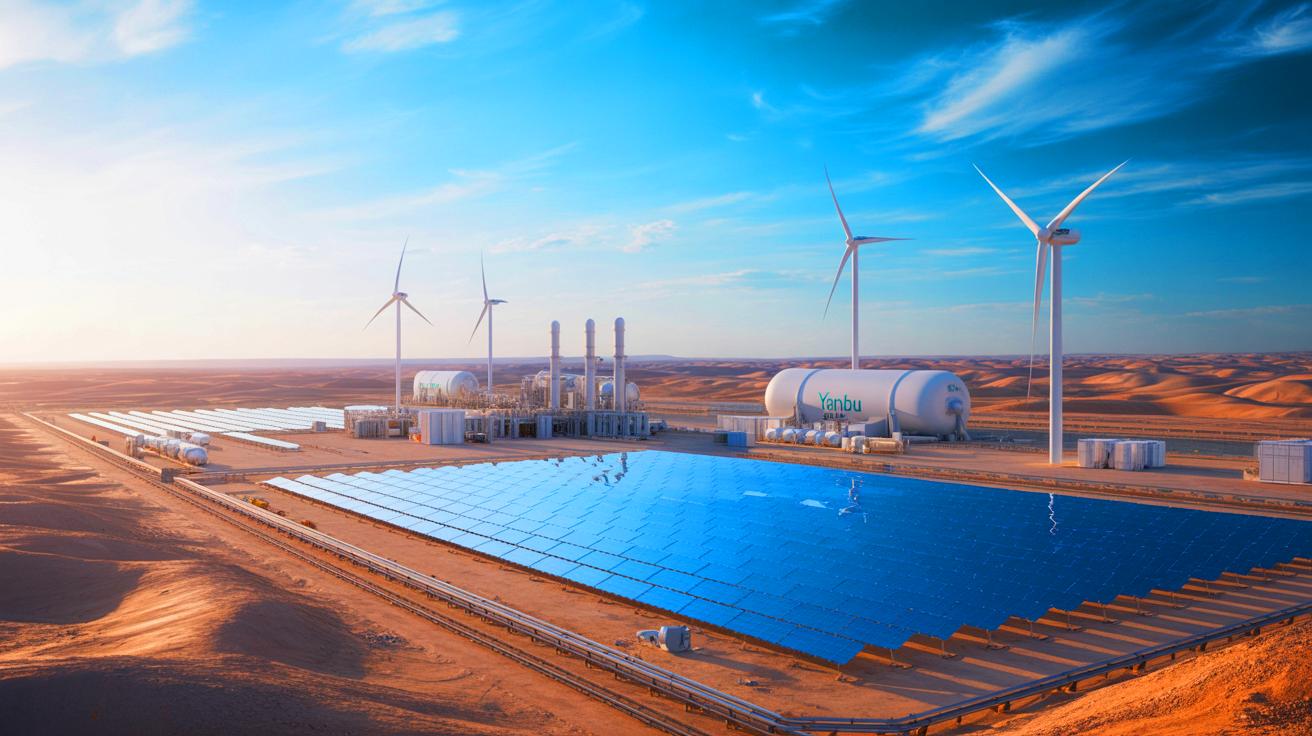
In a sweeping move that underscores its ambition to transition from oil to greener energy sources, Saudi Arabia is set to host the world’s largest green hydrogen plant. The Yanbu Green Hydrogen Hub, located on the country’s west coast, is poised to produce 400,000 tons of green hydrogen annually. This ambitious project is a critical component of Riyadh’s vision to lead the global energy transition by utilizing its vast desert resources to generate clean energy. As the world increasingly turns its attention to sustainable energy, the hub promises to be a cornerstone in the Middle East’s renewable energy landscape.
Understanding the Yanbu Project
The Yanbu Green Hydrogen Hub is not just any industrial development; it represents a colossal leap in the production of green hydrogen. The facility will utilize large-scale electrolysis, a process that involves splitting water molecules into hydrogen and oxygen using electricity. The project requires ultra-pure water, giant electrolyzers, and most importantly, clean electricity to power these operations. Currently, the contract signed focuses on the industrial aspects, including machinery, water desalination, and a dedicated ammonia export terminal.
Transporting hydrogen remains a logistical challenge, so the project will convert it into green ammonia, a more stable and dense form, making it easier to ship to international markets. This conversion effectively creates a concentrated hydrogen solution capable of decarbonizing heavy industries across Europe and Asia. While the infrastructure for solar and wind energy is not yet integrated, plans are underway to incorporate several gigawatts of renewable energy to power this mega-project.
Global Implications of the Hydrogen Hub
The Yanbu project is more than just an industrial venture; it signifies Saudi Arabia’s strategic shift in its global energy role. With countries like the United Arab Emirates and Morocco also investing heavily in hydrogen, the Middle East is positioning itself as a future hub of green energy. These nations collectively account for 10% of the global electrolyzer capacity under development. While the infrastructure is still to be built, the commitment to developing a hydrogen-based economy is evident.
This regional focus on hydrogen parallels the historical role of OPEC in oil markets. The Gulf states aim to leverage their natural resources to dominate the hydrogen sector, much like they did with oil. The substantial investments underscore a clear intention: to become the primary suppliers of clean hydrogen, establishing new economic and geopolitical dynamics.
Challenges Facing European Hydrogen Ambitions
Europe’s ambitions to produce 10 million tons of renewable hydrogen by 2030 face significant hurdles. Despite intentions, large-scale industrial projects remain scarce, and the high costs of electrolyzers deter swift investment decisions. If Europe does not accelerate its efforts, it risks relying on imports of green hydrogen or ammonia, potentially dictated by prices set in Riyadh.
The slow pace of development in Europe contrasts sharply with the rapid advancements in the Middle East. This disparity raises concerns about Europe’s energy independence and its ability to meet climate goals without succumbing to external price pressures for critical energy resources.
Industry Leaders in the Transition
On the industrial front, companies like Técnicas Reunidas are playing pivotal roles in the energy transition. With significant contracts in Saudi Arabia, the Spanish engineering firm is at the forefront of integrating CO2 and green molecule conversion technologies. Their partnership with Sinopec, a Chinese energy giant, further extends their influence, bridging innovations from the deserts of Saudi Arabia to laboratories in Spain.
As these companies collaborate, they set a precedent for how industrial engineering can drive global energy transformation. Their work exemplifies the shift towards sustainable practices that underpin future industrial developments worldwide, cementing a new era in energy production and consumption.
A Vision for Saudi Arabia’s Future
While Saudi Arabia remains the world’s largest exporter of crude oil, with daily exports exceeding 7 million barrels, the nation is acutely aware of the finite nature of its oil reserves. The kingdom is proactively investing in green energy to ensure a sustainable economic future. The Yanbu Green Hydrogen Hub is a testament to Saudi Arabia’s commitment to diversifying its energy portfolio in preparation for a post-oil era.
This strategic pivot not only aims to secure economic stability but also positions Saudi Arabia at the forefront of the global energy landscape. As the world grapples with climate change, Riyadh’s efforts to harness renewable resources could redefine its geopolitical influence and economic resilience.
As Saudi Arabia and its neighbors embark on this ambitious energy transition, the global community watches closely. The success of these projects could redefine energy economics, but what challenges and opportunities will arise as the Middle East becomes a powerhouse of renewable energy?



Wow, 400,000 tons of green hydrogen! That’s a lot of clean energy. 🌍
Isn’t it ironic that the world’s biggest oil exporter is now leading in green energy? 🤔
Can’t wait to see how this will impact global energy dynamics. 🌱
How long will it take for the Yanbu project to be fully operational?
Thanks for sharing this exciting news!
This seems like a PR stunt more than a genuine shift. Time will tell!