




| IN A NUTSHELL |
|
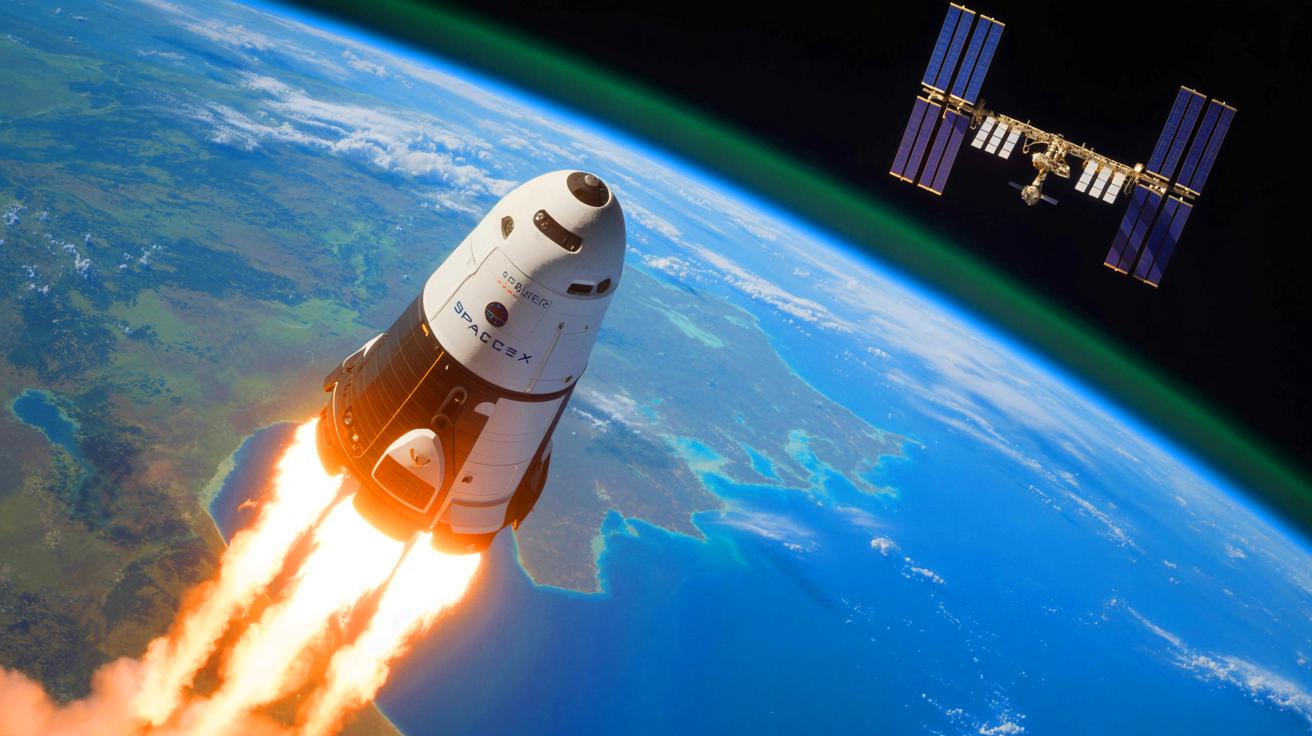
SpaceX’s Dragon capsule has recently completed a significant mission by returning to Earth with 6,700 pounds of innovative gear from the International Space Station (ISS). This mission marks a pivotal moment in space exploration, highlighting the collaboration between NASA and commercial spaceflight companies. The gear brought back promises to advance our understanding of space technology and education. The following sections delve into the groundbreaking projects brought back by the Dragon capsule, each holding the potential to transform the future of space exploration and contribute to technological and scientific advancements on Earth.
Testing Materials for Deep Space
Among the experiments aboard the Dragon capsule was the Multipurpose International Space Station Experiment, known as MISSE-20. This project aimed to assess the resilience of various materials in the unforgiving environment of space. Researchers selected diverse samples, including radiation shielding, solar sail coatings, ceramic composites, and specialty resins, to evaluate their durability against ultraviolet radiation, atomic oxygen, and extreme temperature fluctuations.
The insights from MISSE-20 are poised to significantly impact the design of future spacecraft, particularly in developing advanced heat shields and robust outer structures. By placing these samples on the exterior of the ISS, scientists acquired valuable data on the degradation process of these materials in space. Understanding these effects is crucial for ensuring the longevity and safety of spacecraft that will venture into deep space in the future.
Tentacle-Armed Robots Make Their Mark
The Dragon capsule also returned with the innovative Astrobee-REACCH robotic system. This project integrated NASA’s Astrobee free-flying robots with tentacle-like arms equipped with adhesive pads. These advanced robots demonstrated their capabilities in microgravity by adeptly grasping and maneuvering objects of various shapes and textures.
The potential applications for this technology are extensive. From satellite servicing and orbital debris removal to repositioning objects in space, these robots could play a critical role in extending satellite lifespans and enhancing the safety of spacecraft in low Earth orbit. As orbital technology continues to advance, innovations like Astrobee-REACCH will be crucial in maintaining and optimizing space assets, ensuring a safer and more efficient space environment.
A Leap in Space Imaging
The Dragon capsule’s return also included hardware and data from the OPTICA experiment. This project, known as Onboard Programmable Technology for Image Compression and Analysis, spent a year aboard the ISS. OPTICA focused on testing the compression and real-time transmission of hyperspectral imagery, aiming to reduce the bandwidth required to send detailed images from space.
The implications of OPTICA’s success are far-reaching, particularly in fields like disaster response, agriculture, and environmental monitoring. By cutting costs and enhancing the efficiency of space-based imaging systems, this technology could revolutionize how we gather and utilize data from space to address real-world challenges on Earth. This advancement in imaging could transform our capabilities in monitoring and responding to global issues.
Space Books Float Back Home
The Dragon capsule also returned with a collection of children’s books from the Story Time from Space project. During their time in microgravity, ISS crew members read five STEM-themed books and recorded accompanying science demonstrations. These readings and demonstrations were downlinked to Earth, enriching a growing educational video library.
The Story Time from Space project aims to inspire young minds and ignite an interest in space science. By bringing these stories to classrooms around the world, the initiative helps bridge the gap between Earth and space, fostering a new generation of explorers and scientists eager to unravel the mysteries of the universe. This educational effort is pivotal in nurturing future leaders in space exploration and scientific discovery.
The successful return of the Dragon capsule underscores the ISS’s role as a crucial testing ground for innovations that can transform life on Earth and propel humanity further into the cosmos. Each mission, with its unique blend of scientific inquiry and technological advancement, brings us closer to realizing our ambitions of reaching the Moon, Mars, and beyond. What groundbreaking discoveries and technologies will the next mission unveil, and how will they continue to shape our future in space exploration?
Wow, 6,700 pounds of robots? That’s a lot of metal! 🤖
J’espère qu’ils n’ont pas oublié de ramener des souvenirs ! 😂
Les robots de SpaceX pourraient-ils remplacer les astronautes à l’avenir ?
Bravo SpaceX ! Continuez comme ça !
Quel impact ces robots auront-ils sur notre vie quotidienne ?
Ça doit être un cauchemar logistique de ramener tout ça sur Terre !