





| IN A NUTSHELL |
|
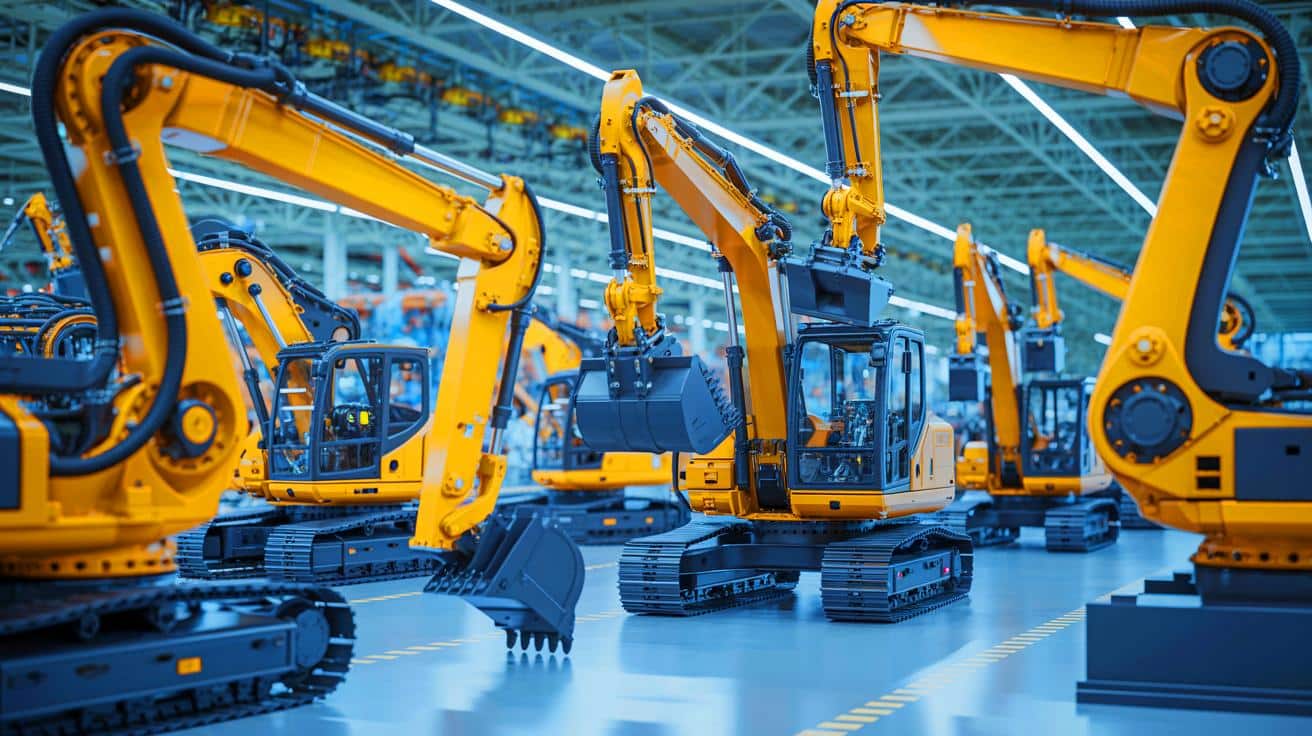
In a significant leap towards the future of manufacturing, Guozi Robotics has unveiled an innovative system that automates the entire excavator production process. This development marks a pivotal moment in the construction-machinery industry, promising to reshape manufacturing efficiency and logistics. Using nearly 200 robots equipped with advanced navigation and collaboration capabilities, Guozi has transformed each production step from inception to shipment at TZ Group’s new factory. As the demand for smarter manufacturing solutions intensifies globally, Guozi’s initiative highlights the potential of robotics in driving industrial progress.
Guozi’s Heavy-Duty Robots Transform Manufacturing
Guozi Robotics, based in Hangzhou, China, has long been at the forefront of smart manufacturing. Their heavy-duty robots, such as the ANTS and PICKING models, have already revolutionized production in renowned factories like Zoomlion, XCMG, and Sany around the world. The company’s recent venture with the TZ Group illustrates its capability to deliver cutting-edge manufacturing and logistics solutions tailored for the construction-machinery sector. With installations in over 1,000 customer locations across 20 countries, Guozi’s impact on the industry is undeniable.
These sophisticated robots are designed to manage high-mix operations without any re-tooling delays, thanks to their intricate systems and contact-free power rails that ensure continuous operation. The robots operate under Guozi’s Line-Side Control System (LCS) and Manufacturing Execution System (MES), providing seamless integration of data between shop-floor devices and plant management. This innovation not only streamlines production but also enhances operational efficiency, setting new benchmarks for the industry.
Revolutionizing Logistics with Precision and Speed
Beyond manufacturing, Guozi’s robots are reshaping logistics with precision. The company’s AI-driven Robot Control System (RCS) ensures centimeter-level orchestration of Automated Guided Vehicles (AGVs), enabling dynamic storage and smart picking. This technology provides a comprehensive end-to-end visibility from warehouse to workstation, optimizing the entire supply chain.
Materials within the distribution network are categorized into large, medium, small, and standard parts. The ANTS lifting AGVs, PICKING multi-layer robots, and heavy-duty carriers interface effortlessly with racks, pallets, and bins, illustrating the system’s versatility. Guozi’s product lineup, which includes intelligent inspection and logistics solutions, positions the company as a leader in production capacity and practical applications. This advancement in logistics not only enhances operational efficiency but also reduces the need for manual labor, paving the way for more automated, intelligent systems in the future.
Strategic Partnerships and Global Impact
Guozi’s influence extends beyond its technological innovations. The company has formed strategic partnerships with global giants like Staples, celebrating nine years of collaboration. With agreements that have seen Guozi provide over 1,000 robots, these partnerships underscore the company’s role as a critical player in the robotics and manufacturing sectors. Such collaborations highlight the significance of robotics in modern supply chains and the growing reliance on automated systems to meet increasing industrial demands.
These partnerships not only expand Guozi’s reach but also showcase the practical applications of its technologies in diverse environments. The continued success of these alliances reinforces the importance of robotics in enhancing productivity and operational efficiency across various industries, setting a precedent for future collaborations.
Future Directions and Industry Implications
Guozi Robotics’ advancements signal a broader trend towards automation and intelligent logistics in manufacturing. As industries worldwide seek to improve efficiency and reduce costs, the role of robotics becomes increasingly vital. Guozi’s innovations represent a shift towards more autonomous and flexible production systems, capable of adapting to diverse operational needs without significant downtime.
While robotics offers numerous benefits, it also poses challenges, such as potential job displacement and the need for workers to adapt to new technologies. As the industry evolves, questions about the balance between automation and employment remain. How can industries harness the power of robotics while ensuring opportunities for human workers in this rapidly changing landscape?


Impressionant! Mais combien d’emplois humains ces robots vont-ils remplacer? 🤔
Bravo à Guozi Robotics pour cette avancée technologique majeure! 👏
Est-ce que cela signifie que les robots peuvent aussi réparer d’autres robots? 🤖
Je suis curieux de savoir combien de temps il a fallu pour développer ces technologies.
Les robots vont-ils aussi se battre pour leurs droits un jour? 😂
Je pense que c’est un pas dans la bonne direction pour l’industrie.
Que va-t-il se passer si un robot tombe en panne pendant la production?