





| IN A NUTSHELL |
|
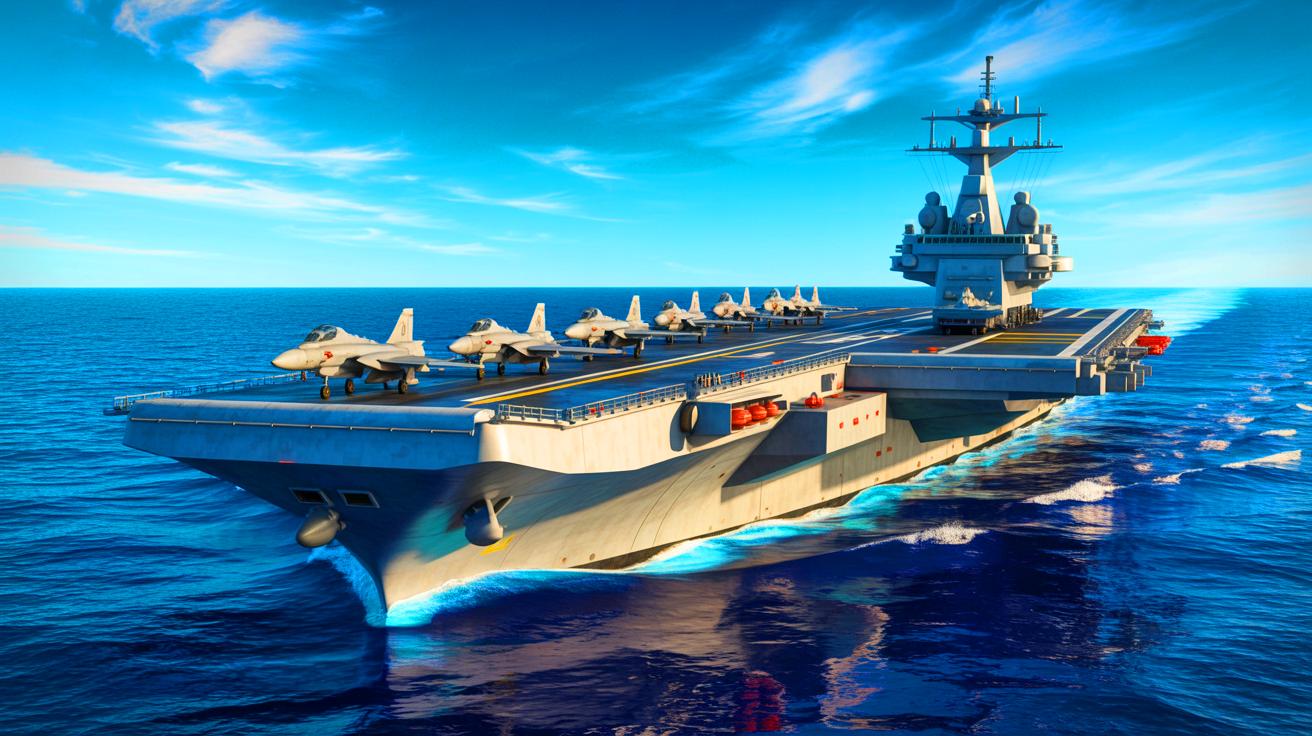
China’s naval ambitions are making waves globally as the country seeks to expand its maritime power through the development of a formidable aircraft carrier fleet. The People’s Liberation Army Navy (PLAN) is setting its sights on establishing a six-carrier fleet by the 2030s, aiming to bolster its strategic presence across the Indo-Pacific region. These developments are not just about increasing numbers but also about modernizing its fleet to include advanced technologies and capabilities. As China challenges the long-standing dominance of the United States in aircraft carrier strength, the implications for global naval strategies are profound and far-reaching.
China’s Ambitious Carrier Program
China’s foray into aircraft carrier operations began with the acquisition of the Varyag from Ukraine, an unfinished Soviet-era vessel that was later rebranded as the Liaoning. This marked the beginning of China’s carrier journey, with the PLAN commissioning the Liaoning in 2012. The launch of the Shandong in 2019 further underscored China’s commitment to expanding its naval capabilities. These initial steps set the foundation for China’s ambitious plan to have a fleet of six carriers by the 2030s.
Currently, China’s carriers are conventionally powered, unlike the nuclear-powered behemoths of the U.S. Navy. However, there are plans to develop nuclear-powered carriers, which would significantly enhance China’s naval reach and operational endurance. China’s focus on expanding and modernizing its carrier fleet is a clear indication of its aspirations to become a dominant maritime force on the global stage.
The Strategic Implications of a Six-Carrier Fleet
The PLAN’s goal of a six-carrier fleet is strategically significant, aiming to maintain a continuous carrier presence in the Indo-Pacific region. This ambition is part of a broader vision to project power and influence across multiple theaters, enhancing China’s ability to respond to regional conflicts and crises. The presence of such a fleet would allow China to conduct simultaneous operations, increasing its strategic flexibility.
Currently, the Liaoning and Shandong are utilized as training platforms, but future carriers are expected to incorporate cutting-edge technologies. Such advancements align with China’s broader military modernization efforts, which include developments in missile systems and submarines. This strategic expansion represents a considerable shift in the regional balance of power, prompting neighboring countries and global powers to reassess their naval strategies in response to China’s growing capabilities.
Advancements in Carrier Airpower
A vital aspect of China’s carrier strategy is the development of a robust air wing. The Shenyang J-15, derived from the Russian Sukhoi Su-33, currently serves as the PLAN’s carrier-based fighter. However, its limitations have led to the development of the J-35B, a more advanced and stealthy aircraft resembling the U.S. F-35. The J-35B is designed to operate from carrier decks and features modifications to optimize space use.
The introduction of the J-35B underscores China’s commitment to enhancing its carrier airpower. With plans to deploy aircraft capable of full weaponry and fuel loads, China aims to rival the air capabilities of established naval powers. This move to integrate advanced technology into its air wings highlights China’s focus on achieving parity with the world’s leading military forces.
Mako Missile Stuns Military as “Blazing Spear Pierces Sky and Sea” in Potential US Navy Deployment
The Role of Aircraft Carriers in Modern Naval Warfare
Aircraft carriers have long been symbols of naval supremacy, serving as mobile airbases that extend a nation’s power projection capabilities. For China, building a robust carrier fleet is about more than regional dominance; it is about securing its interests on the global stage. The ability to deploy carriers strategically allows China to safeguard its maritime trade routes and exert influence in international waters.
As China continues to expand its carrier fleet, the international community faces the challenge of responding to this shift in naval power. The key question is how other nations will react to China’s growing maritime presence. The answer will shape the future of naval warfare and the global balance of power as countries navigate this new era of maritime strategy.
As China aggressively expands its naval capabilities with an eye toward becoming a dominant maritime power, the global community stands at a crossroads. The strategic landscape of the Indo-Pacific region is on the brink of transformation. How will the United States and its allies respond to this emerging maritime force? Will China’s rise lead to increased cooperation or heightened tensions in the world’s oceans?


Wow, six supercarriers? 😮 That’s some serious naval power. How will the US respond to this?
China’s ambition is impressive, but can they sustain such a massive fleet?
Les supercarriers chinois vont-ils vraiment changer l’équilibre des pouvoirs ou est-ce beaucoup de bruit pour rien ?
America needs to step up its game or risk falling behind in naval power.
Do these carriers come with complimentary fortune cookies? 😂
I wonder how this will affect the geopolitical tensions in the South China Sea.
Isn’t it ironic that they started with a Soviet-era vessel?
The PLAN’s growth is a game changer for sure. What are the implications for Taiwan?
If China’s carriers are conventionally powered, how do they compare to the US’s nuclear-powered ones? 🤔
China’s strategy seems like a page out of Sun Tzu’s “The Art of War”.