





| IN A NUTSHELL |
|
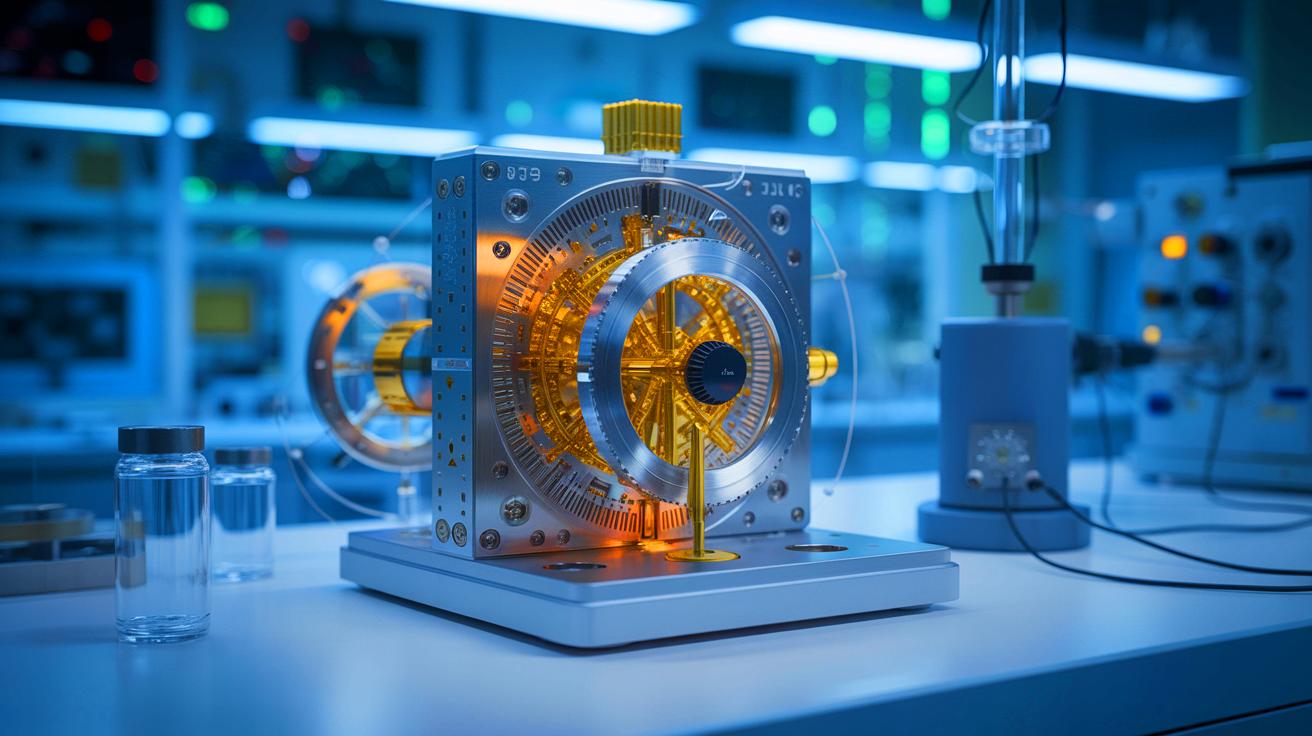
The pursuit of precision in timekeeping has reached new heights with the latest innovation from the National Institute of Standards and Technology (NIST) in the United States. This time, it’s the aluminum ion-based optical atomic clock that has set a remarkable world record. This clock is not only a marvel of modern science but also a testament to two decades of relentless refinement and ingenuity. By measuring a second with unprecedented accuracy, the aluminum ion clock is reshaping the way we perceive time and setting a new benchmark for future advancements.
The Aluminum Ion Clock: A Technological Leap
The heart of the aluminum ion clock is its ability to measure time with unmatched precision. Unlike traditional cesium atomic clocks, this new breed of clocks employs optical technology to track the vibrations of super-cooled, charged atoms known as ions. The breakthrough with the aluminum ion clock lies in its core component: a single aluminum ion. This ion is renowned for its incredibly steady, high-frequency “ticking,” which surpasses the cesium atom that currently defines the scientific second.
However, working with aluminum ions presents unique challenges. Aluminum, though highly stable, is difficult to manipulate on its own. To overcome this, NIST researchers devised a clever solution known as quantum logic spectroscopy, which involves pairing the aluminum ion with a magnesium ion. Magnesium, being more manageable with lasers, helps cool the aluminum ion and facilitates accurate time measurement.
The result is a clock that is 41% more accurate and 2.6 times more stable than its predecessors, achieving a level of precision that measures a second down to the 19th decimal place. This extraordinary achievement marks a significant leap forward in the field of timekeeping.
Achieving Unparalleled Precision
Reaching this level of precision was no small feat. Every component of the aluminum ion clock had to be meticulously engineered. One of the main challenges was controlling excess micromotion, which could disrupt the clock’s accuracy. The team at NIST tackled this by redesigning the ion trap, incorporating a thicker diamond wafer, and modifying gold coatings to minimize disturbances.
Even the vacuum chamber housing the clock played a crucial role. To prevent interference from hydrogen gas, the chamber was rebuilt using titanium, reducing background hydrogen by a staggering 150 times. This innovation allowed the clock to operate continuously for extended periods without the need for frequent resets.
Additionally, a laser of exceptional stability, developed in collaboration with JILA, another NIST joint institute, played a pivotal role. This ultrastable laser, transmitted via fiber optic links over two miles to NIST, enhanced the clock’s stability. By adopting the laser’s superior stability, the aluminum ion clock reduced measurement time from weeks to just a day and a half.
Revolutionizing Quantum Physics and Beyond
The implications of this breakthrough extend far beyond the realm of timekeeping. The aluminum ion clock has the potential to redefine the second, opening doors to groundbreaking scientific and technological advancements. Researchers anticipate that this clock will play a crucial role in exploring new frontiers in quantum physics and developing quantum technology.
One exciting application lies in the field of Earth’s geodesy, where the clock can provide precise measurements of the planet’s geometric shape, orientation, and gravity field. Furthermore, it has the potential to explore physics beyond the Standard Model, investigating whether fundamental constants are fixed or variable over time.
In a related development, NIST recently unveiled another cutting-edge atomic clock, the NIST-F4, further solidifying its position as a leader in the world of timekeeping innovation. The findings related to these advancements have been published in prestigious journals like Physical Review Letters, underscoring the significance and impact of their work.
The Future of Timekeeping and Scientific Discovery
The aluminum ion clock represents a remarkable fusion of science, technology, and innovation. By achieving unprecedented precision, it has not only set a new standard for timekeeping but also opened up new avenues for scientific exploration. As researchers continue to refine and develop this technology, the possibilities are boundless.
What new discoveries in quantum physics await us with the advent of such precise timekeeping? How will these advancements shape the future of scientific inquiry and technological progress? The journey has just begun, and the answers lie in the unfolding chapters of time itself.


Wow, a clock that measures to the 19th decimal place! Just imagine if my morning alarm was that precise 😅
Can someone explain how this will affect my daily life? Or is it just for scientists?
Incredible achievement! Kudos to the NIST team for pushing the boundaries of timekeeping.
How long until my smartwatch has this kind of precision?
This is mind-blowing! Are there any plans to use this technology in space exploration?
Finally, a clock that might actually be more accurate than my microwave’s timer 😂
Does this mean we need to rewrite all physics textbooks now?
Bravo! The world of quantum physics just got a little more precise. Thank you for this innovation!