




| IN A NUTSHELL |
|
The UK Biobank has achieved a monumental breakthrough in medical imaging, completing the world’s largest whole-body imaging project. This endeavor, stretching over 15 years, saw the participation of 100,000 volunteers, who contributed immensely to advancing disease research and diagnostics. By scanning brains, hearts, abdomens, blood vessels, bones, and joints, UK Biobank has provided researchers with an unprecedented dataset. This accomplishment is not just about numbers; it represents a significant leap forward in understanding human health, influencing prevention methods, and enhancing treatment options worldwide.
A Detailed Look Inside the Human Body
Fifteen years ago, a cohort of 100,000 dedicated volunteers embarked on an ambitious journey with the UK Biobank, contributing to what would become the largest imaging project of its kind. Among them, Alison, a member of the Participant Advisory Group, emphasized the importance of this initiative, stating her motivation was to “create a healthier future for all of us to enjoy.” These volunteers provided critical data, including lifestyle information and blood samples, which paved the way for groundbreaking research.
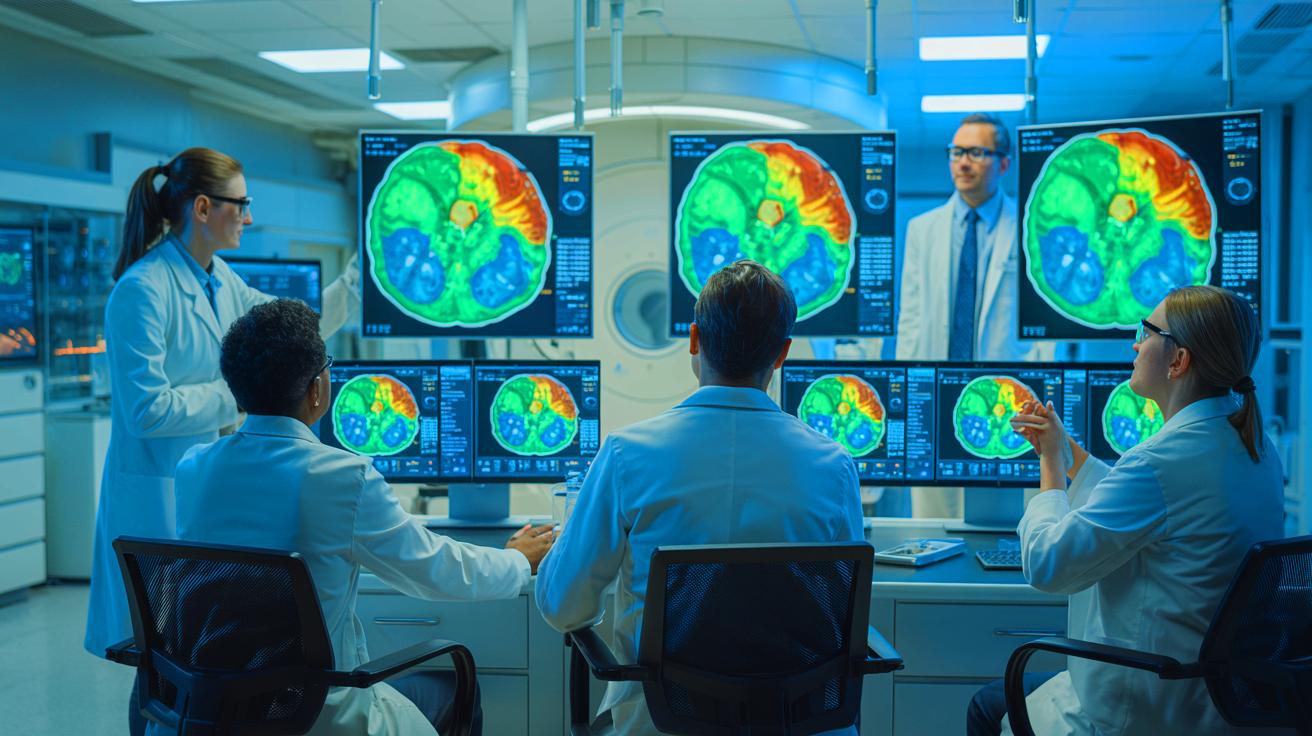
The project, backed by a substantial £60 million investment, involved extensive imaging sessions. Each volunteer underwent five-hour imaging appointments, where researchers collected 12,000 Magnetic Resonance (MR) images of vital organs such as the brain, heart, and abdomen. Additionally, ultrasounds of carotid arteries and comprehensive body scans were conducted, measuring bone density and body fat.
The imaging data has equipped scientists with the tools to explore diseases in unprecedented detail. According to Professor Louise Thomas, “researchers can measure the size, shape, and composition of nearly every organ and tissue in the body in seconds, rather than hours per person.” This capability marks a significant advancement in the realm of medical research, offering insights previously unattainable.
A Bright Future for Disease Research
The UK Biobank’s imaging data is already catalyzing significant discoveries in disease research. Scientists are leveraging this vast dataset to develop advanced AI models, such as one for a healthy heart, which aims to detect diseases early. Notably, researchers are beginning to grasp the concept that our organs might age biologically at a different rate than we do. This understanding is reshaping how we perceive age-related diseases and their onset.
One of the remarkable findings from this dataset is the intricate connection between the heart and brain. Such revelations are possible due to the immense scale of data being integrated into machine learning platforms, allowing for disease prediction years before symptoms manifest. Professor Paul Matthews highlighted the potential of this data, remarking on a study that used brain imaging from 20,000 participants to develop an AI tool capable of predicting the onset of Alzheimer’s and Parkinson’s diseases. “The beauty of UK Biobank is the breadth of the data collected… the imaging scans add another layer of exquisite detail,” he noted.
Unprecedented Scale and Impact
The UK Biobank’s imaging project is remarkable not just for its scale but also for its profound impact on the scientific community. Described as more than ten times larger than any prior studies, this project offers researchers the ability to discern disease patterns previously invisible. By providing a panoramic view of the human body, the data allows for a holistic understanding of how various aspects of our lives, from lifestyle choices to genetic predispositions, influence our health.
With over 1,300 peer-reviewed scientific papers already published based on this data, the UK Biobank has set a new standard for medical research. The rapid analysis of heart scans in under a second is just one example of the technological advancements made possible by this dataset. The ability to see inside the human body “in ways that were previously impossible” opens new avenues for research, enabling scientists to make connections that can lead to new diagnostics and therapeutic strategies.
The Role of Volunteers and Continuous Advancements
Central to the success of the UK Biobank’s imaging project is the role played by its volunteers. These individuals, driven by a desire to contribute to a healthier future, have collectively enabled a dataset of immense value to be compiled. Their commitment has not only enhanced our understanding of disease progression but also provided a foundation for future breakthroughs in medical science.
As the dataset continues to grow, so too does its potential to transform healthcare. The integration of lifestyle and health data with imaging results creates a comprehensive picture that can inform personalized medicine approaches. The ongoing contributions from these volunteers ensure that the UK Biobank remains a pivotal resource in the quest to unravel the complexities of human health.
The UK Biobank’s imaging project signifies a monumental stride in medical research, offering insights that promise to revolutionize disease prevention and treatment. As we continue to explore the depths of this dataset, one must wonder: how will these insights shape the future of global healthcare, and what new frontiers will we uncover next?


Wow, c’est incroyable ce que la technologie peut faire aujourd’hui! 😮
Est-ce que ce projet va également aider à comprendre mieux le cancer?
J’espère que les données seront utilisées de manière éthique, c’est tellement important! 😊
Pourquoi ça a pris 15 ans pour finir ce projet? Ça me semble long!
Impressionnant! Mais comment assurent-ils la confidentialité des données des volontaires?
Merci à tous les volontaires qui ont participé à ce projet incroyable! 🙏
Quel impact ce projet pourrait-il avoir sur les politiques de santé publique?
Ça a coûté £60 millions? Ça fait beaucoup d’argent! 😲
Les découvertes sur le vieillissement des organes sont fascinantes!
Espérons que les résultats mènent à des traitements plus efficaces pour Alzheimer. 🤞
Je suis curieux de savoir comment ces données changent la recherche médicale actuelle.