





| IN A NUTSHELL |
|
The global push toward climate-neutral industries necessitates a significant reduction in carbon emissions. A pivotal component of this transition is the shift from carbon-based fuels to electricity, particularly in transportation and industrial systems. Nickel, a critical material for both stainless steel and the batteries used in electric vehicles (EVs) and renewable energy storage, plays a crucial role in this evolution. However, traditional nickel production methods release a staggering amount of CO₂, posing a significant environmental challenge. Recent breakthroughs at the Max Planck Institute for Sustainable Materials (MPI-SusMat) offer a promising solution to this problem, showcasing a novel method that could revolutionize the industry.
Revolutionizing Nickel Extraction with Hydrogen Plasma
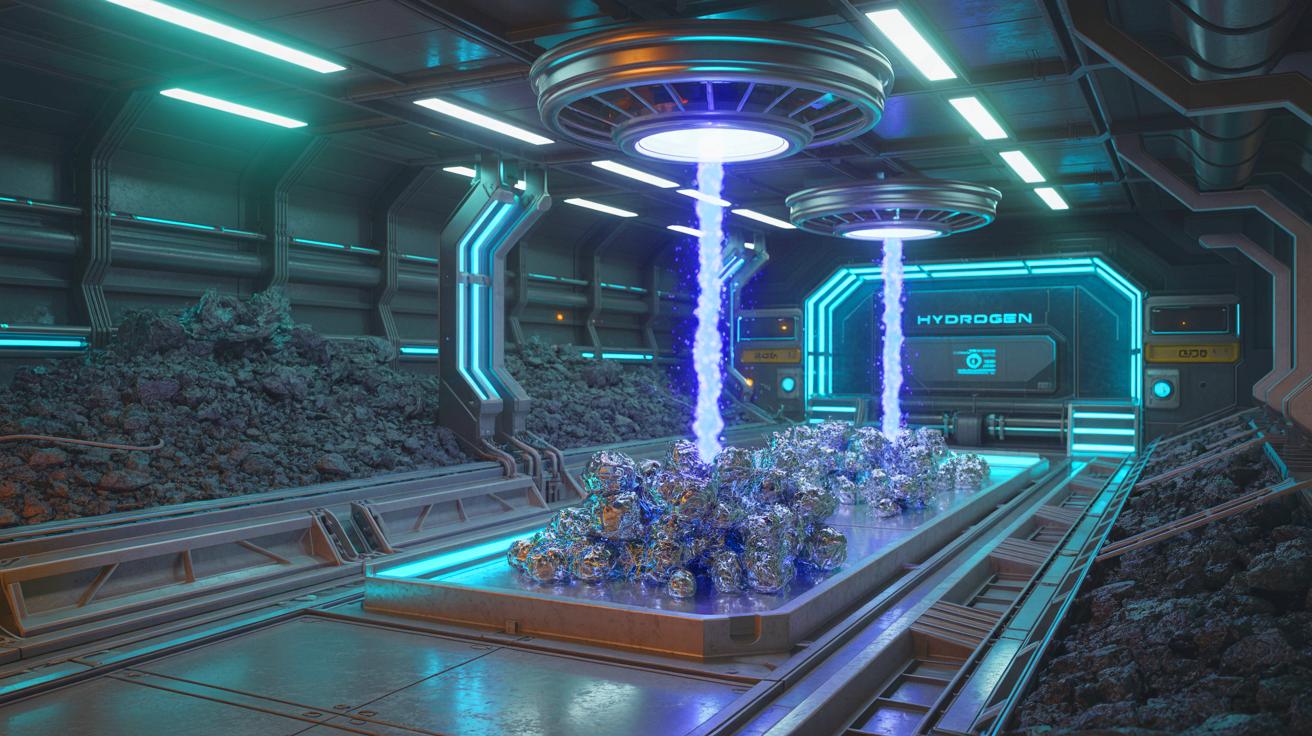
Researchers at MPI-SusMat have pioneered a groundbreaking technique for nickel extraction using hydrogen plasma. This innovative process enables single-step extraction from low-grade ores, significantly simplifying production and reducing costs. The traditional methods of nickel production involve multiple energy-intensive steps, such as calcination, smelting, reduction, and refining, each contributing heavily to the carbon footprint. In contrast, the new method is up to 18 percent more energy-efficient and reduces CO₂ emissions by a remarkable 84 percent.
By focusing on low-grade nickel ores, which constitute 60 percent of global reserves, the team has unlocked the potential to process these complex ores effectively. Utilizing hydrogen plasma and precise temperature control, the researchers can break down complex compounds in a single furnace, producing a ferronickel alloy. This approach not only addresses environmental concerns but also cuts costs by minimizing reliance on high-grade deposits.
Environmental and Economic Benefits of the New Method
The environmental benefits of this new extraction method are profound. By significantly reducing CO₂ emissions, this process aids industries in meeting climate goals without introducing new environmental challenges. The method’s efficiency in using low-grade ores also reduces the need for extensive mining operations, which are often both environmentally and financially taxing. Additionally, the process produces byproducts like slag, which can be repurposed in brick and cement production, further enhancing sustainability.
Economically, the method offers a cost-effective solution for nickel production. With the ability to utilize low-grade ores, industries can reduce expenses related to the extraction and processing of high-grade materials. The process’s scalability, facilitated by standard industrial furnace techniques like high-current arcs and electromagnetic stirring, ensures that it can be adopted widely and efficiently in existing industrial settings.
Scaling Up for Industrial Application
As promising as the new method is, scaling it up for industrial application presents its own set of challenges. The research team at MPI-SusMat is actively working on adapting the process for larger-scale operations. Key to this is ensuring that unreduced melt continuously reaches the reaction interface. Techniques such as implementing short arcs with high currents and integrating external electromagnetic stirring devices are being explored to achieve this. The adaptability of the method to existing industrial furnace practices makes its large-scale application a realistic goal.
The end product, a reduced ferronickel alloy, is immediately useful in stainless steel manufacturing. With further refinement, it can also be used for battery electrodes, making it a valuable resource for the rapidly expanding EV and renewable energy sectors. This versatility highlights the method’s potential to transform not just nickel production but related industries as well.
Broader Implications and Future Prospects
The implications of this research extend beyond nickel extraction. The process can be adapted for the extraction of other crucial metals, such as cobalt, which is also vital for EVs and energy storage systems. This adaptability underscores the method’s potential to drive significant advancements in sustainable material extraction.
The publication of this study in the journal Nature underscores its significance and the potential impact it could have on both the scientific community and industry practices. As researchers continue to refine and scale this method, the broader prospects for sustainable industrial practices and emissions reduction look increasingly promising.
The journey toward a climate-neutral industry is complex but essential. The advancements in nickel extraction by MPI-SusMat highlight a path forward that balances environmental sustainability with economic viability. As industries and researchers continue to innovate, what other groundbreaking methods might emerge to further facilitate our transition to a greener future?

Comment le processus de plasma d’hydrogène fonctionne-t-il exactement ?
Espérons que cette technologie ne coûte pas trop cher à mettre en place !
Est-ce que d’autres métaux peuvent être extraits avec cette méthode ? 🤔
Je suis sceptique. Les industries adopteront-elles réellement ce changement ?
Merci pour cet article informatif. C’est passionnant de voir ces innovations !
J’espère que cela ne causera pas de nouveaux problèmes environnementaux.
C’est une excellente nouvelle pour l’industrie des véhicules électriques ! 🚗
Les chercheurs ont-ils évalué le coût de production avec cette nouvelle méthode ?