





| IN A NUTSHELL |
|
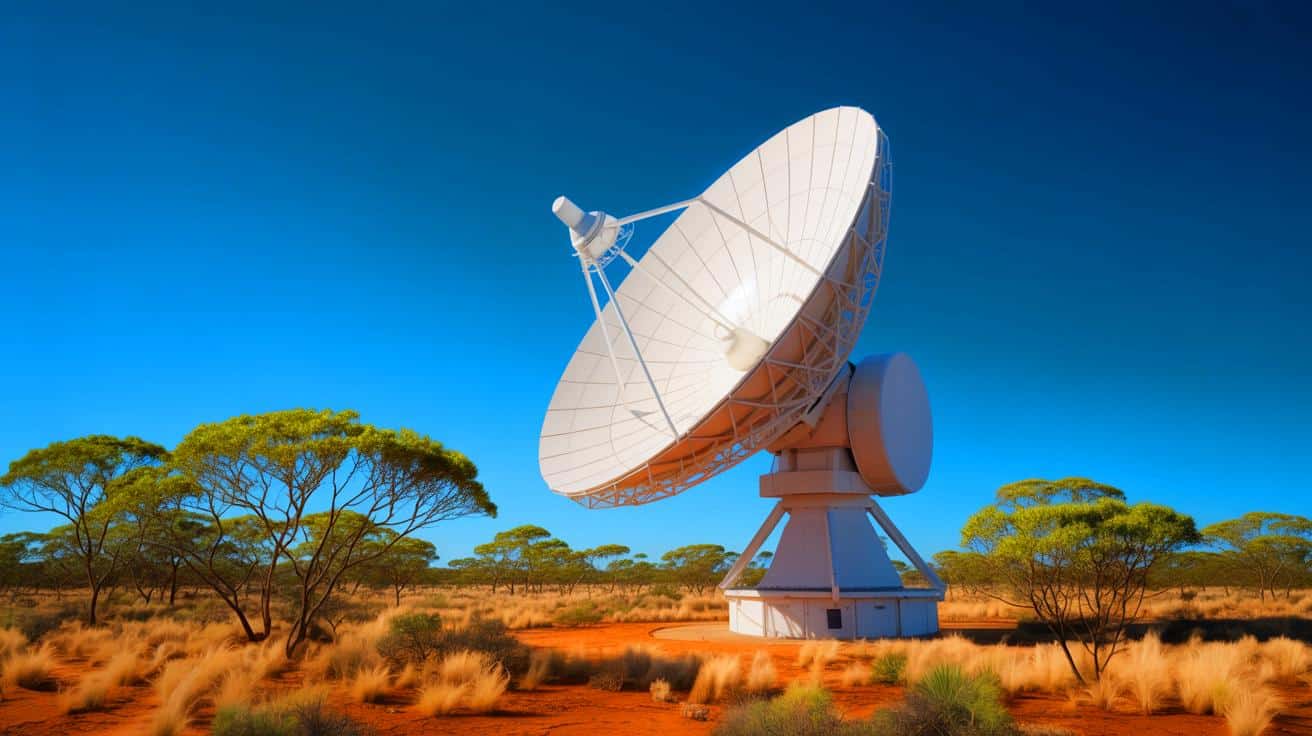
In a significant advancement for international space collaboration, the European Space Agency (ESA) has unveiled its latest deep space antenna in New Norcia, Australia. This 115-foot structure, known as “New Norcia 3,” is strategically positioned roughly 70 miles north of Perth and is set to play a vital role in ESA’s scientific and exploration missions. With an estimated construction cost of around $67 million, this antenna underscores the importance of global partnerships in space exploration. As the demand for data grows, this new facility will enhance communication capabilities, providing essential support for missions such as Juice, Solar Orbiter, and Mars Express. The project also highlights the cooperative efforts between Europe and Australia, emphasizing a shared commitment to advancing space technology and exploration.
New Antenna to Strengthen Europe’s Deep Space Communications
The construction of ESA’s latest deep space antenna at New Norcia represents a pivotal investment to bolster the agency’s communication infrastructure. With a price tag of approximately $67 million, the project encompasses the construction of the antenna itself, as well as upgrades to station buildings and supporting infrastructure. The Australian Space Agency has contributed roughly $3.2 million, reflecting a robust partnership between Europe and Australia in the realm of space exploration.
Josef Aschbacher, ESA’s director general, emphasized the strategic importance of the new antenna. This development is seen as a critical step in maximizing the scientific output of missions operating far from Earth. Furthermore, the collaboration between the European and Australian space sectors is set to expand, with Australia initiating negotiations for a cooperative agreement with ESA.
The new antenna will not only support ESA missions but also assist agencies like NASA, Japan’s JAXA, and India’s ISRO. This mutual support increases scientific output and operational efficiency, benefiting commercial space missions as well. Enrico Palermo, head of the Australian Space Agency, highlighted the local economic benefits and employment opportunities expected from this investment, projecting a 50-year operational lifespan for the facility.
Strategic Location for Global Space Coverage
New Norcia's strategic location is instrumental in providing continuous coverage for deep space missions. Situated ideally to complement ESA's other stations in Malargue, Argentina, and Cebreros, Spain, it ensures uninterrupted communication with spacecraft operating billions of miles from Earth. This geographical advantage makes New Norcia an invaluable asset in the global network of space communications.
Once operational, New Norcia will become ESA's first ground station to host two deep space antennas, managed locally by Australia's national science agency, CSIRO. This agency also operates NASA's deep space communication complex near Tidbinbilla, Canberra. Such collaboration underscores the strength of international partnerships in advancing space exploration and technology.
In addition to supporting ESA's missions, the station plays a crucial role in monitoring launches from Europe. A 15-foot tracking antenna situated mere feet from ESA’s deep space antennas tracks Vega-C and Ariane 6 launches in real time. This facility also supports ESA’s Biomass mission, ensuring accurate forest measurements with a calibration transponder that the satellite visits multiple times annually.
Economic and Scientific Impact of the New Norcia Antenna
The economic and scientific impacts of the New Norcia antenna are expected to be significant. Local industries are poised to benefit from the investment, with an influx of economic value projected to span decades. Employment opportunities in the region are set to rise, driven by the construction and operational phases of the project.
Scientifically, the antenna is a cornerstone for ESA’s exploration and space safety missions. By providing robust communication capabilities, it ensures that missions like Juice, Solar Orbiter, and Mars Express can transmit data effectively back to Earth. This data is crucial for enhancing our understanding of the solar system and beyond.
The antenna's ability to support international missions further amplifies its scientific value. By facilitating communication for NASA, JAXA, and ISRO, it fosters a spirit of global cooperation in scientific discovery. This interconnected approach not only enhances mission efficiency but also paves the way for future collaborative endeavors in space exploration.
Looking Ahead: Future Missions and Collaborations
With the New Norcia antenna set to become operational in 2026, ESA and its partners are already looking ahead to future missions. Upcoming projects such as Plato, EnVision, Ariel, Ramses, and Vigil will benefit from the enhanced communication capabilities provided by this facility. The continuous support for these missions is critical for their success and for advancing human knowledge of space.
The collaboration between ESA and the Australian Space Agency is expected to grow, with both sides exploring new avenues for joint initiatives. This partnership serves as a model for international cooperation, demonstrating how shared resources and expertise can lead to groundbreaking achievements in space exploration.
As the New Norcia antenna prepares to enter service, it stands as a testament to what can be achieved when nations work together towards a common goal. What new discoveries might arise from this enhanced global cooperation in space exploration?


Wow, 115-foot antenna! That’s taller than my house. 😄
Wow, une antenne géante en Australie ! Est-ce que ça veut dire qu’on va enfin recevoir des messages des extraterrestres ? 👽
How does this new antenna compare to existing ones in terms of capability and technology?
Pourquoi ont-ils choisi l’Australie pour cette antenne ? Y a-t-il des avantages géographiques spécifiques ?
Hope this project brings lots of jobs to the local community in Australia!
Why did they choose Australia for this project? 🤔
Merci pour cet article fascinant! C’est incroyable de voir une telle collaboration internationale pour l’exploration spatiale.
With a cost of $67 million, I wonder how long it will take for the investment to pay off.
It’s great to see Europe and Australia working together on space exploration! 👍
Combien de temps a pris la construction de cette antenne ? Cela semble être un projet énorme !
Isn’t it amazing how we can communicate with spacecraft billions of miles away? 🚀
What kind of data will this antenna help transmit back to Earth?
J’espère que cette antenne résiste bien aux tempêtes australiennes ! 😅
Does this new antenna mean faster internet for us earthlings? 😂
Curious to know more about the missions Juice, Solar Orbiter, and Mars Express.
Est-ce que l’antenne sera utilisée pour des missions au-delà de celles mentionnées ? 🤔
How do they manage to keep the data transmission secure from space?