




| IN A NUTSHELL |
|
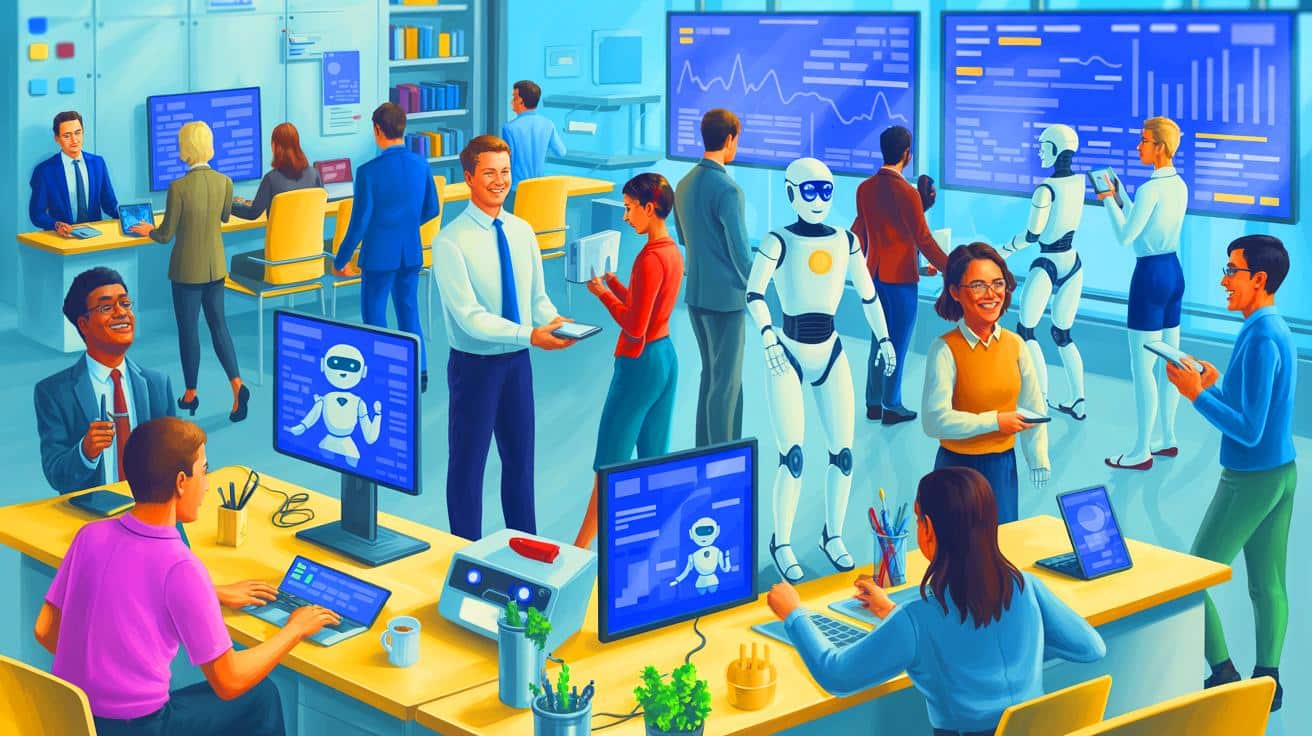
In today’s rapidly advancing technological landscape, digital helpers have become a common presence in our daily lives. From chatbots assisting with customer service inquiries to robots delivering amenities in hotels, the influence of automated agents is undeniable. A recent meta-analysis conducted by researchers at Aalborg University Business School, led by Professor Holger Roschk, sheds light on how these digital assistants compare to human employees across various outcomes. The study compiled data from 327 experiments involving over 281,000 participants, revealing intriguing insights into the effectiveness and perception of machine helpers. While people often view machines as less personable, their actions—such as purchasing decisions and advice-following—often align closely with those influenced by human interaction.
The Scope of Automated Agents
The research team examined three primary types of automated agents: robots, chatbots, and algorithms. Robots operate in the physical world, performing tasks through bodies and motors. Chatbots engage in text or voice interactions, while algorithms process inputs and produce outputs without direct conversation. The study assessed perceptions, intentions, and behaviors, revealing that while machines may lack warmth, their impact on behavior is significant.
Interestingly, the study found that context plays a critical role in the effectiveness of automated agents. In scenarios requiring utilitarian tasks, such as route calculations or wait time predictions, algorithms performed competently. Conversely, in situations that could induce embarrassment, chatbots often matched or even surpassed human performance in terms of compliance and decision-making. This dynamic indicates that people may not express enthusiasm for machines, but their behavior often aligns with machine suggestions.
Perceptions of Machine Judgment
One notable finding from the meta-analysis is that people tend to accept negative outcomes more readily when delivered by a machine. This phenomenon is particularly evident when a request is denied according to standardized rules. Professor Roschk noted, "We also see that artificial agents, contrary to what you might expect, have certain advantages in situations where a negative response must be given."
Supporting this observation, prior studies indicate that individuals feel less judged by service robots when purchasing items associated with stigma, leading to increased comfort and acceptance. The absence of social pressure and the perception that machines do not form opinions contribute to this acceptance. Additionally, naming a robot or chatbot can enhance their performance in conversational tasks, whereas overly humanlike design may hinder acceptance.
The Role of Humanlike Traits
The study highlights the distinction between utilitarian and hedonic tasks. Utilitarian tasks emphasize functional benefits like accuracy and cost-efficiency, where algorithms often excel. In contrast, hedonic tasks focus on enjoyment, where human-like interactions may be more favorable. This dichotomy underscores the importance of considering the nature of the task when evaluating the effectiveness of automated agents.
Experts also explore the concept of automated social presence, suggesting that machines may evoke a sense of social presence or machine presence depending on cues. A recent concept paper argues that both dimensions influence reactions, not solely humanlike traits. Interestingly, in some cases, emphasizing machine characteristics rather than humanlike traits proves advantageous, particularly in contexts requiring speed, rules, or privacy.
Where Humans Excel
Despite the growing capabilities of automated agents, human employees continue to hold an advantage in areas demanding empathy, improvisation, and complex explanations. The study reveals notable gaps in warmth and humanlikeness, which are crucial in sensitive or high-stakes interactions. Professor Roschk advises companies to strategically deploy artificial agents in roles that alleviate physically or mentally demanding tasks for employees while reserving human agents for situations that require a personal touch.
The findings emphasize the importance of leveraging machines where they excel, allowing humans to focus on tasks that require uniquely human attributes. This approach not only enhances efficiency but also ensures that the strengths of both humans and machines are maximized in the workplace.
As digital helpers continue to evolve and integrate into various aspects of daily life, the question arises: How will the balance between human and machine interaction shape the future of work and customer service? The ongoing exploration of this dynamic relationship will undoubtedly influence the design and implementation of automated agents in the years to come.


Est-ce que ces robots vont remplacer nos emplois à l’avenir ? 🤔
Est-ce que les robots remplaceront un jour les humains dans tous les domaines ? 🤖
J’ai du mal à faire confiance à une machine pour prendre des décisions importantes pour moi.
Merci pour cet article fascinant ! Je suis curieux.se de voir comment cela va évoluer.
Merci pour cet article fascinant ! Les robots sont vraiment impressionnants.
Intéressant, mais je me demande si ces machines peuvent vraiment comprendre les nuances émotionnelles. 🤔
Est-ce qu’un jour on pourra rigoler avec un chatbot comme avec un ami ? 😂
Les robots qui manquent de chaleur, c’est un peu comme des toasters qui parlent, non ?
Pas sûr que je veuille qu’un algorithme me dise quoi acheter. Ça fait un peu Big Brother, non ?
Je suis sceptique quant à l’idée que les gens acceptent mieux les mauvaises nouvelles de la part des machines.
C’est fou de voir à quel point les robots peuvent influencer nos décisions sans qu’on s’en rende compte !